


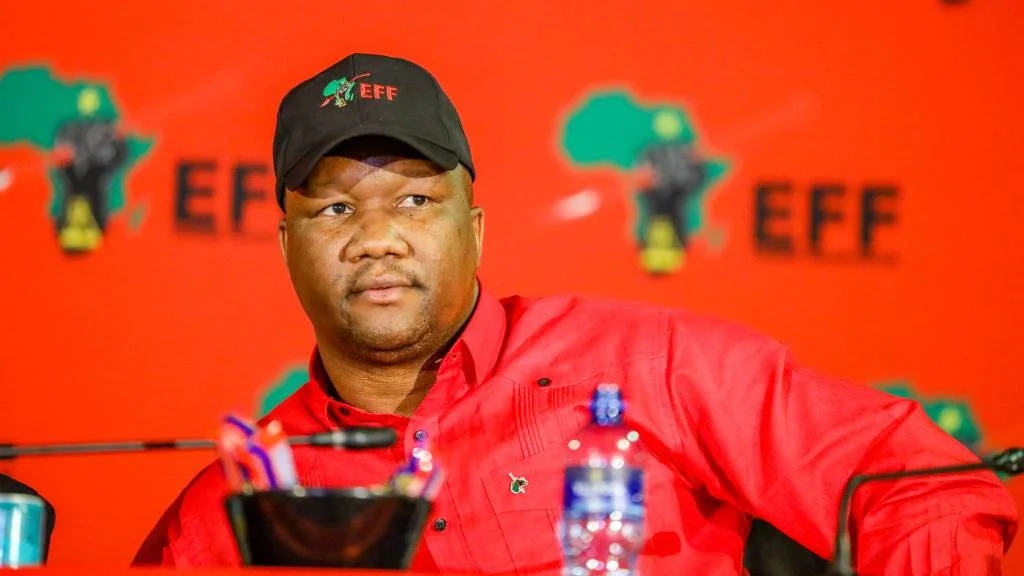
As the Economic Freedom Fighters (EFF) gears up for its third National People’s Assembly, the party is poised to adopt a resolute stance on foreign affairs, calling for South Africa to strengthen its political and economic alliances with nations such as China and Russia—key partners within the BRICS+ framework. This shift in policy comes amid concerns that the current Government of National Unity may dilute South Africa’s established position regarding the ongoing Russia-Ukraine conflict and its response to the humanitarian crisis in Gaza.
Marshall Dlamini, the party’s Secretary General, has expressed alarm at the perception that South Africa’s government is wavering in its support for Russia, particularly in light of the recent military escalation. Dlamini has fervently advocated for South Africa to align itself with Russia’s retaliatory actions against Ukraine, following Ukrainian strikes that reportedly targeted civilian areas and critical infrastructure. “We want President Putin not to compromise on protecting Russians against NATO-sponsored aggression,” Dlamini stated. He framed the conflict as part of a broader struggle against what he termed “modern-day imperialism,” drawing parallels with historical injustices that have shaped the very fabric of Western nations.
“Do not forget that these countries were built on the back of abuse and slavery,” he remarked, highlighting a narrative of resistance that resonates with the EFF’s broader political ideology.
In tandem with the party’s foreign policy stance, Dlamini has reiterated the EFF’s long-standing alignment with the Palestinian cause, concerning the actions of Israel in Gaza. He underscored the necessity of solidarity with the oppressed, stating, “We have always associated ourselves with the struggle of those in Gaza and East Jerusalem.” The party has previously sponsored a motion in Parliament advocating for South Africa to sever ties with Israel, reinforcing its commitment to defending human rights on a global scale.
Domestically, Dlamini raised concerns about the potential erosion of South Africa’s democratic principles, particularly due to the increasing influence of right-wing parties within the Government of National Unity. “We want BRICS countries to be aware of Cyril Ramaphosa and his DA ministers who have dominated key portfolios,” he stated, alluding to the strategic appointments that have raised eyebrows within the EFF regarding South Africa’s policy direction. Dlamini’s comments suggest an apprehension that the country may now be taking cues from Western influences, particularly in light of recent diplomatic statements involving South African leaders.
The EFF’s hardline foreign policy approach starkly contrasts with that of the Democratic Alliance (DA), which has advocated for a balanced view towards both Ukraine and Israel. DA Leader John Steenhuisen has visited both countries and has argued for South Africa’s support towards their respective causes, a stance that the EFF continues to vehemently reject.
The debate surrounding South Africa’s foreign policy continues to evolve, with Presidential spokesperson Vincent Magwenya recently clarifying the country’s ongoing position on Ukraine, following misunderstandings about visa provisions intended for diplomats involved in peace negotiations.
As the National People’s Assembly approaches, all eyes will be on the EFF and its articulated stance, not just within South Africa but also on the international stage, as it seeks to carve a distinct path in the landscape of global politics.