


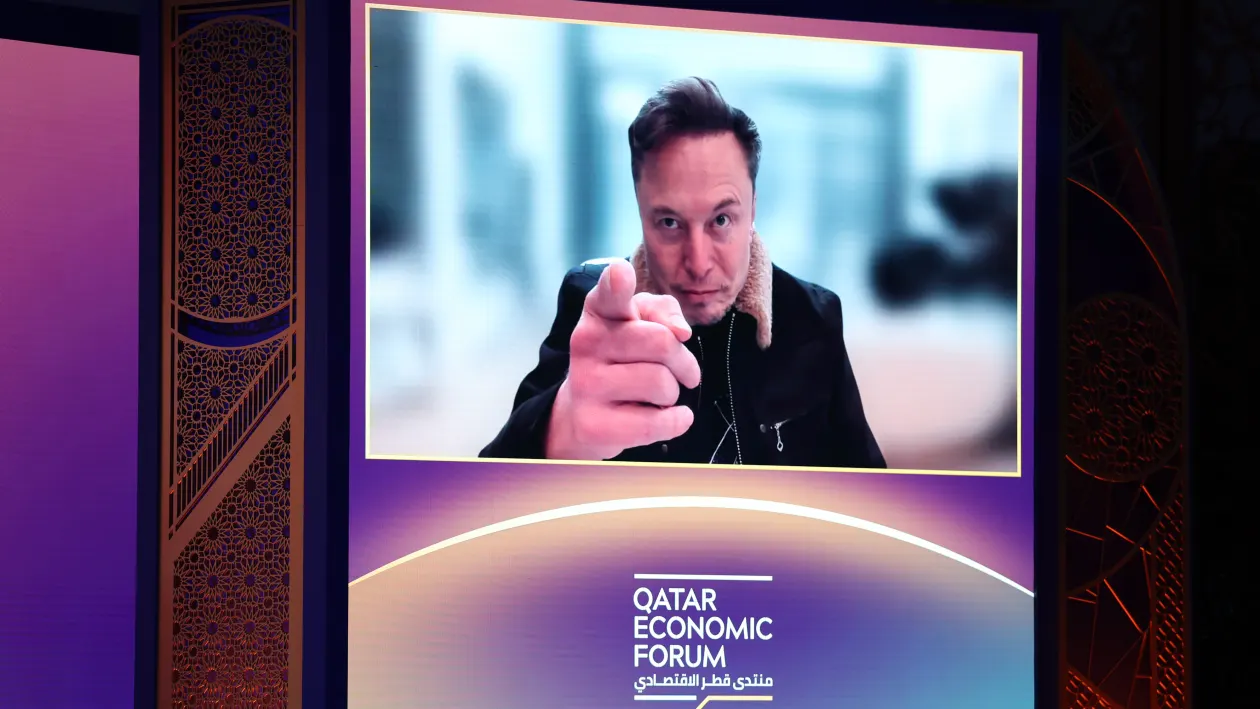
In a surprising announcement during a video interview at the Qatar Economic Forum, billionaire entrepreneur Elon Musk stated that he plans to significantly reduce his political contributions in the foreseeable future, marking a notable shift from his recent role as a key benefactor for the US Republican Party. Musk, who has invested nearly $300 million in political support over the past year, expressed a sense of satisfaction with his previous expenditure, saying simply, “I think I’ve done enough.” The comment drew laughter from the audience, leaving it unclear whether he was serious or jesting.
When pressed by Bloomberg’s Mishal Husain on his approach to the upcoming midterm elections, Musk’s tone was unequivocal. “I think, in terms of political spending, I’m going to do a lot less in the future,” he reiterated, reinforcing a narrative of withdrawal from the political arena. His decision comes after a year characterised by his vocal backing of Donald Trump and significant contributions to Republican candidates, including a recent $25 million investment in a contentious Wisconsin Supreme Court election — a race in which Musk’s preferred candidate suffered a considerable defeat.
Musk’s role in the political sphere has not been without its controversies. His efforts have elicited backlash, which some speculate has contributed to a decline in his public approval and perhaps even affected Tesla sales. As Musk navigates the intricate balance of wielding political influence while managing the ramifications of such actions, his retraction from financial involvement could signal a strategic pivot. “If I see a reason to do political spending in the future, I will do it. I do not currently see a reason,” he stated, hinting at a possible openness to re-engage, should circumstances shift.
This latest reticence follows a tumultuous period for Musk. His immersion in political fundraising has led some within the Republican party to ponder how they can embrace the billionaire’s resources while mitigating the potential fallout from his declining popularity. Once viewed as a potent ally for the GOP, Musk’s willingness to engage politically seemed unwavering until recent developments after the Wisconsin race raised questions about the efficacy of his contributions.
The interview was notably intense, with Musk taking aim at various media outlets and even venturing into criticisms of fellow tech mogul Bill Gates, whom he accused of maintaining connections with controversial figures. The entrepreneur also reaffirmed his leadership at Tesla, asserting that he plans to stay at the helm for at least another five years.
With a scheduled dinner with Trump this week, Musk’s decisions regarding political engagement remain closely watched. However, he has recently indicated a desire to retreat from the capital and devote more attention to his primary ventures, including Tesla and SpaceX.