


The kingdom of Eswatini has confirmed the arrival of five individuals deported from the United States under the administration of former President Donald Trump. Government spokesperson Thabile Mdluli announced this development on Wednesday, asserting that the deportations followed months of “robust high-level engagements” between the two nations.
The nature of the deportations has sparked a significant debate on human rights and due process. The individuals, identified as citizens of Laos, Vietnam, Jamaica, Cuba, and Yemen, are presently housed in isolated correctional facilities within Eswatini. Mdluli acknowledged the complexities regarding their origin: “As a responsible member of the global community… Eswatini adheres to international agreements and diplomatic protocols regarding… respect for human rights.” Nevertheless, her comments suggest an awareness of the potential implications of accepting deportees from foreign nations.
These deportations are part of a broader tactic employed by the Trump administration, which has seen many foreign nationals sent to countries not of their origin. Tricia McLaughlin, spokesperson for the US Department of Homeland Security, labelled the deportees as “depraved monsters,” claiming they had committed serious crimes such as murder and child rape, and asserting that their home countries had refused to accept them back.
This practice, however, has drawn fierce criticism from human rights advocates who argue it subjects these individuals to heightened risks in nations with documented histories of human rights abuses. Critics fear that deportations are being carried out so expeditiously that they deny individuals the opportunity to contest their removal, effectively infringing upon their rights. In recent months, the Trump administration has faced accusations of exploiting countries plagued by violence and political instability for deportations.
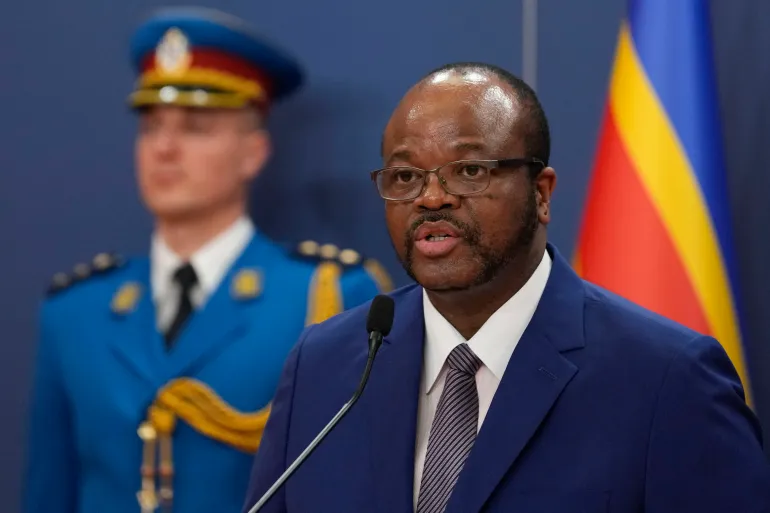
In the case of Eswatini, a nation ruled as an absolute monarchy by King Mswati III, the human rights landscape is fraught with its own challenges. The kingdom has been widely criticised for its heavy-handed approach to dissent, particularly following the violent suppression of pro-democracy protests in 2021, which left numerous protesters dead. Critics are apprehensive about the implications for the deported individuals, especially given reports of past abuses within the country’s justice system.
Despite these concerns, Eswatini’s government defended its decision to accept the deportees as a measure benefiting both nations. Mdluli highlighted the longstanding bilateral relations between Eswatini and the US, stating, “Every agreement entered into is done with meticulous care and consideration, putting the interests of both nations at the forefront.” Furthermore, Eswatini has pledged to collaborate with the International Organization for Migration (IOM) to assist these individuals in returning to their countries of origin, albeit under uncertain circumstances that may not guarantee their safety.
The recent deportations reflect a trend whereby Trump’s administration has sought to rival the humanitarian standards on which the US has historically prided itself. This has many questioning the morality and legality of sending deportees to nations that cannot ensure their protection.