


The families of Israeli captives have united in a poignant appeal for justice, demanding that the ongoing ceasefire with Hamas be terminated if the remaining 19 bodies, yet to be returned from Gaza, are not handed over swiftly. Their heartfelt statement from the Hostage Families Forum Headquarters resonates with a deep sense of urgency and moral obligation, emphasising that “the agreement cannot continue to be implemented without Hamas returning all the hostages.”
This sentiment reflects a critical moment for relations between the parties involved in the conflict. As tensions mount, the families assert that allowing the ceasefire to persist while hostages remain unreturned would signify a grave moral and leadership failure.
Despite assurances from Hamas that it has returned all reachable hostages, with the Red Cross receiving the remains of an additional two late on Wednesday, the Palestinian militants have thus far returned only nine out of the 28 expected. The group has now declared an inability to recover any more bodies without “significant efforts,” raising questions about the fulfilment of this deal.
In a related development, US President Donald Trump affirmed his willingness to allow Israeli forces to resume military actions against Hamas should the militant group fail to honour its obligations. “Israel will return to those streets as soon as I say the word,” he stated unequivocally during a CNN interview, indicating a readiness to escalate the situation further.
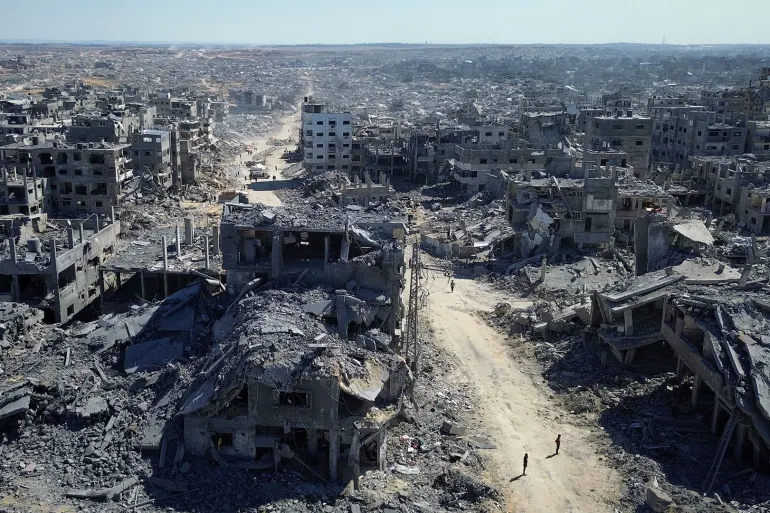
As the international community watches closely, humanitarian organisations have expressed frustration as aid supplies slowly trickle into Gaza. While trucks wait at the border, essential aid remains minimal, prompting urgent calls for increased humanitarian access.
The dynamics of the ceasefire appear precarious, with Israeli officials urging the Israel Defense Forces (IDF) to prepare a comprehensive plan to confront Hamas. Reports of public executions by Hamas following their return to the streets of Gaza heighten fears of instability, while revelations of maltreatment emerge from the returned bodies, some indicating signs of torture or execution.
Recently, the Israeli army confirmed the identification of the two hostages’ remains, Inbar Hayman and Mohammad al-Atrash, illustrating the personal loss underlying this ongoing crisis. Prior to this handover, seven formerly identified deceased hostages were returned alongside an eighth body not classified as a former hostage by Israeli authorities.
Amidst rising tensions, Israel’s government has warned that failure to return the bodies could lead to a halt of humanitarian efforts, jeopardising the precarious situation on the ground. With the Rafah crossing integral to delivering aid, critics have condemned Israel’s threat to close it as “outrageous.”
The humanitarian toll continues to escalate, with reports from Gaza showing that Israeli fire resulted in the deaths of three Palestinians just yesterday—a stark reminder of the human cost intertwined in this conflict.