


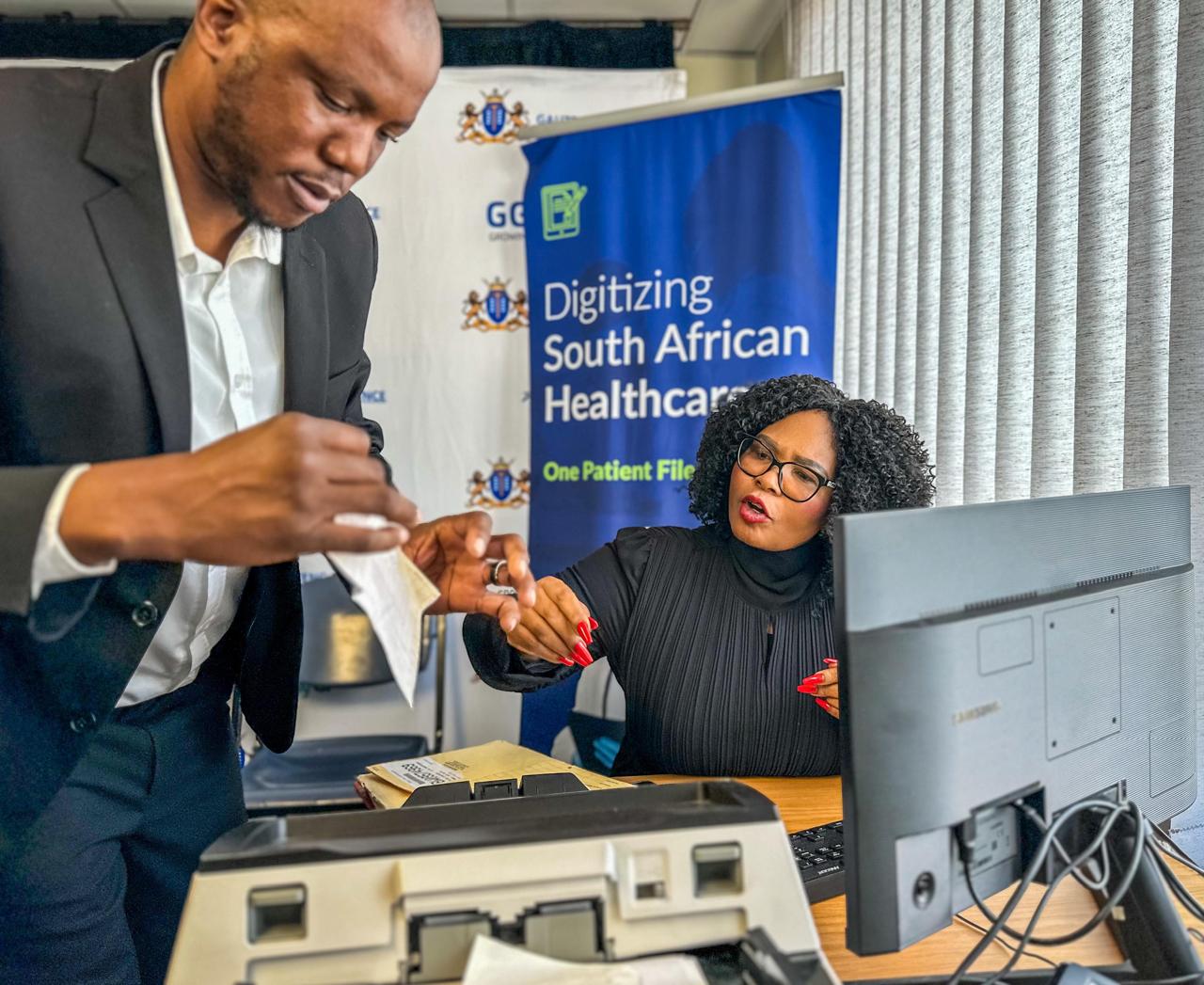
In a significant step towards transforming Gauteng’s public healthcare system, Health and Wellness MEC, Nomantu Nkomo- Ralehoko, on tuesday announced that the province is on a mission to digitise 800 million pages of patient records.
Gauteng Department of Health said it had completed the first phase of the province’s patient file digitisation programme, with over 800 000 records digitised at Chris Hani Baragwanath Academic Hospital (CHBAH), which is Africa’s largest hospital. The milestone which was noted during a media breakfast hosted at CHBAH, forms part of a bold digital transformation drive to improve efficiency, patient care and system accountability across 37 public hospitals in the province.
Already, four specialised teams are currently working at Thelle Mogoerane, Tembisa Tertiary, Steve Biko Academic and Sebokeng hospitals. “This project is not a standalone act of modernisation; it forms part of our
broader Digital Health Transformation Strategy, which aligns with global health imperatives. We are restoring the dignity to our patients by ensuring their medical history is instantly accessible, securely stored and never lost
again,” said MEC Nkomo-Ralehoko.
The department said it is also integrating these records into the broader Health Information System (HIS) and expanding supporting technologies such as Queue Management Systems and Radiology Image Archiving. These innovations further enhance patient flow, reduce overcrowding and improve the overall service turnaround times.
“I don’t know if you’ve been to a restaurant and you sat and it takes too long for them to bring you your food. I mean you get irritated, am I correct? So waiting times is actually an issue, it’s not only a health issue but everywhere we go and with us making sure that people receive you know the help that they need timelessly will actually improve our outcomes,” said the CEO at the Chris Hani Baragwanath Academic Hospital Dr Nthabiseng Makgana who was programme director at the event.
The digitised files representing more than 42 million pages are now stored in a secure cloud environment, accessible to authorised healthcare professionals. Nkomo-Ralehoko said this ensured faster treatment, eliminates the loss of files and is also expected to help the department to defend itself better in medico-legal cases.
“Let me remind you that behind every patient file is a story and often a long journey to healthcare system.For too long this journey has been interrupted by a misplaced record, delayed care or lost files. These are the situations that compromise the safety of patients and sometimes expose the department to unnecessary medico-legal suits,” said the MEC.
Medico-legal costs (when health facilities are sued by aggrieved patients) have been a major cost for the government particularly in Gauteng and Nkomo-Ralehoko said the digitisation process along with a range of other interventions is expected to to help sustain the reduction of such expenses which reported have already been pushed down from R 30 billion.
“When we introduced the medico-legal strategy, that’s when we’re able then to set up a project was in the project management where the project psyche of how are we going to deal with it for all these years, coming from that 30 billion and then we moved to when 2022-23 financial year, we moved the palliative care to the opening balance in that financial year was 24.3 billion.Then currently this cost has been reduced significantly, resulting in contingent liabilities to 7.1 billion,” said the MEC also emphasising the need to achieve zero liability.
The project implemented in partnership with a private company and resulted in the employment of no less than 100 young people from local communities, offering skills training as well as job opportunities.
The next phase involves rolling out the project to the remaining hospitals over the next 36 months, with a target of digitising 800 million pages from Gauteng.