


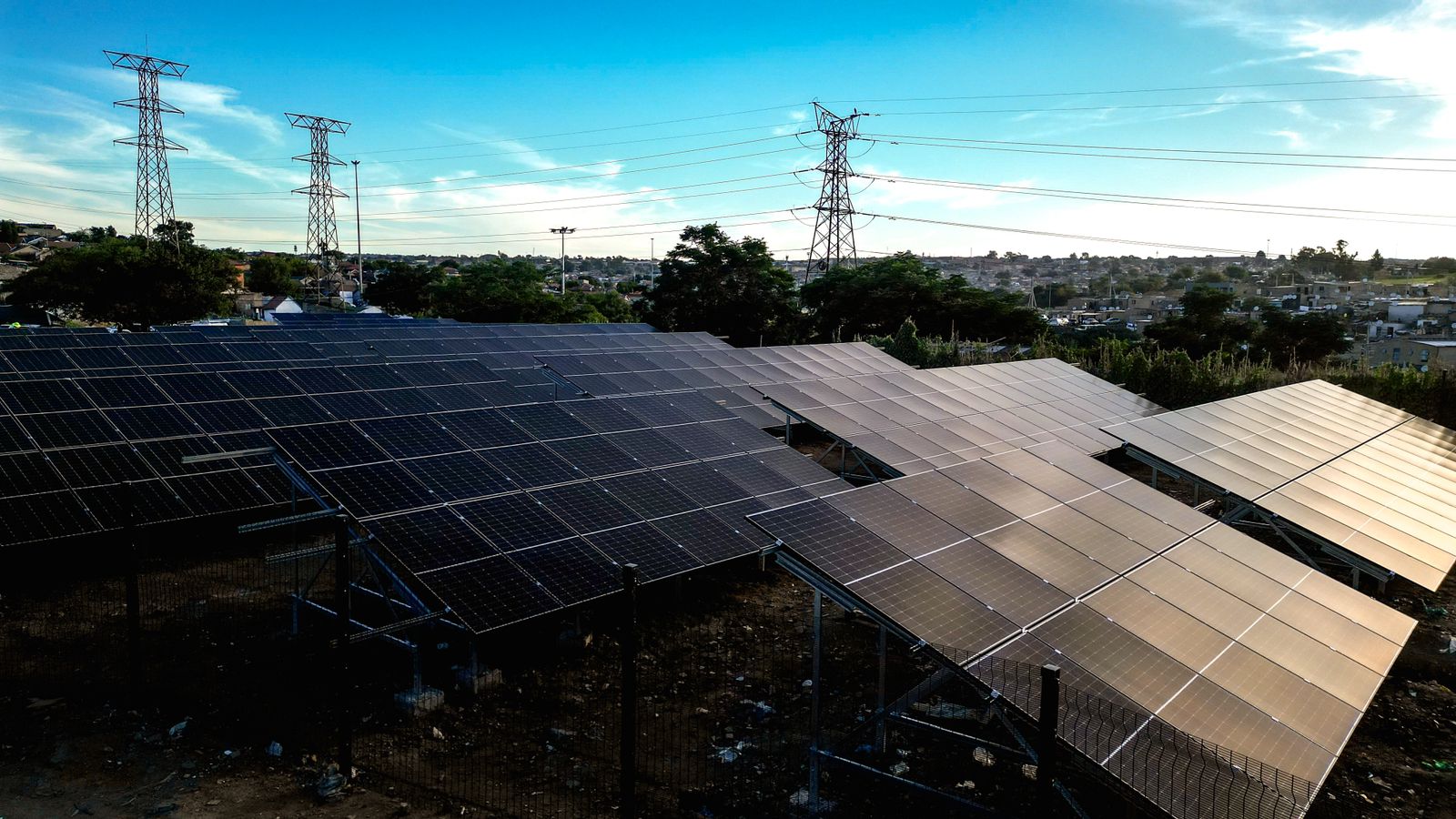
Hardly three months after the Gauteng provincial government appointed City Power to electrify the province’s two hundred or so informal settlements, the first project has been completed and switched and commissioned on Wednesday.
Premier Panyaza Lesufi and Joburg Mayor handed over a multimillion-rand solar power microgrid to the community of eMarasteni in Alexandra which never had electricity.
The facility built at a cost of R60 Million produces up to megawatt of electricity and has electrified some 200 households in the informal settlement of predominantly people of Rastafarian religion.
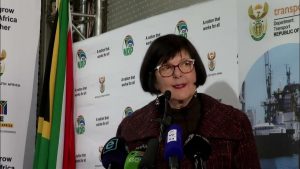
“This is part of an energy crisis response plan by the province where they have availed funds to assist us in terms of guaranteeing energy equality. This is a community that had been here for a number of years, and they didn’t have any electricity at all and through this solar farm we are able to give them electricity,” said City Power CEO Tshifhularo Mashavha.
Tshifhularo said the entity opted for solar grids as Eskom is unable to provide much needed surplus power.
“Unfortunately Eskom is not able to give us additional capacity in most of the areas which means even if we may have the funds for electrification it means we but are not going to be able to give people electricity because we are not able to get it from Eskom but through this plant we are able to ensure that this community here gets access to electricity,” she said.
Work has already started on construction of more solar grids with 14 planned for the current financial year. Setting up the solar farms doesn’t come without challenges as the targeted areas (informal settlements) have got not infrastructure at all.
The Marasteni project required among others a road as there was none and City Power was concerned about dust affecting the plant.
“The 60 million rands is not just for electrification , yes the solar farm that you are looking at but also for the cabling work, the poles, the meters, the street lights, also for the road works because we actually had to pave the whole road because we had a dirt road so that we don’t find ourselves with dust that could reduce the efficiency of the plant and it is also for the security features,” said the CEO.
South Africa’s ongoing energy crisis has pitted residents of electrified areas with those of neighbouring informal settlements who often, out of desperation, connect themselves illegally resulting in overloading that leads to outages that cause tension and Mashavha said the eMarasteni was no exception.
“We’ve got areas that we have already surveyed and they are all plugged into the energy master plan that are ready because you need to also look at environmental factors as well and there’s a lot of other factors that you look at before electrification so we’ve got over two hundred informal settlements and they are all plugged into our energy master plan and through the pioritisation we started with this one so they were in that priority list because if you look around the community over there had electricity and the community on the other side already had electricity but these ones did not have and unfortunately sometimes when people do not have access to power they then take it illegally so it then meant that communities around would not have electricity as a result of those illegal connections and that also made us to ensure that this becomes a priority,” she said pointing out that the utility has had to replace a nearby substation seven times in just three months as a result of overloading, each time at a cost of R 500 000.