


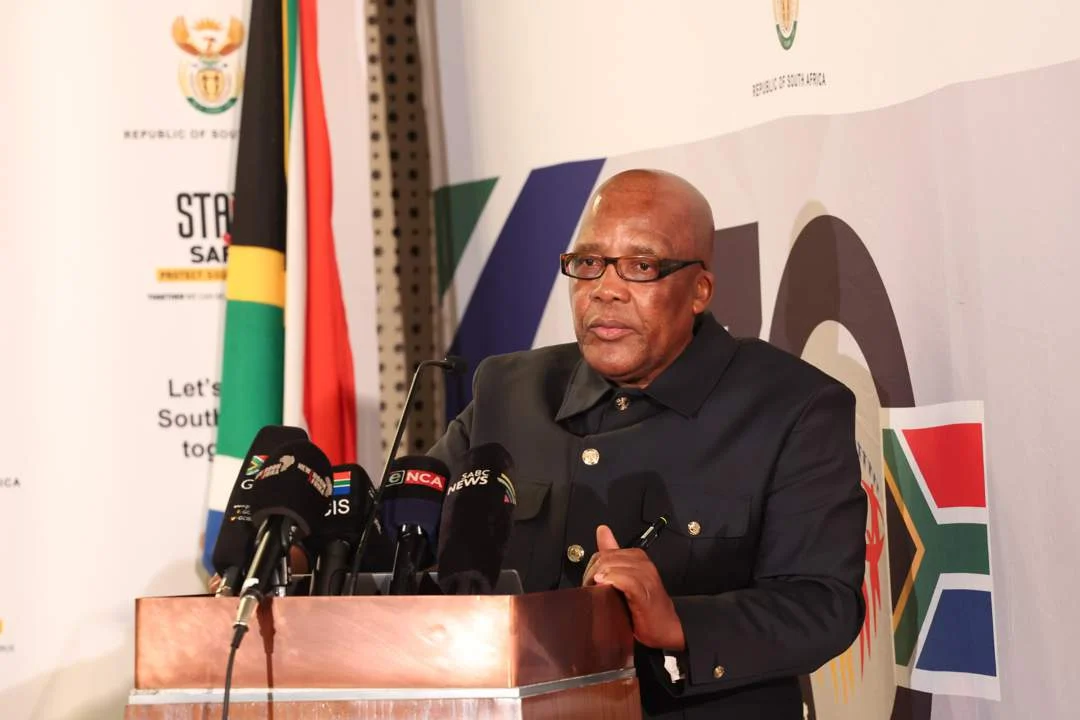
In a recent session of the National Assembly, Health Minister Aaron Motsoaledi revealed that his department is currently embroiled in seven legal cases, primarily concerning the contentious National Health Insurance (NHI) Act and the National Health Act. These litigations come with a staggering cost of R9.1 million paid thus far, raising significant concerns about the financial implications for an already strained healthcare system.
During a question-and-answer session, Democratic Alliance (DA) Member of Parliament Michele Clarke probed Motsoaledi about the total expenses tied to the litigation and the potential financial liabilities stemming from adverse cost orders. The Minister clarified that since October 2023, when they briefed their first counsel, the total expenditure has surged to R9,696,679.99, a considerable sum given that one legal judgment is currently under appeal, leaving no pending financial liabilities at this time.
Motsoaledi also outlined that the department has engaged a formidable legal team to counter the various challenges, comprising five senior and seven junior counsels. Responding to Clarke’s questioning regarding the justification for such a large legal team when hospitals struggle to fund patient care and doctor overtime, he justified the expenditure by highlighting the complexity of the cases faced. “The President’s team is for only one case, not seven,” he asserted. “We are sued for seven cases, and that is why this amount of money is for those who have been involved in litigation.”
The Minister acknowledged the stark reality that R9 million spent on legal defence appears excessive, particularly to those in the healthcare sector facing critical operational constraints. “You honourable members, who are subsidised to stay on private medical aid for R70 billion, why don’t you have the heart to believe that money must go to help the poor?” he challenged.
Motsoaledi also took aim at the broader financial picture, stating that South African citizens benefiting from private medical aid receive tax credits amounting to R33 billion, alongside R103 billion funneled towards just 14% of the population. This reality pierces deeper into the heart of the debate about the NHI, an initiative aimed at equalising healthcare access in the country. “If you are not on private medical aids and being heavily subsidised, there won’t be any litigation because we won’t be asking for NHI. South Africans will be equal,” he added.
Meanwhile, African Christian Democratic Party (ACDP) MP Steven Swart echoed concerns about the NHI Act’s constitutionality and the high costs linked to litigation. He raised alarms about the pressing issue of medical legal claims, which last year reached an overwhelming R75 billion, warning that the associated legal costs could deplete essential health service funds further.
In response to Swart’s concerns, Motsoaledi reiterated that while the issue of medical legal claims is distressing and indeed drains resources from the healthcare system, fraud constitutes a significant portion of these claims. “Fraud was found to be the biggest part of this. Medical legal worries us, and you are correct, it takes money away from the health care system,” he stated, urging a collective understanding of these challenges.
The dialogue in the National Assembly has shed light on the formidable legal and financial challenges facing the Department of Health, underscoring the intricate balance required to manage legal risks while striving to enhance the country’s health services.