

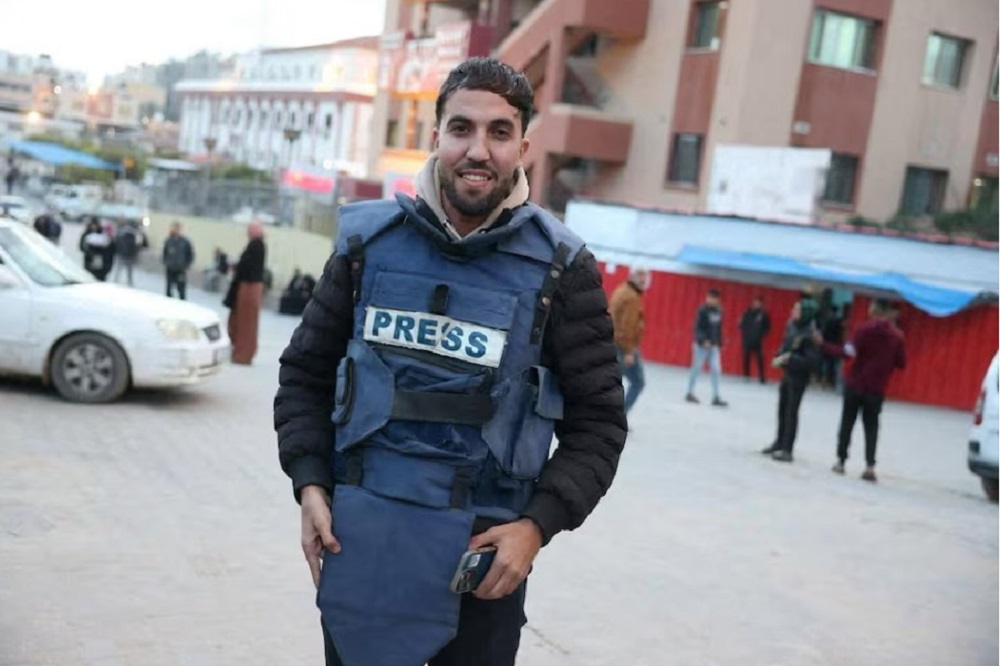
In a tragic escalation of violence in the Gaza Strip, an Israeli airstrike on Nasser Hospital in Khan Younis on Monday resulted in the deaths of at least 20 individuals, including five journalists from prominent international news organisations. The attack, which has drawn widespread condemnation and concern, highlights the perilous conditions faced by media professionals in conflict zones.
The initial strike targeted a live broadcasting position operated by Reuters, claiming the life of cameraman Hussam al-Masri. Positioned on an upper floor, just below the roof, al-Masri was struck as he covered the unfolding situation. Shortly thereafter, as rescue workers and medics rushed to provide assistance, a subsequent airstrike hit the same area, causing further casualties among the journalists and first responders.
The journalists tragically killed in the attack included:
- Mariam Abu Dagga, a freelancer for the Associated Press and other outlets
- Mohammed Salama, a reporter for Al Jazeera
- Moaz Abu Taha, a freelance journalist with contributions to various news outlets, including Reuters
- Ahmed Abu Aziz, whose affiliations have not been specifically detailed
Among the wounded was Hatem Khaled, another Reuters contractor, whose condition necessitated urgent medical assistance. In light of the attacks, a Reuters spokesperson expressed profound sorrow over the loss of their colleagues, stating: “We are devastated to learn that cameraman Hussam al-Masri was killed… and are urgently seeking more information.” The news agency has reached out to both Israeli and Gazan authorities to expedite medical help for Khaled.
The Israel Defense Forces (IDF) confirmed the strikes, stating that they would conduct an inquiry into the incident. In a statement, the IDF expressed regret over the loss of innocent life, asserting that their operations aim to mitigate harm to uninvolved individuals while ensuring the safety of their troops. “The IDF does not target journalists as such,” said their spokesperson, though the actual circumstances of the attack continue to prompt intense scrutiny and concern from the international community.
This devastating incident has reignited debates over the risks that journalists face while covering conflicts. The loss of life, particularly among those dedicated to informing the world, underscores the grave dangers present in regions of escalating violence.
US President Donald Trump responded to the news during a press briefing, expressing his discontent and underscoring the need to resolve the ongoing conflict in the region. “I didn’t know that. Well, I’m not happy about it,” Trump remarked, adding that an end to the “whole nightmare” is essential.
As global calls for accountability and protection for journalists grow louder, the chilling reality of life in conflict zones remains starkly evident. The tragic loss at Nasser Hospital not only emphasises the precarious situation for reporters working in such environments but also serves as a reminder of the urgent need for measures to safeguard those dedicated to delivering the news from the front lines.