


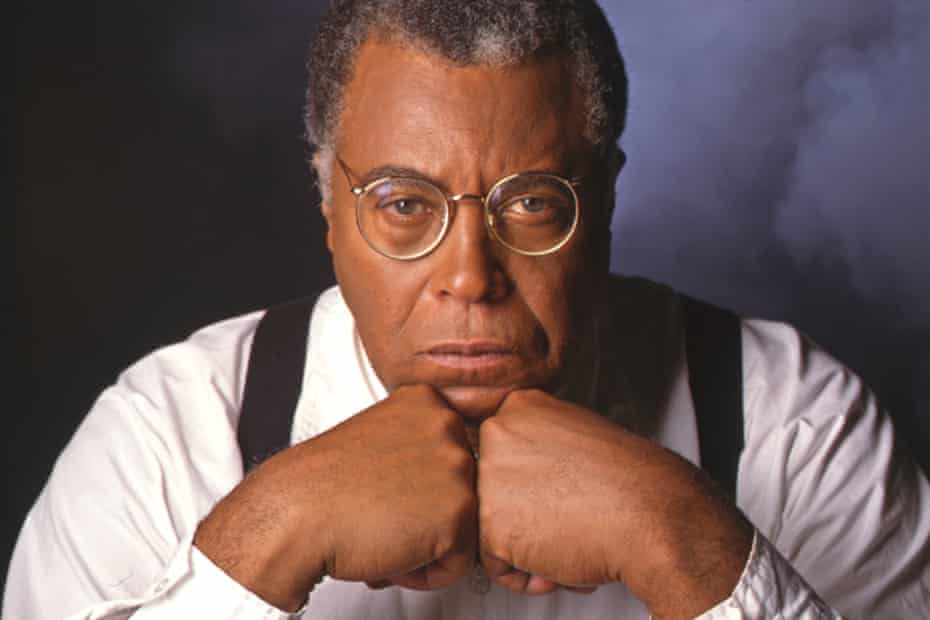
James Earl Jones, the prolific film, TV and theater actor whose resonant, unmistakable baritone was most widely known as the voice of “Star Wars” villain Darth Vader, died Monday morning at his home in Dutchess County, N.Y., his rep confirmed to Variety. He was 93.
After overcoming a profound stutter as a child, Jones established himself as one of the pioneering Black actors of his generation, amassing a bountiful and versatile career spanning over 60 years, from his debut on Broadway in 1958 at the Cort Theatre — renamed the James Earl Jones Theatre in 2022 — to his most recent performance in 2021’s “Coming 2 America.” For that film, Jones reprised his role as King Jaffe Joffer from the 1988 Eddie Murphy comedy “Coming to America” — one of several roles, along with Darth Vader, that Jones revisited, including the voice of King Mufasa in Disney’s animated feature “The Lion King” in 1994, the 1998 direct-to-video sequel and the 2019 remake, and CIA deputy director Vice Admiral James Greer in three Jack Ryan movies, 1990’s “The Hunt for Red October,” 1992’s “Patriot Games” and 1994’s “Clear and Present Danger.”
Jones’ other notable movies include as a B-52 bombardier in Stanley Kubrick’s 1964 Cold War satire “Dr. Strangelove” (his feature film debut), as the first Black president of the United States in 1972’s “The Man,” as the fearsome villain in 1982’s “Conan the Barbarian,” as a reclusive author in 1989’s “Field of Dreams,” as a blind former baseball star in 1993’s “The Sandlot,” and as a minister living in apartheid South Africa in 1995’s “Cry, the Beloved Country.”Jones was nominated for four Tony Awards, and won two, in 1969 for playing boxer Jack Johnson in “The Great White Hope” (which he reprised on film in 1970, receiving his only Oscar nomination), and in 1987 for originating the role of Troy Maxson in August Wilson’s Pulitzer Prize-winning drama “Fences.” He was nominated for eight primetime Emmy awards, winning twice in 1991, for supporting actor in the miniseries “Heat Wave,” about the 1965 Watts riots, and for lead actor in the drama series “Gabriel’s Fire,” about a wrongfully imprisoned ex-cop who becomes a private detective. It was the first time an actor won two Emmys in the same year.
Among his more than 80 film credits, Jones’ other notable movies include as a B-52 bombardier in Stanley Kubrick’s 1964 Cold War satire “Dr. Strangelove” (his feature film debut), as the first Black president of the United States in 1972’s “The Man,” as the fearsome villain in 1982’s “Conan the Barbarian,” as a reclusive author in 1989’s “Field of Dreams,” as a blind former baseball star in 1993’s “The Sandlot,” and as a minister living in apartheid South Africa in 1995’s “Cry, the Beloved Country.”
Jones was nominated for four Tony Awards, and won two, in 1969 for playing boxer Jack Johnson in “The Great White Hope” (which he reprised on film in 1970, receiving his only Oscar nomination), and in 1987 for originating the role of Troy Maxson in August Wilson’s Pulitzer Prize-winning drama “Fences.” He was nominated for eight primetime Emmy awards, winning twice in 1991, for supporting actor in the miniseries “Heat Wave,” about the 1965 Watts riots, and for lead actor in the drama series “Gabriel’s Fire,” about a wrongfully imprisoned ex-cop who becomes a private detective. It was the first time an actor won two Emmys in the same year.
Jones earned a Kennedy Center Honor in 2002, the Screen Actors Guild Life Achievement award in 2009, an honorary Oscar in 2011 and a lifetime achievement Tony Award in 2017. His Grammy award in 1977 for spoken word album makes Jones only one a handful of actors to receive an EGOT.
Jones’ looming yet ultimately affable presence and rich speaking voice made him a natural for Shakespeare, and he played some of the great roles, such as Macbeth and Othello, for Joseph Papp’s American Shakespeare Festival. Jones narrated several documentaries, from 1972’s “Malcom X” to the 2007 Disneynature doc “Earth,” and, famously, he intoned the tagline “This is CNN” for the cable news channel.
His television credits, which number over 70, including many movies and miniseries such as “Roots” and “The Atlanta Child Murders,” recurring roles on “L.A. Law,” “Homicide: Life on the Street” and “Everwood,” and guest roles on shows like “The Simpsons,” “Picket Fences,” “Law & Order,” “Frasier” and “House.”
As for his most famous role, Jones was paid $7,000 to lend his voice to Darth Vader in 1977’s “Star Wars: A New Hope,” but he declined screen credit for that film and its sequel, 1980’s “The Empire Strikes Back,” out of deference to the actor who played the role on screen, David Prowse. By 1983’s “Return of the Jedi,” however, Jones had become fully synonymous with one of the most memorable and terrifying villains in cinema history, and received credit for his work. He returned to Vader’s voice again for 2005’s “Episode III — Revenge of the Sith” and 2016’s “Rogue One: A Star Wars Story,” but for the 2022 Disney+ series “Obi-Wan Kenobi,” Jones instead authorized Lucasfilm to use archival recordings and AI technology to recreate Vader’s voice.
When asked in 2014 by the New York Times about how he’d kept his career alive for so long, Jones’ response evoked the kind of plainspoken humility that he had so often brought to his performances as well. Variety
“The secret is never forgetting that you’re a journeyman actor and that nothing is your final thing, nothing is your greatest thing, nothing is your worst thing,” Jones said. “I still consider myself a novice.”