



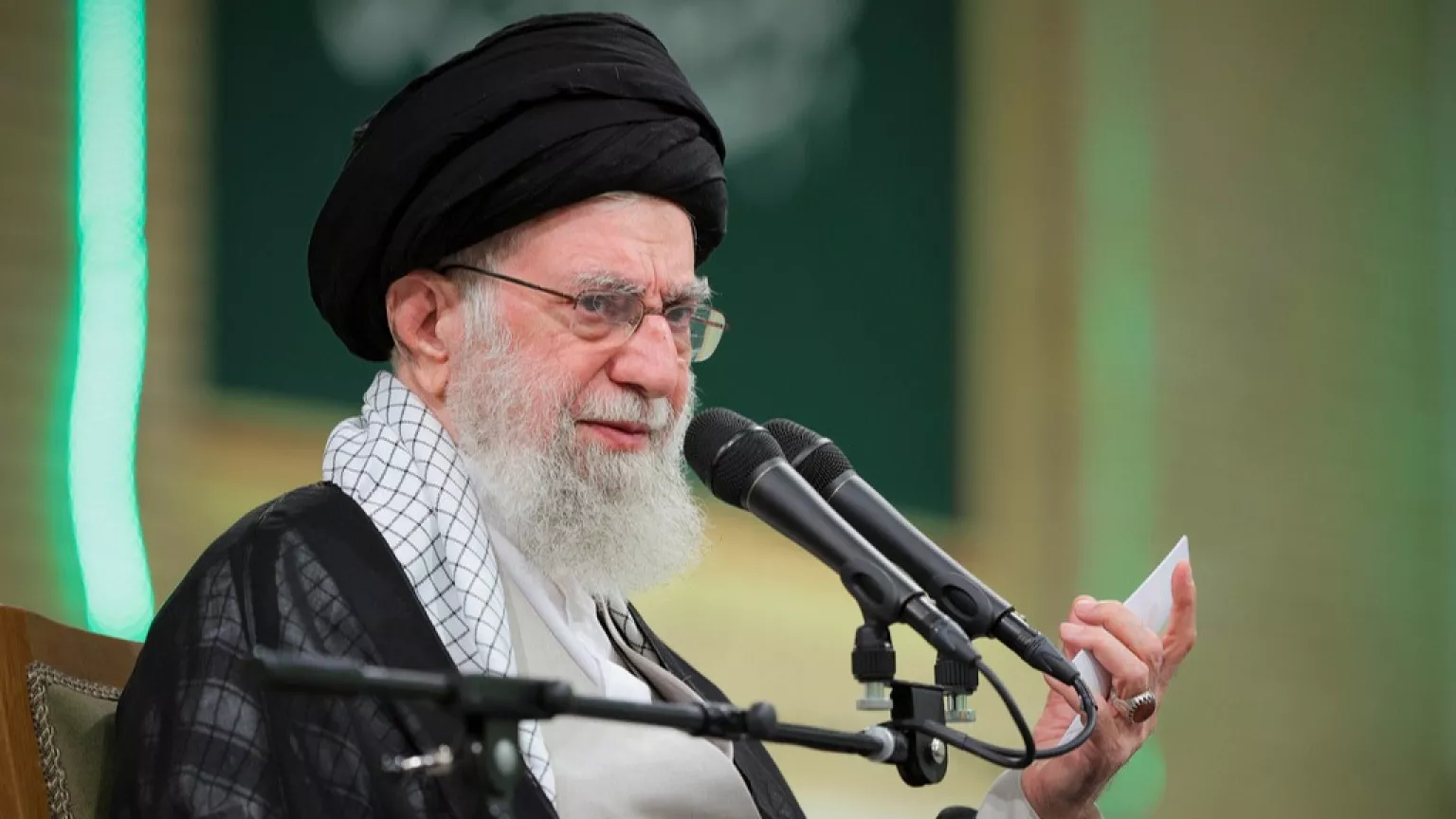
Iran’s supreme leader Ayatollah Ali Khamenei proclaimed a significant triumph over the United States and Israel in his first public remarks since a ceasefire was initiated following a tumultuous 12-day conflict. Khamenei’s statement, delivered via a video briefing, marks a provocative moment in the ongoing tensions between the nations, particularly after the US military targeted Iran’s nuclear facilities in a show of force.
“We have dealt a hard slap to America’s face,” Khamenei declared, underlining his belief in the Islamic Republic’s resilience and strategic might as the ceasefire continues to hold despite accusations of violations from both sides. The conflict escalated significantly, with direct missile strikes exchanged between Iranian and Israeli capitals, signalling a dangerous new chapter in their long-standing hostilities.
Khamenei took the opportunity to congratulate the Iranian populace for what he termed their victory over both the “fake Zionist regime” and the American leadership. He asserted that the American military engagement was a desperate reaction to the perceived threat against Israel, which he claimed was “nearly brought to its knees and crushed” by Iranian forces.
“The American regime entered direct war because it felt that if it didn’t enter, the Zionist regime would be completely destroyed. However, it achieved nothing,” Khamenei added. The Iranian leader praised the unity among the over 90 million citizens of Iran, claiming that their solidarity in supporting the armed forces exemplified the nation’s formidable spirit. “A nation… stood united, with one voice,” he stated, amplifying the narrative of a strong national identity in the face of external aggression.
The ceasefire agreement follows a tit-for-tat exchange marked by US airstrikes on Iran’s key nuclear sites, drawing criticism over the limited effectiveness of the attacks. Initial assessments from Pentagon intelligence suggested that the damage inflicted on facilities in Fordow and Natanz was less severe than anticipated, with much of Iran’s enriched uranium stockpile reportedly moved before the strikes took place.
Khamenei’s denunciation of the US came alongside claims that the timing of Israel’s aggressive actions coincided with discreet negotiations between the two nations, spurring suspicions of American involvement in the attacks. “This incident happened when our officials were busy with indirect negotiations… and there was no sign of any harsh military movement from Iran’s side,” he remarked, suggesting a pattern of manipulation aimed at destabilising the region.
Furthermore, Khamenei stated that “the Iranian nation cannot be surrendered”, reinforcing a well-established theme of resistance against foreign aggression. He expressed confidence that Israel would face consequences for its actions, framing the conflict as a fight for national dignity.
In a significant development, Iran’s Guardian Council also passed legislation requiring the cessation of all co-operation with the International Atomic Energy Agency (IAEA), which further underscores the rising tensions. The new law prohibits inspectors from entering Iran and mandates a continuation of uranium enrichment without international oversight, following a unanimous vote in parliament.


