


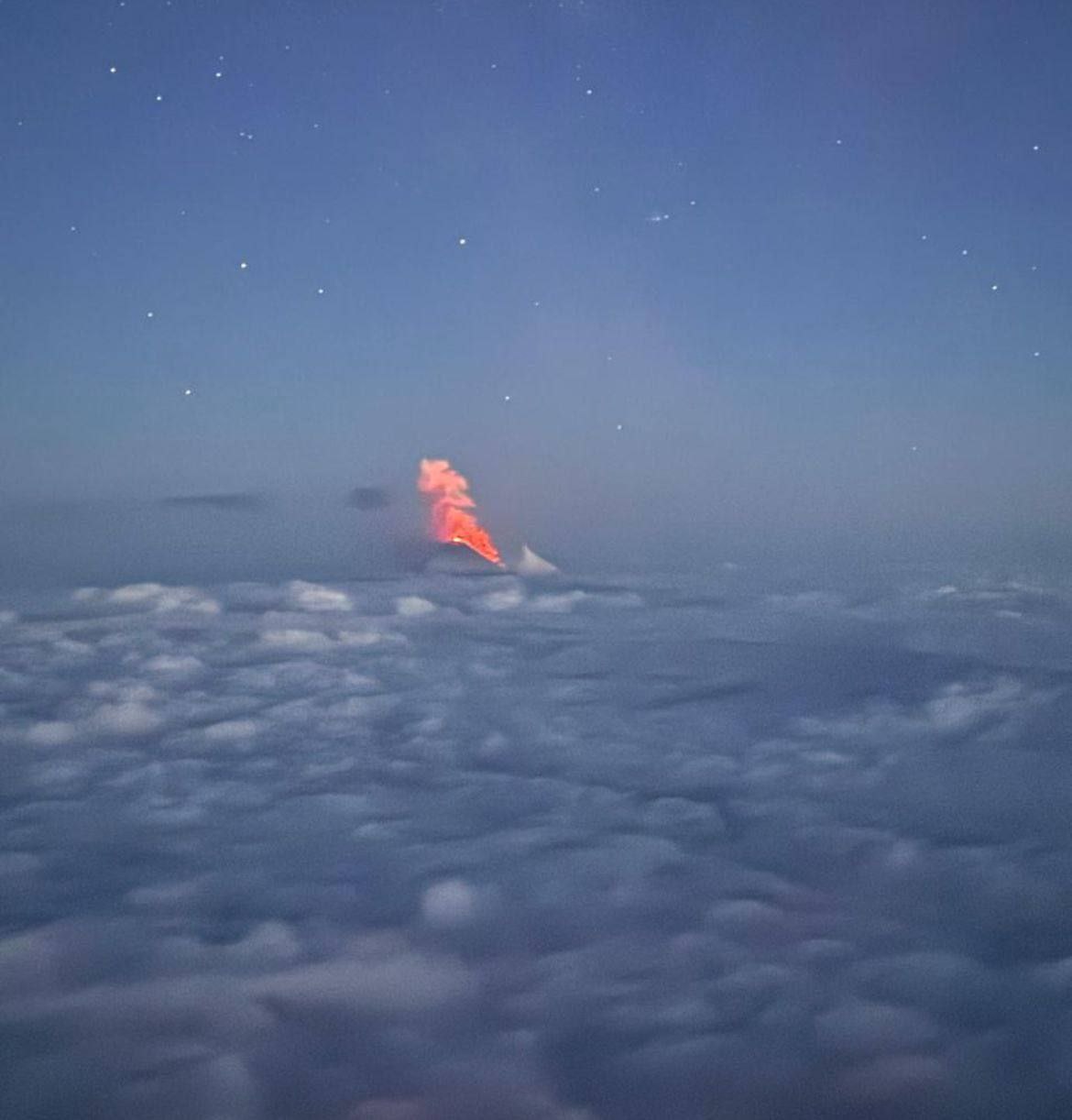
The Klyuchevskoy volcano, standing as the highest active volcano in Eurasia, has erupted on Russia’s Kamchatka peninsula, as reported by the Russian state news agency RIA. This dramatic geological event comes closely on the heels of a powerful 8.8 magnitude earthquake that struck the Pacific on Wednesday morning, sending shockwaves through the region and stirring up fears of a tsunami.
According to reports from Reuters, the earthquake, which took place in the early hours, generated tsunami waves reaching up to 4 metres (approximately 13 feet), causing significant damage along Russia’s east coast. Buildings were reported as damaged, and the authorities issued evacuation warnings across various coastal areas, extending as far as Japan’s eastern coastline.
In an unfortunate turn of events, a 58-year-old woman lost her life in central Japan’s Mie prefecture when her vehicle fell off a cliff during the evacuation. However, Chief Cabinet Secretary Yoshimasa Hayashi stated that there were no injuries or significant damage reported in other areas, including near any nuclear plants, reassuring the public of their safety as they navigated the storm of disruption.
The chaos extended beyond Japan, impacting nations across Central and South America. Authorities in Colombia, Chile, Ecuador, and Panama swiftly mobilised to prepare for the potential fallout from the earthquake and the resultant tsunami warnings. The National Unit for Disaster Risk Management in Colombia recommended precautionary evacuations along the Pacific coastline, highlighting the imminent risk of strong currents and waves.
Meanwhile, in Chile, classes were suspended in coastal schools as officials issued alerts and monitored developments closely. The director of the National Disaster Prevention and Response Service, Alicia Cebrián, assured that precautionary evacuations would proceed as necessary, especially for areas like Easter Island, potentially first to face the tsunami’s impact.
As the tsunami warnings cascade through the Americas, Ecuadorian officials have announced that waves exceeding 1.4 metres could imminently strike the Galápagos Islands, calling for urgent attention from residents and tourists alike. The broader Pacific region was urged to stay alert, as multiple nations adjusted their emergency measures in response to this seismic event.
In contrast, some regions have now begun retracting their tsunami alerts. In Russia, local authorities reported that warnings for Sakhalin and Kamchatka have been lifted, with state agency Tass declaring the alert for Severo-Kurilsk cancelled. As of the latest updates, the Kremlin has underscored the efficacy of their alert systems, asserting that no casualties were recorded. In addition, the International Atomic Energy Agency indicated that nuclear plants along the Pacific Coast exhibited no safety concerns following the earthquake.