


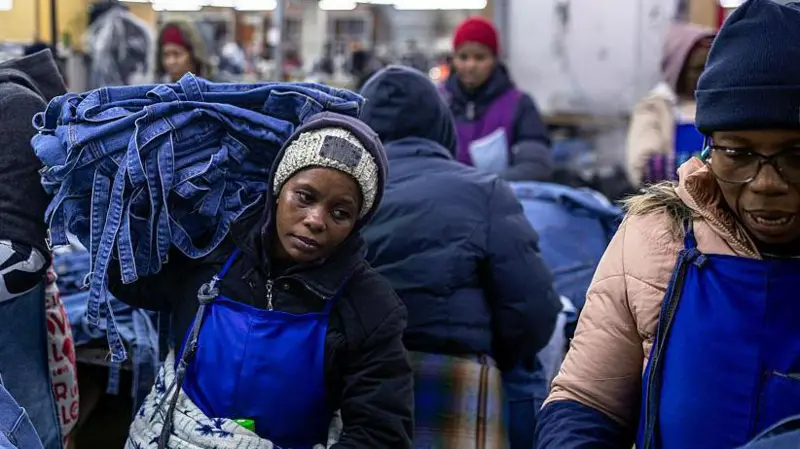
The mountain kingdom of Lesotho is grappling with an unprecedented crisis as it declares a national “state of disaster” due to soaring unemployment and mass job losses. The economically textile-dependent nation is reeling from the economic fallout of US tariffs and cuts to foreign aid, measures implemented by the previous US administration under President Donald Trump that have devastated local livelihoods.
The declaration, announced through an official government notice on 7 July, grants the Lesotho government additional powers to address the dire situation over the next two years, allowing it to bypass standard procedures in an effort to expedite relief measures. With youth unemployment soaring to a startling 38%, Prime Minister Sam Matekane has highlighted the urgent need for assistance, blaming the crisis on shifting global trade dynamics and the repercussions of US policy changes.
In recent months, reports have indicated that the country could face the loss of up to 40,000 jobs if the African Growth and Opportunity Act (AGOA)—which allows duty-free access for textiles exported to the United States—is not renewed by the end of September. As Lesotho relies heavily on its textile industry, primarily for exports to the US, the potential expiration of AGOA has raised alarm bells, compounding an already precarious economic situation.
Factory workers, such as those performing quality checks on denim products in Maseru, have become emblematic of this crisis, caught in a dire economic landscape exacerbated by Trump’s 50% tariffs specifically targeting Lesotho. The imposition of these tariffs—labelled as “Liberation Day” tariffs—singled out Lesotho with the highest rate of any nation, further crippling an economy already struggling to stay afloat.
The economic indicators paint a bleak picture: the country’s gross domestic product hovers just above $2 billion, a figure that underscores its reliance on a fragile exporting sector. By mandating ministries to allocate 2% of their budgets for job creation efforts, the government is scrambling to provide support for the nation’s youth, who have proven particularly vulnerable to the missions of international trade wars.
The plight of Lesotho’s economy has also sparked international interest, notably highlighted by the arrest of a local activist charged with sedition for critiquing governmental inaction through social media. This incident has drawn widespread condemnation from rights groups, igniting discussions around freedom of expression amid an urgent economic crisis.
As the deadline for AGOA renewal approaches, Lesotho faces the daunting task of not only keeping its garment factories operational but also safeguarding the livelihoods of thousands of workers dependent on this critical lifeline. The stark reality is clear: without renewed support from the US, the southern African kingdom may find itself in a deeper quagmire, posing serious implications for the future of its economy and its young workforce.