


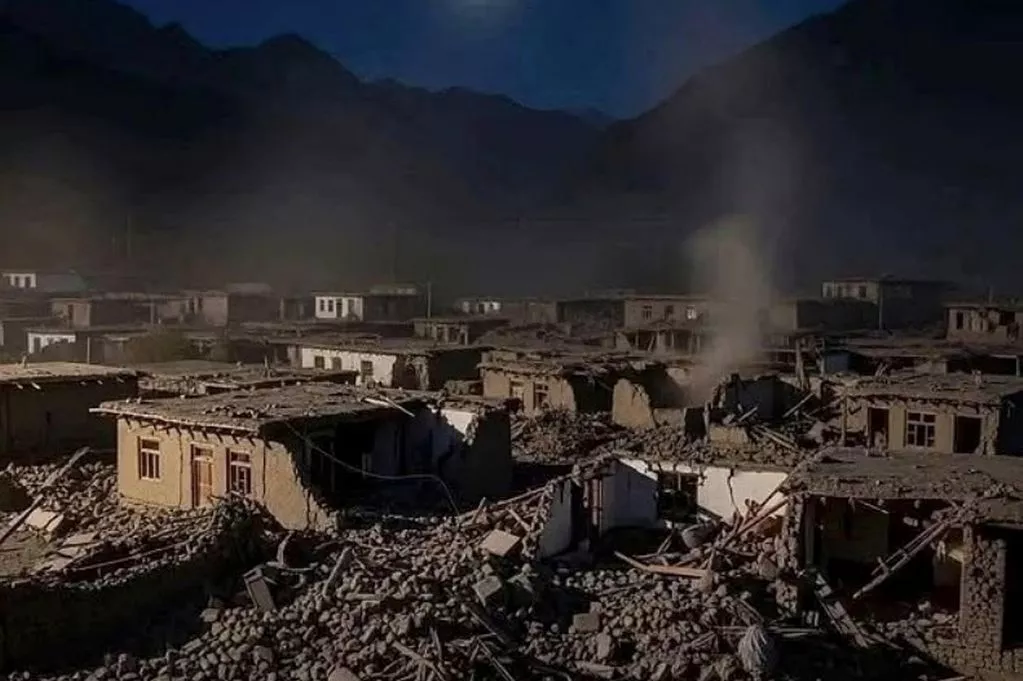
A powerful magnitude 6.0 earthquake struck eastern Afghanistan on Sunday night, with initial reports confirming at least 20 fatalities and over 100 individuals injured. The quake occurred at a shallow depth of just 8 km (5 miles), making its impact particularly severe in the already vulnerable region.The epicentre of the earthquake was located just 27 km (17 miles) from Jalalabad, the capital of Nangarhar province, affecting both Kunar and Nangarhar provinces bordering Pakistan. Tremors were felt as far away as Kabul and Pakistan’s capital Islamabad, instilling fear across a wide area.
Helicopters have begun operating to transport the injured from the quake-hit Mazar valley in Kunar province. The Taliban government reported that several villages have been entirely destroyed, with officials warning the death toll could rise significantly given the remote and rugged terrain. Many areas remain inaccessible due to landslides and aftershocks, hampering rescue efforts.Witnesses from Kunar and Nangarhar described experiencing multiple aftershocks.
Local resident Polad Noori recounted feeling 13 aftershocks through the night, prompting many to sleep outside their homes fearing further tremors. “I have never seen such a strong earthquake in my life,” he remarked, highlighting the unprecedented nature of this disaster for the community.Taliban officials are appealing for humanitarian assistance, urging international organisations to mobilise resources to aid in what could be a widespread relief effort. The police chief of Kunar province indicated that roads have been effectively rendered impassable, necessitating air travel for rescue operations.
“We need more helicopters to reach affected areas,” he stated. This earthquake comes just months after another devastating tremor struck the region in June 2022, claiming over 1,000 lives. Afghanistan’s geographic location on critical fault lines makes it prone to seismic activity, exacerbated by the lack of earthquake-resistant infrastructure.
Most residences are constructed from non-durable materials, rendering them particularly vulnerable to seismic events.Medical staff have arrived in the hardest-hit areas, attending to the critically injured, while local residents have rallied to donate blood and support relief efforts. The Taliban’s deputy governor confirmed that many volunteers have flocked to hospitals in Nangahar province, exemplifying the resilience and solidarity of the community in the face of tragedy.