





Public Works Minister Dean McPherson has come out strongly in defence of the Expropriation Act, a law challenged by his party the Democratic Alliance.
McPherson said it would be foolhardy for any country to think it could carry out a development agenda without laws allowing the state to expropriate land.
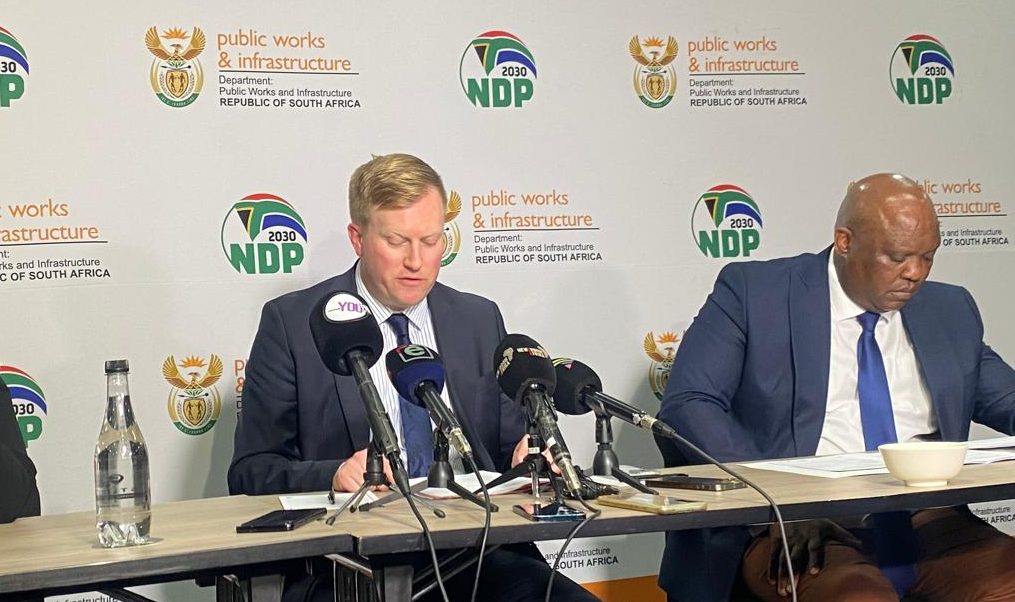
McPherson briefed the media on his department’s plan of turning South Africa into a construction site through a rollout of massive infrastructure projects and said such ambitions could be frustrated by greedy land owners.
“Any country that wants to grow its economy, wants to expand ports, wants to expand rail, wants to expand airports, wants to expand its transmission network, and in fact, the expansion of the national transmission network will be the single largest infrastructure project in this country of 350 billion rands to build 14,500 kilometers of power lines, must have an efficient and effective expropriation act. You cannot create servitudes across the country to build power lines without an expropriation act,” he said.
The minister said the country’s rich and powerful have held the country’s development at ransom by among others buying land earmarked for development so they can later sell it to government at highly inflated rates.
“And I get into a lot of trouble when I say that,but you simply can’t have a situation whereand this happens, where people collude with officials in departments or state-owned entities to find out where transmission lines are going to be built, where new railways are going to be built, and then start buying land in all of those places,and then demand tens of millions of rand for something that is worth a million rand. And the country must ask itself, does it want to just pay whatever price is put before it, where that takes money out of other important projects, or do we want the country to pay what is just and equitable?That is an important question that must be answered,” said McPherson.
The minister who is also the DA’s KwaZulu-Natal chairperson underplayed his party’s objection to the law which has already been escalated to a court challenge.
“There is a political party that has taken the matter to court, and that is for them to discuss and for them to comment on. I apply my mind and my approach to these things in my capacity as a minister, and any political party or any organisation that wants to go to court is free to do so.We live in a country where any decision is open to judicial review,” said the minister.


