


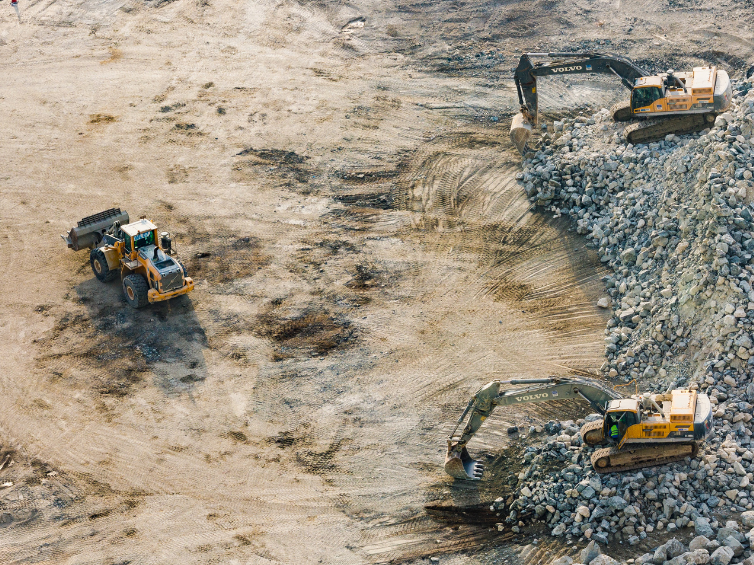
The outlook for South Africa’s mining sector appears increasingly bleak as recent data reveals a staggering plunge in production. According to Statistics South Africa (Stats SA), mining output in April fell by 7.7% compared to the same period last year, a decline that came on the heels of a 2.5% drop in March. This downward trajectory signals a concerning trend, marking the sixth consecutive month of contraction for this critical sector of the economy.
Jean-Pierre Terblanche, principal service statistician at Stats SA, noted that the decline was largely driven by a significant drop in the production of platinum group metals (PGMs), which saw a staggering 24.1% contraction from a revised 9.9% decline in March. “Nickel, copper, gold and coal also performed poorly in April,” he reported, highlighting the pervasive struggles across the industry.
While there were some positive gains in diamonds, iron ore, chromium ore, and manganese ore, these were not enough to lift the mining industry into positive territory. The continued declines in mining output, coupled with a sharp 6.3% decrease in manufacturing production, suggest a challenging start for South Africa’s gross domestic product (GDP) in the second quarter of the year.
Further analysis of the mining data revealed that the declines in gold production and coal output subtracted a combined -0.6 percentage points from the overall readings. Additional metrics showed a 6.1% decrease in building materials and a 5.2% fall in other non-metallic minerals, further contributing to the difficult landscape for producers.
Investec economist Lara Hodes commented on the elevated uncertainty surrounding global tariffs, highlighting them as a key downside risk to mining output. “On April 2, US President Donald Trump introduced a 10% base tariff on nearly all imports into the US, though reciprocal tariffs were temporarily suspended for 90 days to facilitate negotiations,” she explained. Interestingly, while most South African minerals sold to US consumers—such as PGMs, coal, gold, manganese, and chrome—were excluded from these tariffs, others like iron ore and diamonds faced a daunting 30% levy on imports.
This tariff situation has left South Africa’s mining sector anxious about its broader impacts on business and consumer sentiment, which could translate into decreased business investment and consumer spending, ultimately affecting global GDP growth. As the US stands as South Africa’s second-largest trading partner, any deterioration in trade relations could spell disaster for the country’s vital export sectors, including agriculture, automotive manufacturing, and mining.
Hodes cited a worsening landscape for global manufacturing, as evidenced by the steep fall in new export orders recorded by the JP Morgan Global Manufacturing PMI survey results in April. “Despite the surge in the gold price as a safe-haven investment amidst uncertainty, domestic production is grappling with myriad challenges,” she cautioned.
Issues such as elevated input costs, persistent labour challenges, illegal mining, and notable logistics bottlenecks threaten to stifle mining activity and export potential. On a seasonally adjusted monthly basis, mining output did experience a slight uptick of 0.6% in April, rebounding from a revised 3.6% increase in March. However, production contracted by 2.7% over the three months ended April compared to the previous quarter.
Everest Wealth CEO, Thys van Zyl, warned that the looming deadline of July 9 for the possible implementation of the 30% tariffs should serve as a wake-up call for government action. He noted, “The turbulent global economy and ongoing geopolitical uncertainties will persist, but these cannot be used as excuses for neglecting domestic growth initiatives.”
Van Zyl further emphasised that if the tariffs do come into force, they could have a cascading effect on export-dependent industries in South Africa—particularly those connected to automotive manufacturing, agricultural exports like citrus and wine, as well as the steel and mining sectors. “Higher tariffs threaten not only exports but also local investment and production,” he warned.
As South Africa navigates these challenging waters, Van Zyl stressed that the government must seize the opportunity presented by the suspension of tariffs to secure a new, mutually beneficial trade agreement. “It is crucial to maintain preferential access to the US market and avoid escalating tariffs that could undermine our economic interests and growth potential,” he concluded.