





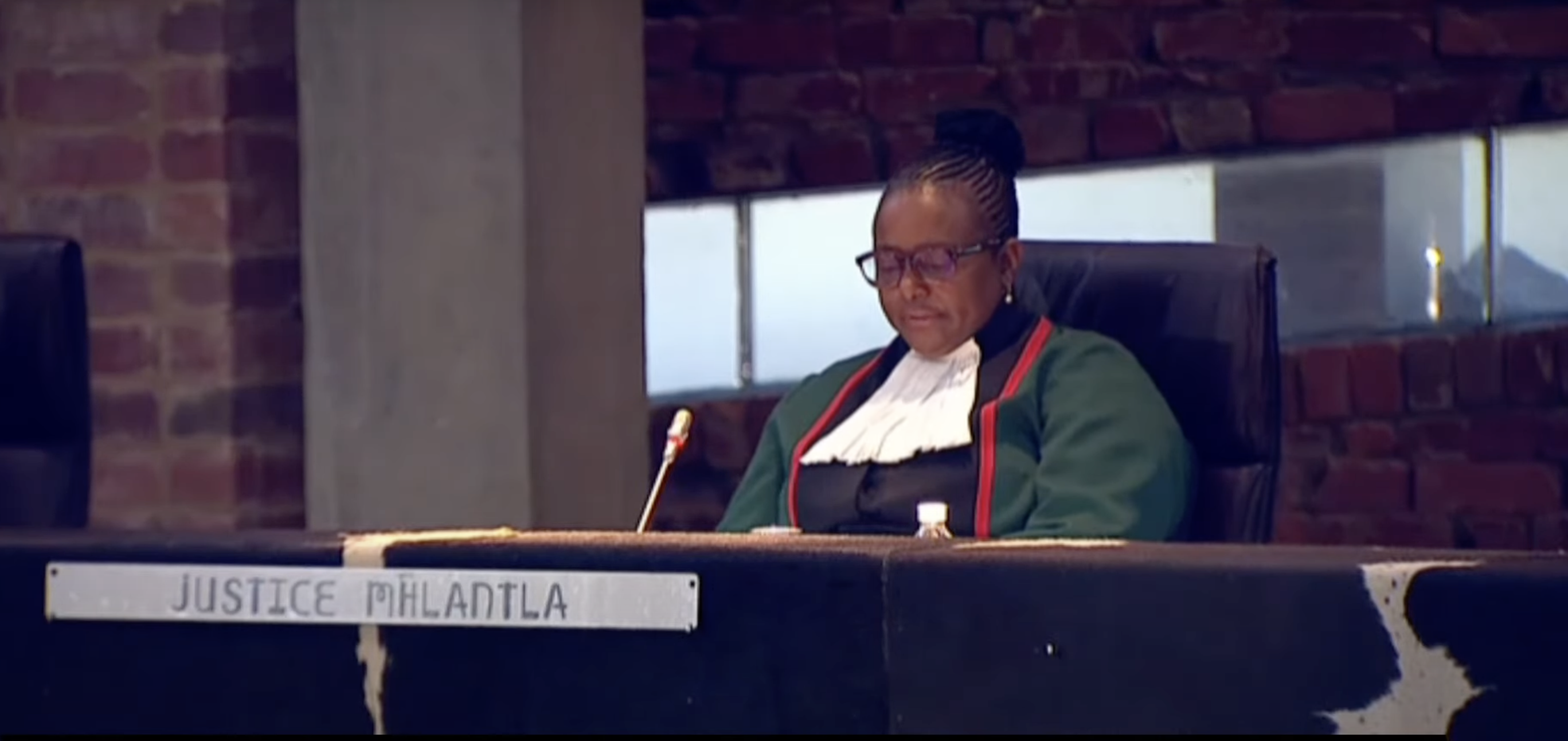
Electoral reform campaigners have expressed mixed feelings to the Constitutional Court’s ruling on two major cases where changes to the Electoral Amendment Act were sought.
In a ruling delivered by Justice Nonkosi Mhlantla, the Apex court rejected the Independent Candidates Association’s demand for independent candidates to be allowed to contest for up to 350 seats while only reserving 50 to be exclusively for political parties.
Currently independents can only contest for 200 seats while the other half is exclusively for political parties. Based on this arrangement, independents can never be a majority in the parliament or any of the legislatures and the pressure group wanted the court to change that.
Mhlantla said amending the seat allocation could have unintended consequences such as the IEC “having to create additional seats whenever the numbers don’t add up after an election,” she said.
The judgment effectively thwarted the hopes of aspiring independent candidates of competing on an equal footing with political parties as individuals would need much more support than organized formations.
“It is very disappointing that independent candidates still require 70 to 90 thousand to get a seat in the National Assembly which is somewhat higher than for a political party, so this is a major obstacle for the National Assembly,” said elections expert and electoral reform expert Michael Atkins who flew from Durban to hear the judgment.
“ For example in Gauteng based on 2019 results, would need to get over 90 thousand votes to guarantee obtaining a seat. However political parties in effect would still, on the same numbers need thus far I am only aware of Mr Zackie Achmat who has declared his intention and in the Western Cape he would be requiring around 88 thousand to guarantee obtaining a seat in the National Assembly, ”said Atkins trying to paint a picture of how tough it may be for independent candidates.
about 45 thousand votes to obtain the same seat in the same National Assembly.
The question of the seat allocation for independent candidates for the national assembly, is very disappointing that independent candidates still require 70 to 90 thousand to get a seat in the National Assembly which is somewhat higher than for political parties, so this is a major obstacle for the National Assembly.
It is a major victory for achieving the rights of independent candidates to contest elections, so I think that goes a long way to making the participation of independents more realistic and much clearer in this situation.
For example in Gauteng based on 2019 results, would need to get over 90 thousand votes to guarantee obtaining a seat. However political parties in effect would still, on the same numbers, need about 45 thousand votes to obtain the same seat in the same National Assembly.
We understand the legal arguments and the constitutional experts would dissect all the particular arguments however its going to be necessary to ask some of the people who intending to contest the national assembly elections how they feel about this, thus far I am only aware of Mr Zackie Achmat who has declared his intention and in the Western Cape he would be requiring around 88 thousand to guarantee obtaining a seat in the National Assembly.
Mudzuri:
The court actually made a determination on how many signatures for the 2024 elections so not only are we leaving here victorious but we also leaving here with legal certainty which is great in terms of the IEC being able to prepare for the 2024 elections.
When it comes to the ICA loss, tough loss, the judge was very very tough but I think overall it just actually says to parliament that anything you do with regards to electoral reform will be watched closely and will be challenged if needs be.
Because the thousand signatures has been applied for political parties for a while now and we haven’t seen this like massive representation of political parties. Many political parties register to be eligible but not everyone follows through in terms of actually contesting because the reality is the signature is just the beginning the amount of money, time and support along with other challenges so we should not be afraid of who enters in fact we should embrace it and we shouldn’t always make people fear the possibility of new entrants.
Individuality is good and if they decide to associate with each other they have a right to do that and that’s what a lot of these judgements are about but I think the point of an independent candidate is not just about being independent, its about people from different communities who’ve been locked out of the political system having an opportunity to stand as independents and represent the communities that they come from in parliament and to come from parliament to come back into these communities with solutions and answers.
The downside of this judgment is that it didn’t really consider the consequences of this. Regardless of anything that’s happened today independent candidates have to go out today and get double the amount of votes that political parties have to get for those regional seats.


