


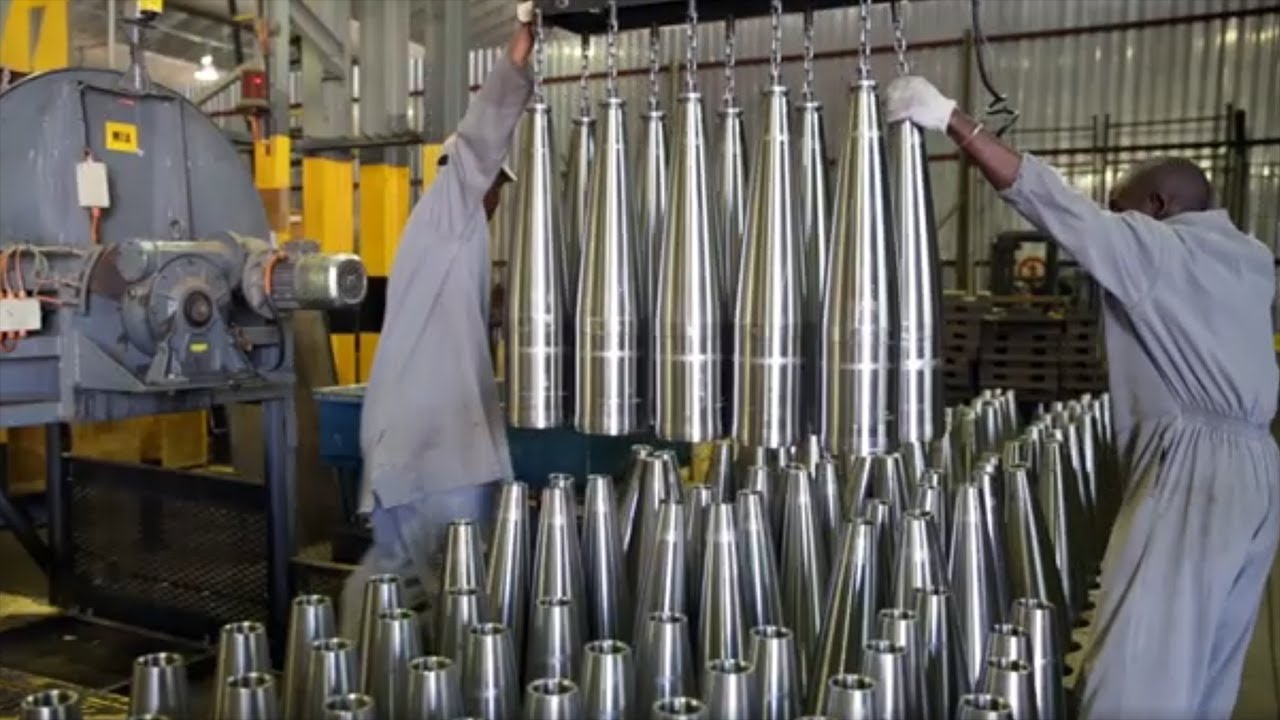
The war in Ukraine continues the role of a South African based ammunition manufacturer has increasingly been called into question as interest groups accuse the company of sending locally manufactured ammunition to Ukraine under a guise.
South Africa prides itself with being non-aligned and as a matter of principle does not supply arms to countries engaged in conflict.
The government is a shareholder in Rheinmetall Denel Munition who’s majority shareholders are based in Germany and should the allegations be proven to be true, will not just embarrass South Africa in diplomatic circles but could also lead to the dissolution of the entity.
Rheinmetall, the German based multinational arms conglomerate, in which the USA investment company BlackRock has a majority shareholding, is the majority controlling shareholder in Rheinmetall Denel Munitions (RDM) which has a subsidiary in South Africa.
Rheinmetall recently stated that the German army’s depots are empty because of the huge supplies going to Israel and Ukraine, with its South Africa branch being a major supplier of 155mm ammunition, that helps Rheinmetall to service a massive €8.5 billion contract with the German government.
The Pressure group Open Secrets investigated the company following complaints and found possible violations of South Africa’s arms control laws as well as regulations by among others shipping out munitions purportedly to Germany, Poland and other European countries only to divert them to Ukraine, a claim the company denies insisting it only supplied arms to countries listed on its website which do not include Ukraine.
Conflict monitoring groups became suspicious when the company started producing and shipping out much more than what its client countries, all not involved in conflict usually required leading to calls for more intense probing.
The Economic Freedom Fighters has since taken the matter to parliament where it is calling for closer scrutiny of Rheinmetall’s shipments.
“The Economic Freedom Fighters (EFF) is deeply concerned that despite South Africa’s prohibition of weapons sales to Israel, there are indications of very serious breaches of this embargo,” the EFF Spokesperson Sinawo Thambo said in a statement.
The red berets believe Rheinmetall could be exploiting loopholes in South Africa’s purposefully flexible regulations which, to an extent, relies on honesty by the company and the countries it supplies.
“While the law compels the NCACC to give permission for South Africa manufactured weapons to be sold on to another state, and the end user must provide an End User Certificate (EUC), stating where the weapons will ultimately end up, this system is seriously flawed.
The system is largely based on trust in an international arms environment that is fraught with illegal arms resales, hidden sales and fraudulent reporting, and there is no monitoring or regulation, and totally inadequate follow-ups and accountability.” said the EFF.
A group of activists defied Pretoria rainy weather on Sunday to stage a picket in front of the Union Buildings to call for more oversight over sales of arms to Israel and Ukraine.
Convener of the protests Thuto Mashaba said the rally was a continuation of the picket held last month inBoksburg against the supply of ammunition by Rheinmetall to Ukraine and Israel.
He said the activists noted that German arms manufacturer Rheinmetall continues to produce artillery shells in addition to public confession of supplying its products to Ukraine.
“We demanded that the President and the Government at the very least check the activities of the Rheinmetallplant for compliance with South Africa’s official policy of not intervening in international conflicts or supplying arms to third countries. At the most – to stop the activities of the ammunition factory,” said Mashaba.
Kholofelo Mokgama who led the picket outside Rheinmetall recently said for many years, South Africa’s Rheinmetall factory produced artillery shells. But things began to heat up in mid-2024, when reports emerged that these shells were going where they shouldn’t.
Meanwhile, interest groups vowed to continue holding protests outside the Rheinmetall’s plant in Boksburg.