


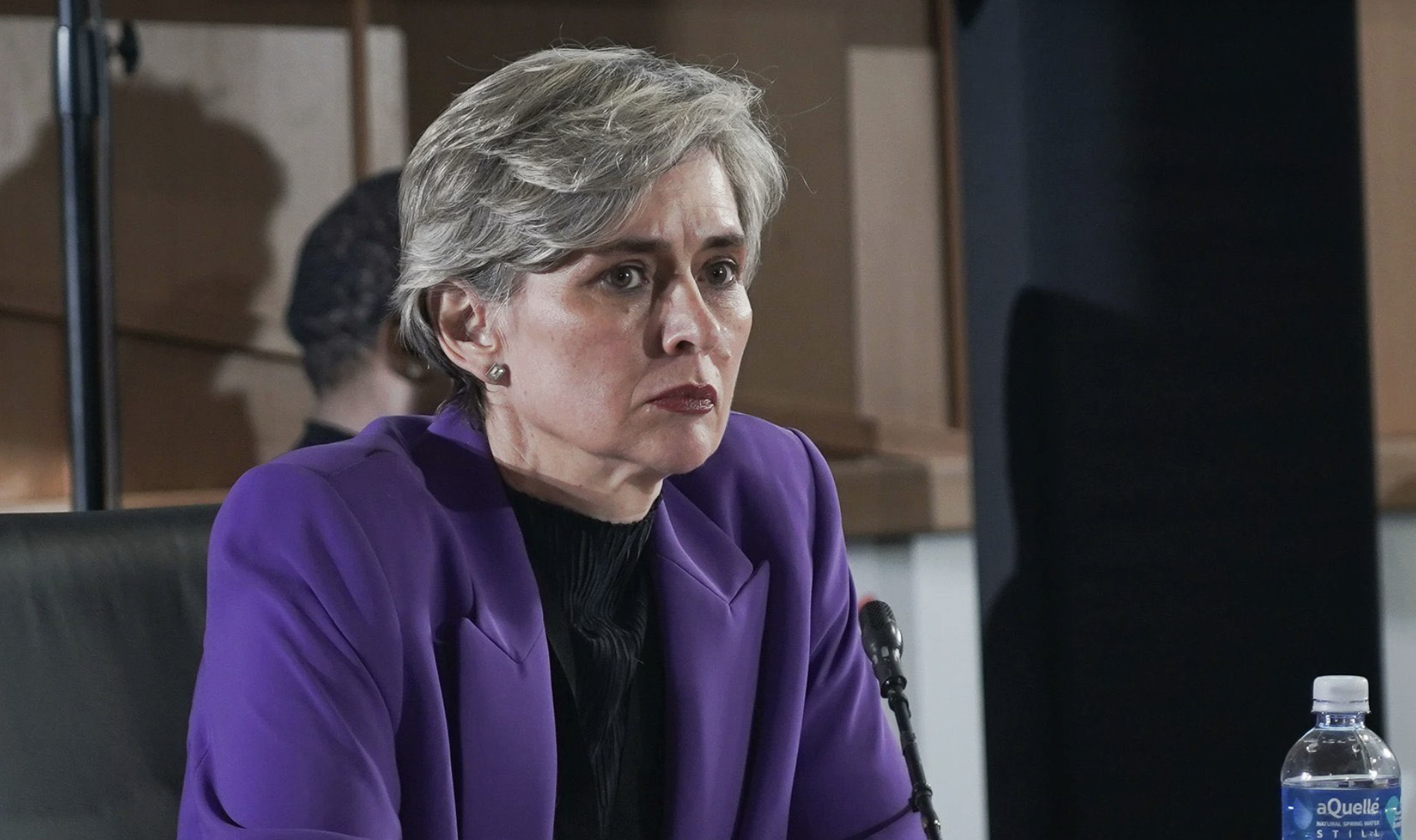
In a shocking testimony before the Madlanga Commission, SAPS expert Major-General Patronella Van Rooyen has accused Parliament of neglecting its constitutional duty by failing to investigate allegations of political interference involving KwaZulu-Natal Police Commissioner, Lieutenant-General Nhlanhla Mkhwanazi. This revelation comes in the wake of Mkhwanazi’s striking media briefing in July, during which he alleged that Police Minister Senzo Mchunu was involved in serious misconduct concerning police investigations.
During her testimony, Van Rooyen stated, “The fact that the Portfolio Committee didn’t act on that is, in my mind, a failure of their mandate.” She highlighted that even a mere initiation of an investigation or a request for explanations from police management would have showcased effective oversight on Parliament’s part. Instead, the failure to act left significant concerns unaddressed, undermining the integrity of the oversight mechanism itself.
On July 6, Mkhwanazi made headlines across the country, flanked by heavily armed tactical officers and dressed in a Special Task Force uniform, where he publicly accused Minister Mchunu of interfering in critical police investigations. He specifically alleged that Mchunu had ordered the disbandment of the Political Killings Task Team (PKTT), a move Mkhwanazi claims resulted in the protection of criminal networks straddling both police and political spheres.
In her testimony, Van Rooyen asserted that Mchunu acted beyond the bounds of his authority by disbanding the PKTT, emphasising that such a decision ought to lie exclusively with the national police commissioner as per Section 207 of the Constitution.
“To manage and control the police service, that must be linked to managing and controlling the police service in the execution of its constitutional mandate,” she stated, reiterating that Mchunu’s decision fell outside the scope of his ministerial powers. “The minister is not a technocrat. A minister is empowered to select which areas merit special attention but cannot prescribe or direct at an operational level how policy is implemented,” Van Rooyen elaborated.
Furthermore, she pointed out that there was no documentation indicating that Mkhwanazi or the senior police management received any formal notification concerning the task team’s disbandment, raising fears of political motivation behind the minister’s actions.
As the Madlanga Commission continues its inquiries, the implications of these revelations resonate deeply within the fabric of South African governance and democracy. This unfolding drama not only calls into question the accountability and oversight of the police under political influence but also highlights the urgent need for Parliament to rectify its approach to oversight in the wake of such serious allegations.