

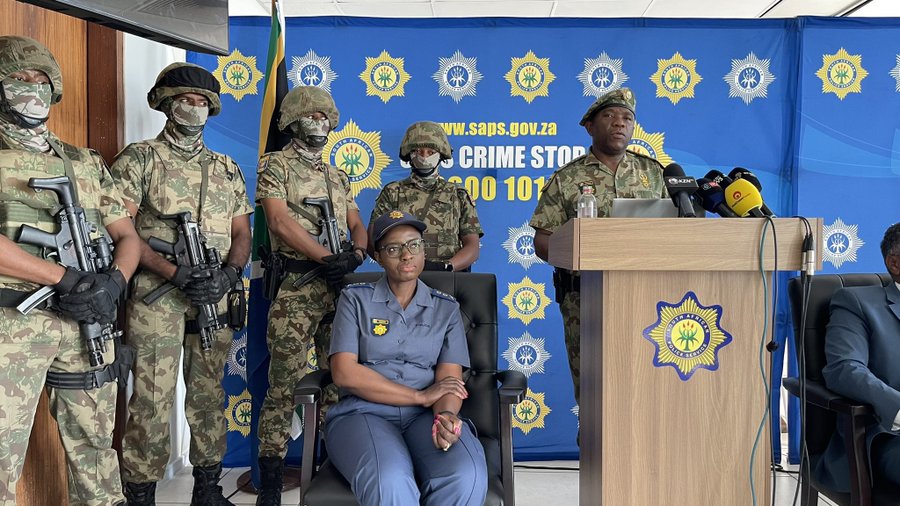
The disbandment of the political killings task team in South Africa has raised alarm bells, with serious allegations surfacing against high-ranking officials, including Police Minister Senzo Mchunu and KwaZulu-Natal Police Commissioner Nhlanhla Mkhwanazi. The task team, which has been pivotal in investigating politically motivated crimes in KwaZulu-Natal, was disbanded without the knowledge of the National Police Commissioner, Fannie Masemola, prompting claims of political manipulation and corruption within the police ranks.
Mkhwanazi made scathing allegations against his peers in a recent statement, suggesting that some police officials, alongside politicians in Gauteng, were entrenched in serious crime cartels. He cited the task team’s accomplishments, specifically its work in uncovering a criminal syndicate with ties to the criminal justice system, as a reason for the disbandment order issued by Mchunu.
“The team has been investigating a total of 612 dockets, including murder, attempted murder, and conspiracy to commit murder,” Mkhwanazi disclosed. However, he lamented that after the instruction to dissolve the task force was enforced, 121 critical case dockets were removed from their oversight, allegedly at the direction of Deputy National Commissioner for Crime Detection, Lt General Shadrack Sibiya, on Mchunu’s orders.
These case dockets have reportedly remained untouched at the head office, raising concerns about the future of investigations into these vital cases, which Mkhwanazi argues are interconnected with ongoing crime syndicates.
In a sharp rebuttal, Mchunu dismissed Mkhwanazi’s allegations, labelling them as “wild claims” lacking evidence. “I will not allow my integrity or that of the Ministry, or the South African Police Service (SAPS), to be undermined,” he stated, announcing a review of Mkhwanazi’s statements and the potential for disciplinary action.
The tension escalated when Mkhwanazi questioned Mchunu’s decision-making process, particularly the lack of communication to senior officials about the task team’s closure. The task team, established in 2018, has faced significant disruption despite its success in uncovering a complex network of criminal activity, inclusive of politicians and law enforcement officers.
Sibiya reacted to Mkhwanazi’s accusations, urging him to cease making threats and instead embody the disciplined conduct expected of a police member. He described Mkhwanazi’s anger as stemming from the recent arrest of the crime intelligence chief, Lt-Gen Dumisani Khumalo, which has further complicated police dynamics amid growing frustrations over leadership decisions.
As public sentiment sways, all eyes now turn to the President Cyril Ramaphosa, who is currently attending the BRICS Leaders’ Summit in Brazil and his approach to this troubling national security crisis.
“This matter receives the highest priority attention, as safeguarding the integrity of the country’s security services remains paramount,” the President’s office remarked, reinforcing the urgency for transparency and discipline amidst the storm of accusations.
Political parties, including the Economic Freedom Fighters (EFF) and the MKP, have rallied behind Mkhwanazi, lauding his courage for naming those they believe are complicit in crimes against the South African people. They have also called upon Ramaphosa to remove Mchunu from his post without delay, adding further pressure on the already strained political landscape.