


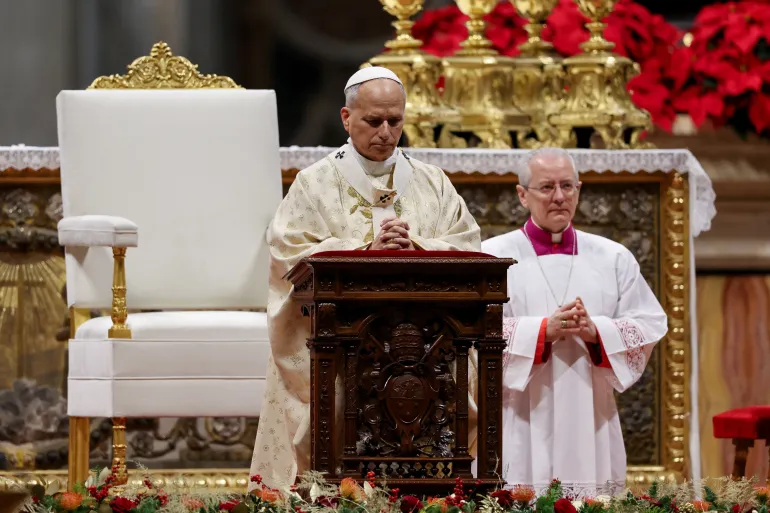
In his inaugural Christmas sermon as pontiff, Pope Leo XIV, the first American to lead the Catholic Church, made an unusually direct appeal highlighting the dire conditions faced by Palestinians in Gaza, drawing a poignant parallel to the Nativity story during a traditionally spiritual service.
Celebrating Mass before thousands in St. Peter’s Basilica, Leo reflected on Jesus’ birth in a humble stable, stating that God had “pitched his fragile tent” among humanity. “How, then, can we not think of the tents in Gaza, exposed for weeks to rain, wind and cold?” he asked, evoking the makeshift shelters housing displaced families in the war-ravaged territory.
The pope, elected in May following the death of Pope Francis, is known for a more diplomatic tone than his predecessor. Yet he has repeatedly addressed the Gaza crisis in recent months, insisting last month that a lasting resolution to the Israeli-Palestinian conflict must include the establishment of a Palestinian state.
Israel and Hamas reached a ceasefire in October after two years of intense conflict, but humanitarian organizations report persistent challenges, including insufficient aid reaching Gaza’s devastated population, where nearly everyone has been displaced.
In his homily, Leo also lamented broader global suffering: “Fragile is the flesh of defenseless populations, tried by so many wars, ongoing or concluded, leaving behind rubble and open wounds.” He decried the plight of young people forced into combat, criticizing leaders who send them to fight amid “pompous speeches.”
During his subsequent “Urbi et Orbi” message, delivered from the Vatican balcony, Leo called for an end to conflicts worldwide, naming wars in Ukraine, Sudan, Mali, Myanmar, Thailand, and Cambodia, among others.
Meanwhile, in Bethlehem – the biblical birthplace of Jesus in the occupied West Bank – Christmas festivities resumed in full for the first time in over two years, emerging from the shadow of the Gaza war. Parades, music, and a glittering Christmas tree filled Manger Square, drawing hundreds of worshippers to the Church of the Nativity.
Latin Patriarch Pierbattista Pizzaballa, who visited Gaza recently, spoke of enduring suffering there despite the ceasefire but noted residents’ resilience and desire to rebuild. “The wounds are deep, yet… their proclamation of Christmas resounds,” he said during his homily.
Bethlehem’s return to vibrant celebrations offered hope to a community hard-hit economically by years of subdued holidays, breathing new life into the city as Christians worldwide marked the birth of Jesus.