


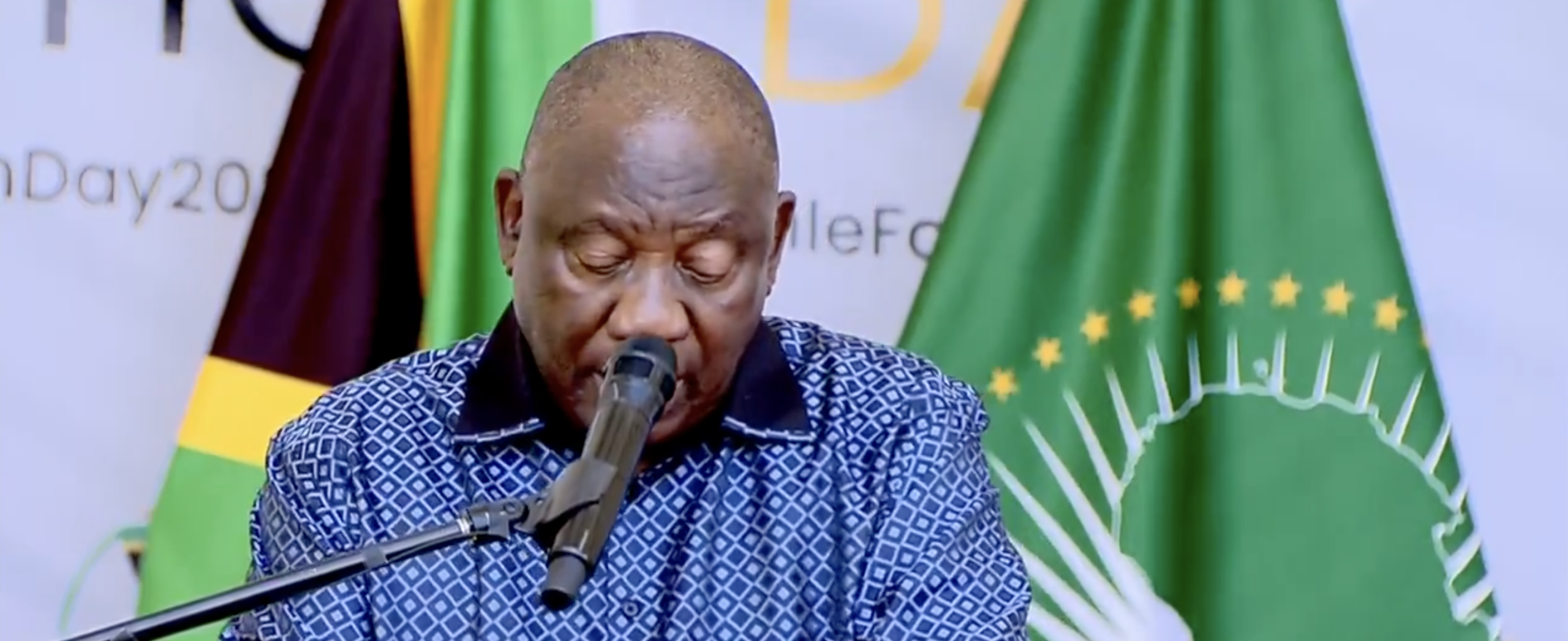
President Cyril Ramaphosa has described Reconciliation Day as a vital moment for South Africans to confront their painful past with honesty, acknowledge the complexities of the country’s shared history and renew their commitment to building a peaceful and united future.
The president was delivering the keynote address at the Reconciliation Day commemoration held at the Ncome Museum in Nquthu, KwaZulu-Natal. The museum honours the Battle of Ncome of 16 December 1838, during which thousands of Zulu warriors lost their lives defending their land.
Ramaphosa said returning to eNcome was not about reopening old wounds, but about reaffirming a promise to future generations that South Africa would never again be divided by hatred, injustice or exclusion.
“We reconciled in 1994, we are still reconciling in 2025, and we will continue to reconcile our differences because we are one nation — we are all South African citizens,” he said, adding that while the country had overcome significant challenges, much work still lay ahead.
The president stressed that South Africa’s democracy was built on reconciliation, noting that citizens continue to bear the scars of centuries of dispossession, oppression and violent repression. He recalled a number of tragic historical events, including the Battle of Ncome, the Bambatha Rebellion, the Bulhoek Massacre, the 1946 Mineworkers’ Strike, Sharpeville, Langa, Cato Manor, Western Deep Levels, the Trojan Horse Massacre, Sebokeng and Boipatong.
“These events and places are etched into our collective memory. They symbolise the brutality unleashed on black South Africans and the deliberate attempts by former oppressors to turn our people against one another,” Ramaphosa said.
Despite this dark history, he noted that South Africans chose reconciliation over vengeance at the dawn of democracy, guided by the values espoused by former president Nelson Mandela. Ramaphosa said reconciliation was chosen not to forget the past, but to create a society where the children of the formerly oppressed and oppressors could live together without fear.
The president cautioned against individuals and groups who deliberately misrepresent the state of race relations and democracy in South Africa. He said surveys show that the majority of South Africans remain hopeful about the country’s democracy and believe race relations have improved since 1994.
He also pointed to examples of social progress, including children of different races learning and playing together, as well as successful land restitution projects and thriving black farmers.
Acknowledging South Africa’s diversity of views, Ramaphosa urged citizens not to suppress their differences, but to engage constructively through dialogue. He highlighted the ongoing National Dialogue initiative, calling for the inclusion of all individuals, groups and communities.
“No person, no group and no community must be excluded,” he said, adding that dialogue was essential to forging a shared vision for the country’s future.
Ramaphosa expressed optimism that inclusive engagement would enable South Africans to confront pressing challenges such as poverty, inequality, crime, corruption, and gender-based violence and femicide.

