


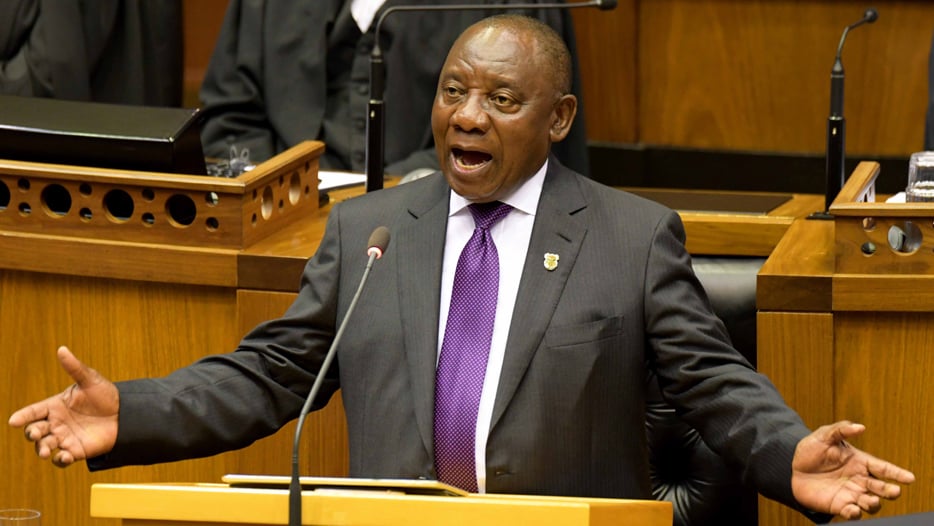
President Cyril Ramaphosa has reaffirmed that South Africa’s Broad-Based Black Economic Empowerment (BBBEE) policies are not merely a temporary measure, but a crucial component of the nation’s efforts toward economic transformation and inclusion. Speaking at the recent Black Business Council summit, alongside Minister of International Relations, Ronald Lamola, Ramaphosa addressed mounting criticisms from opposition parties, most notably the Democratic Alliance (DA), regarding the efficacy of these affirmative action policies.
In his latest newsletter, Ramaphosa emphasised that South Africa’s economic prosperity hinges on its commitment to BBBEE. “Now is not the time to backtrack on these policies; they are the cornerstone of economic inclusion and essential for the necessary economic growth that is enshrined in our constitution and the Freedom Charter,” he stated, reinforcing the view that such measures respond to historical injustices and embody a constitutional imperative.
Amid what has been termed a ‘poly-crisis’, characterised by global conflict, economic stagnation, and environmental degradation, the message from the presidency was clear: the current legislative framework must remain intact. “To the contrary, it is the time to move forward with greater purpose and raise our ambition,” Ramaphosa urged, citing the legislative groundwork laid since 1994 as instrumental in driving economic transformation.
Minister Lamola echoed this sentiment, calling on black entrepreneurs to seize opportunities within the country’s economic landscape. “Inclusive growth must mean the inclusion of black entrepreneurs in the mainstream of our economy,” he said, emphasising the essential role of small businesses and collaborative efforts in the country’s recovery.
Despite the DA’s assertions that BBBEE policies have been ineffective, Ramaphosa pointed to tangible progress, highlighting improvements in ownership patterns and an increase in businesses owned by women. According to Statistics SA, from 2006 to 2023, there have been significant income increases among black African households—46 per cent real income growth, compared with 29 per cent for coloured and 19 per cent for Indian households. However, Ramaphosa pointed out the stark income disparities that remain, noting that the average earnings of white households still outpace those of black African households by nearly five times.
“This is the gulf we must close through deliberate and sustained efforts to expand opportunity. Transformation is not a favour. It is a necessity,” he asserted, framing economic redress as essential for the collective future of the nation.
In a counter to Ramaphosa’s stance, DA deputy spokesperson for International Relations, Ryan Smith, expressed concern that the current affirmative action laws have failed to deliver desirable economic outcomes. “The DA recognises the importance of economic redress, but believes that policies like BBBEE are the wrong tools for achieving it,” he stated, advocating for an Economic Justice Policy that uses poverty rather than race as the basis for redress.
As the debate heats up, the implications of these policies remain crucial not only for economic stability but for the broader social fabric that underpins South Africa’s democratic commitments. With Ramaphosa firmly standing by the BBBEE frameworks and calling for their continued evolution, the national dialogue on economic empowerment and equity is expected to intensify in the coming months.