


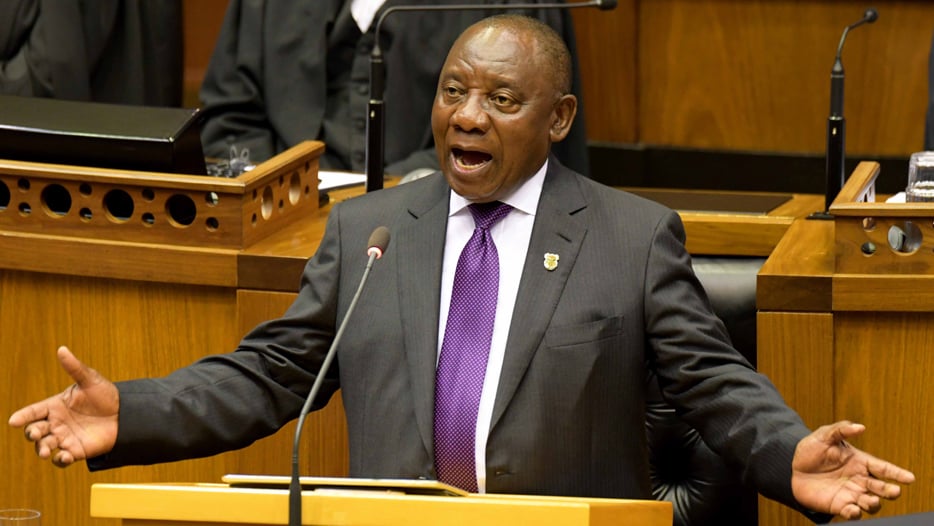
President Cyril Ramaphosa said the country is blessed to have good, dependable, and devoted teachers, despite the difficult challenges in the education sector.
Ramaphosa was delivering a keynote address at the 24th National Teaching Awards (NTA) ceremony at the Birchwood Conference Centre in Ekurhuleni.
The NTA honours the educational excellence of teachers across the country and coincides with World Teachers Day.
“This enduring commitment to honouring our educators speaks to their unique and treasured place in our country.
Teachers aren’t only expected to impart textbook knowledge to their learners.
They often have to be counsellors, social workers, disciplinarians, and surrogate parents,” said Ramaphosa.
Ramaphosa acknowledged that 30 years after democracy, there are still high levels of inequality in the education sector.
“In some schools, resources are plenty, the schoolyard is safe, there are basic amenities, the pupil-teacher ratio is appropriate, and learning takes place in good conditions.
But in others, educators struggle to obtain even the most basic resources for teaching, schools lack safe toilets and running water, and crime and violence from outside the school inevitably finds its way in,” said the president.
Despite this, he said there’s been much progress to narrow the gaps between the schools, and there’s still much to do.
The president emphasized that the government is working hard to strengthen the foundations of early learning, to ensure successful education outcomes in the future.
“The education curriculum is being revised, updated, and reformed to meet the needs of a rapidly changing world.
With the high rate of youth unemployment in our country, educators need to ensure that our schools are producing the skills our economy needs.
They need to ensure that every school leaver has the confidence and capabilities that enable them to study further, find employment or be self-employed.
We are working to fully implement the three-stream model, which offers academic, vocational, and occupational pathways for learners,” explained Ramaphosa.
Moreover, the president said the signing into law of the Basic Education Laws Amendment Act (BELA) is part of ongoing efforts to build an education system that is more effective and more equitable.
Ramaphosa last month signed the bill into law but delayed the implementation of two clauses four and five, which deal with school admissions and language, by three months to make room for more discussion and deliberations after it received some opposition.
He called on stakeholders to support its implementation to ensure that all the children receive good quality education regardless of their circumstances.
“Among other things, the Act provides for early learning foundations to be strengthened, promotes greater accountability of parents for their children’s learning and promotes inclusivity in the classroom.
The spirit and purpose of this new legislation is to ensure there is uniformity and fairness in educational standards between schools and across the country,” said Ramaphosa.

