


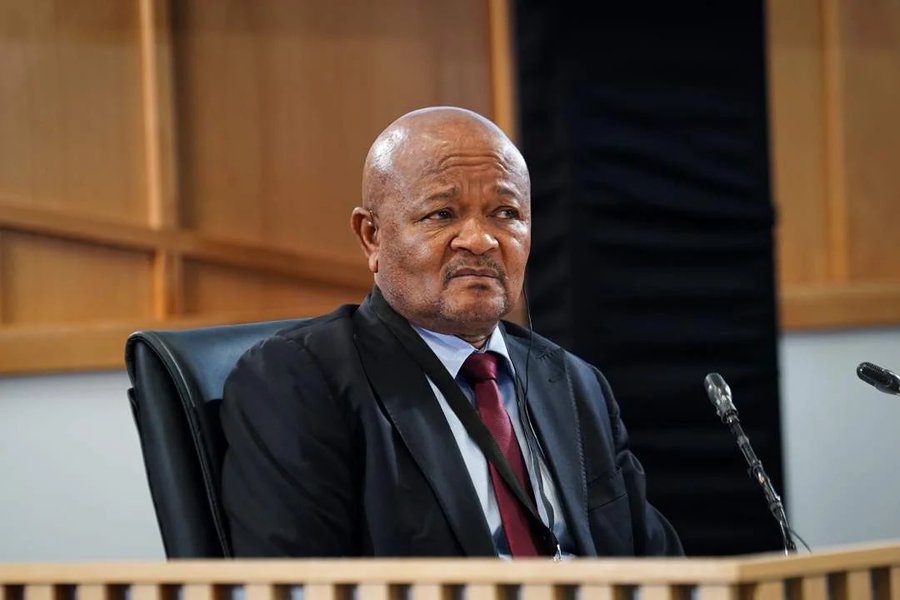
Police Minister Senzo Mchunu became the latest high-profile figure to come under pressure at the Madlanga Commission as he struggled to justify his role in the alleged political interference within South Africa’s criminal justice system.
Mchunu has long insisted that his decision to disband the Political Killings Task Team was based on advice from senior SAPS leadership. But during his testimony on Thursday, Justice Mbuyiseni Madlanga challenged the minister’s explanation, exposing key contradictions. The commission found that the report authored by National Commissioner Fannie Masemola — which Mchunu claimed informed his decision — was actually received after the directive to disband the unit had already been issued.
Intense questioning from Evidence Leader Advocate Mahlape Sello and the commissioners eventually led Mchunu to concede that there were flaws in his decision-making process.
Justice Madlanga pressed the minister on the inconsistency, pointing out that he could not have relied on information he only learned later:
“Your answer does not make sense because it’s something that you get to know after you had taken that decision… Would you accept that?”
Mchunu ultimately acknowledged that he had no prior knowledge of what Masemola would later report.
The minister also admitted that he never consulted the national commissioner before taking the decision — directly contradicting his previous claims.
“Who is the person that you were meant to consult?”
“It was the national commissioner.”
“So do you accept that you did not consult him?”
“Yes, I accept I didn’t.”
Attempting to defend the urgency reflected in his directive, Mchunu argued that the term “immediate” was not intended to be taken literally and that additional processes — including a possible review — were expected to follow. Justice Madlanga, however, rejected this explanation.
The exchange has raised renewed questions about the motivation behind Mchunu’s decision and the transparency of executive involvement in sensitive policing matters.