




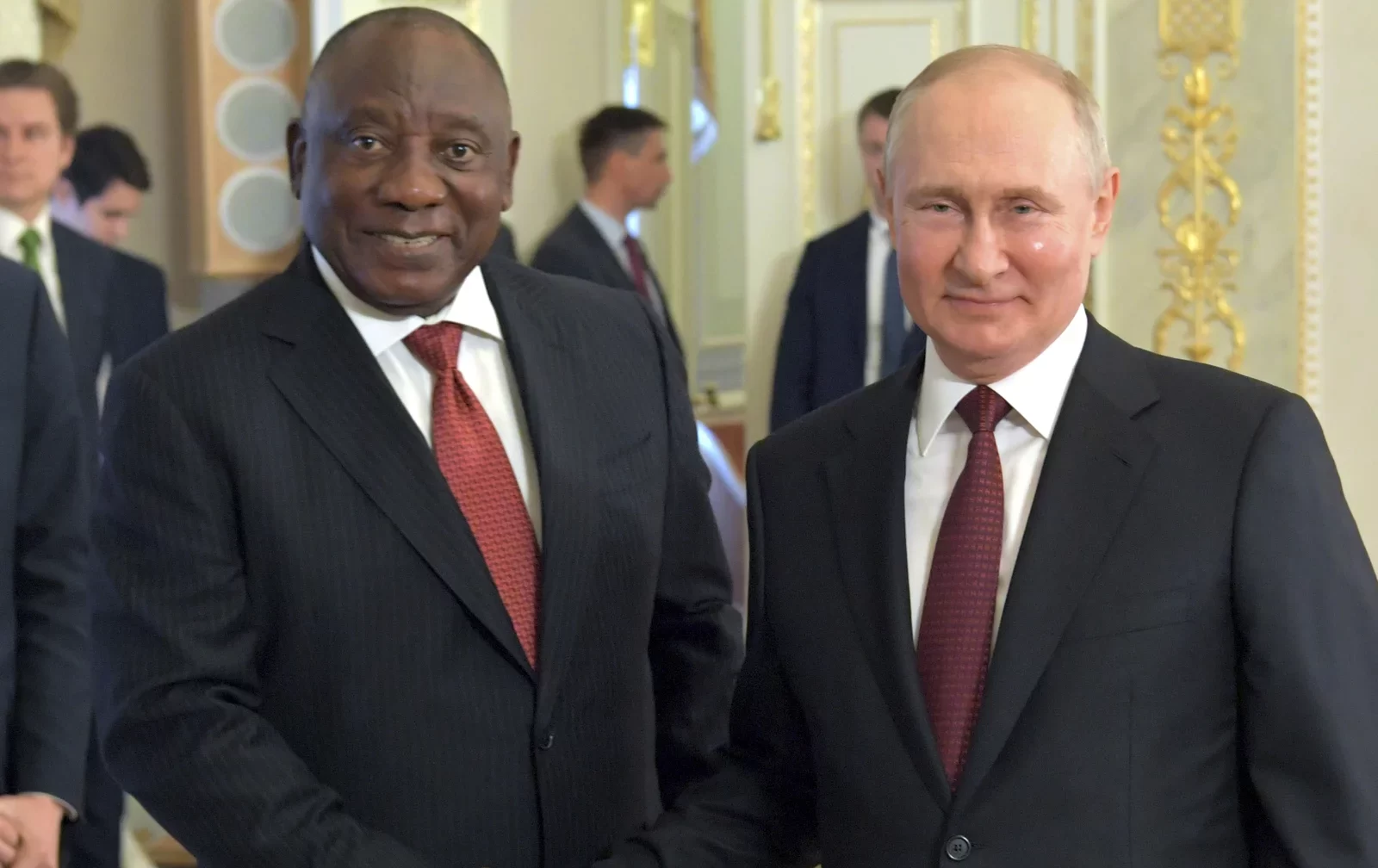
President Cyril Ramaphosa announced on Thursday morning the expansion of the BRICS block with six more countries, Argentina, Saudi Arabia, Iran, United Arab Emirates, Egypt and Ethiopia getting approval to become members.
Ramaphosa was speaking at the BRICS Summit on its last day at the Sandton Convention Centre in Joburg and he said the five BRICS countries reached an agreement on the guiding principles, standards, criteria and procedures of the BRICS expansion process which has been under discussion for quite some time.
“We have consensus on the first phase of this expansion process, and further phases will follow. We have decided to invite the Argentine Republic, the Arab Republic of Egypt, the Federal Democratic Republic of Ethiopia, the Islamic Republic of Iran, the Kingdom of Saudi Arabia and the United Arab Emirates to become full members of BRICS.
“The membership will take effect from 1 January 2024. We value the interest of other countries in building a partnership with BRICS. We have tasked our Foreign Ministers to further develop the BRICS partner country model and a list of prospective partner countries and report by the next Summit.”
Leading up to the Summit, there was a wide-ranging BRICS business programme aimed at attracting investment, promoting collaboration and showcasing opportunities within South Africa, Africa and BRICS countries.
Ramaphosa said they welcome the vision of the President of the New Development Bank Dilma Rousseff and the work of BRICS Women’s Business Alliance.
“We welcome the clear vision of Ms Dilma Rousseff as the President of the New Development Bank on the role that the Bank should play in support of infrastructure and sustainable development in Africa and the Global South,” the president said.
The President said the leaders addressed their expectations for the BRICS economic partnership to generate tangible benefits for the communities and deliver viable solutions for common challenges faced by the Global South.
“We shared our vision of BRICS as a champion of the needs and concerns of the peoples of the Global South. These include the need for beneficial economic growth, sustainable development and reform of multilateral systems.
“We reiterate our commitment to inclusive multilateralism and upholding international law, including the purposes and principles enshrined in the United Nations Charter.”


