


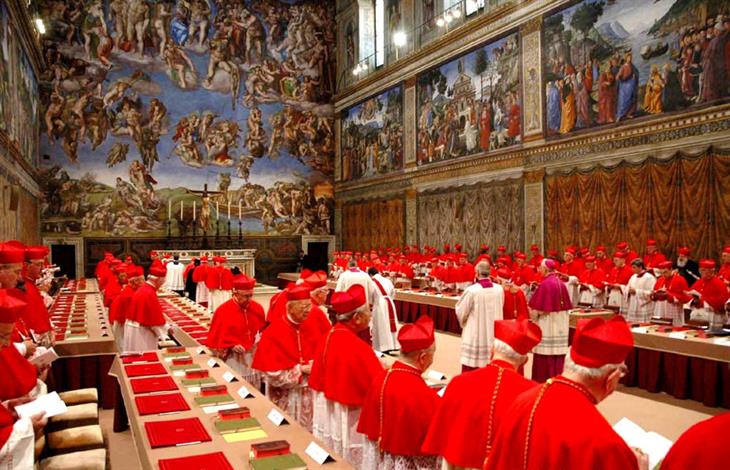
When the Catholic Church enters the solemn act of selecting a new pope, the world turns its attention to one small yet significant detail: the chimney atop the Sistine Chapel. Here, amid centuries of ritual and tradition, black or white smoke rises to convey a pivotal moment in Church history. Black indicates that no decision has been reached; white, the triumphant declaration of Habemus Papam – ‘we have a pope.’ This spectacle, steeped in drama, echoes through the centuries, yet beneath its surface lies an elaborate system of engineering and symbolism.
The recent passing of Pope Francis, who died on Easter Monday at the age of 88, has activated this intricate process once more. On 7 May, cardinals will convene at St Peter’s Basilica to celebrate a special Mass before moving to the Sistine Chapel, where they will cast their votes in a conclave that will define the future of the Catholic Church.
The tradition of using smoke to announce the outcome of papal elections has roots tracing back to the 15th century. Born from the necessity of transparency and the desire to prevent tampering, this practice evolved into an immediate form of communication with the outside world, while maintaining strict confidentiality within the chapel’s walls. The smoke signals of today are a deliberate nod to a time when papal elections often became public spectacles of frustration and unrest.
Dr. Candida Moss, a theology professor at the University of Birmingham, reflects on the tradition’s deeper meanings. “From antiquity onwards,” she explains, “people have seen rising smoke as a form of communication with the divine.” In Catholic belief, prayers ‘ascend’ to God; thus, the smoke evokes a sense of communion between the earthly and the heavenly realms, while also inviting the faithful in St Peter’s Square to partake in this sacred experience from afar.
Creating this smoke is no trivial task. Inside the Sistine Chapel, technicians install two temporary stoves: one designated for burning ballots and the other for generating the vapour that will send its message into the heavens. Each is connected to a meticulously engineered flue, leading smoke through a chimney constructed above the chapel’s roof. The complexity of this setup is heightened by the chapel’s unique architectural features, adorned with Michelangelo’s masterful frescoes.
Vatican technicians face a multitude of challenges in this process. “This is such a precise process because if one thing goes wrong, it’s not just a technical failure – it becomes an international incident,” notes structural engineer Kevin Farlam. Every joint is sealed meticulously, ensuring that the smoke flows unobstructed, while preventing leaks that could miscommunicate the significance of the vote.
The summons of smoke is created through a specific chemical concoction akin to ‘custom fireworks,’ explains Professor Mark Lorch from the University of Hull. For black smoke, a mixture of potassium perchlorate, anthracene, and sulphur is burned, resulting in a thick plume. In contrast, white smoke arises from a careful blend of potassium chlorate, lactose, and pine rosin, producing a clean signal. Gone are the days of relying on damp or dry straw, causing confusion with shades of grey – modernity demands unambiguous communication.
A new auditory addition, bells, was introduced during Pope Benedict XVI’s election, offering an additional layer of clarity to broadcast the moment of selection alongside the smoke. Despite discussions around updating the tradition with digital alerts, coloured lights, or even televised votes, the Vatican remains steadfast in retaining this centuries-old ritual, believing that it connects the modern world with an ancient reverence.
As the world awaits the announcement of the next pope, the hidden complexities of this sacred ritual come to light. Adorned with echoes of antiquity, the announcement of a new papal leader resonates with the weight of history and belief, steeped in the elegant but intricate dance of smoke rising from the Sistine Chapel.