




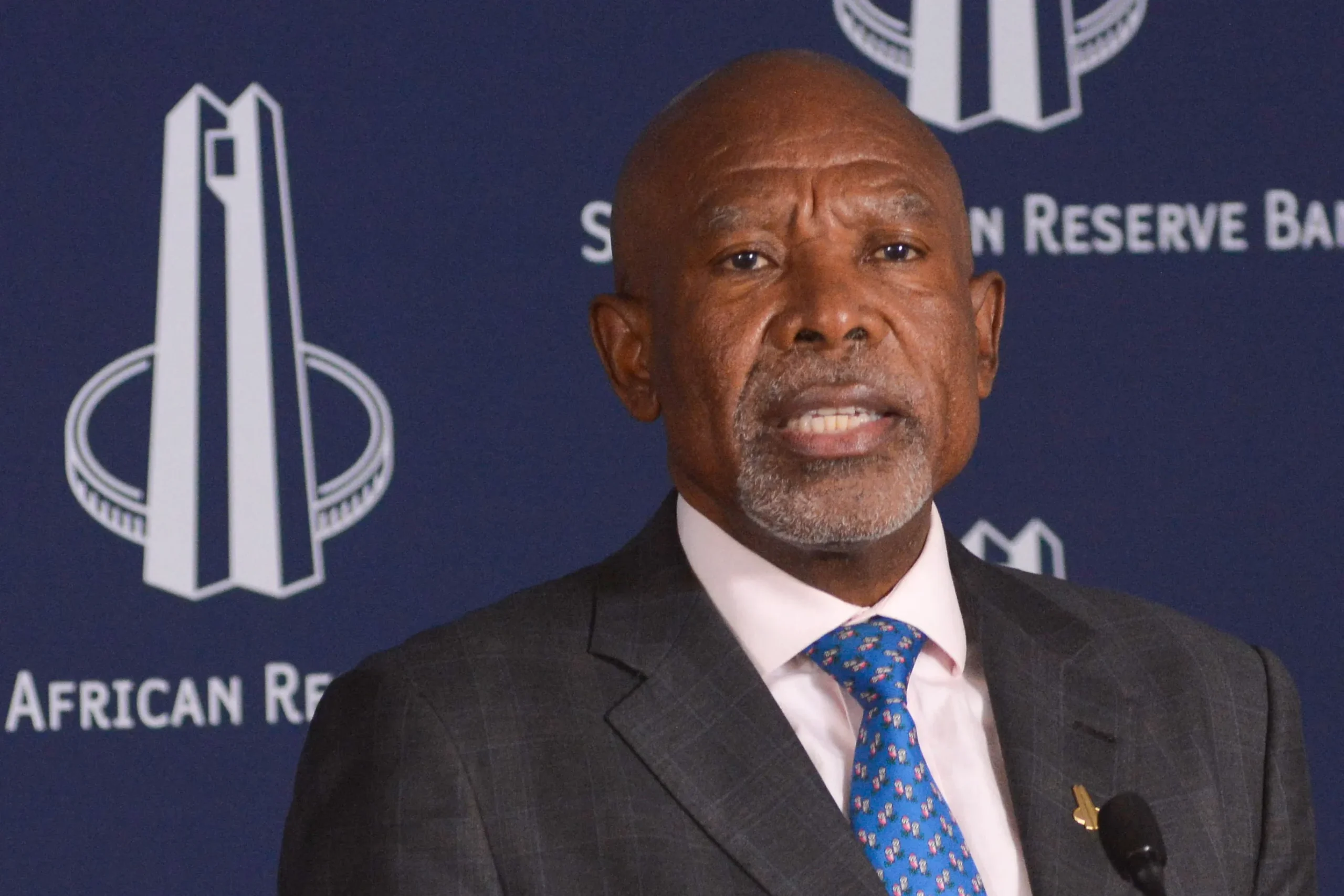
South African Reserve Bank (SARB) Governor Lesetja Kganyago announced that the Monetary Policy Committee (MPC) has unanimously decided to reduce the repurchase (repo) rate by 25 basis points to 7.00%. This adjustment, effective immediately, lowers the prime lending rate from 10.50% to 10.25%, providing modest relief to borrowers amid a cooling inflation environment.
The decision followed a three-day MPC meeting in Pretoria and aligns with market expectations, as headline inflation eased to 2.8% in October—its lowest since June 2020—driven by lower food and fuel prices. Kganyago emphasised the bank’s vigilance, stating: “Because of these downside surprises, together with a stronger rand and a lower oil price assumption, we have small downward revisions to our inflation outlook, for both 2025 and 2026. We remain on track to deliver 3% inflation over the medium term.”
Key Economic Context
- Inflation Outlook: SARB now forecasts headline inflation at 3.2% for 2025 (down from 3.4%) and 3.5% for 2026, within the 3-6% target band. Risks remain balanced but tilted toward upside pressures from potential electricity tariff hikes, wage growth, and global commodity volatility.
- Growth Projections: GDP growth is expected at 1.3% in 2025, slightly below prior estimates due to subdued mining output and high unemployment (32.1%). Load-shedding has eased, supporting a gradual recovery.
- Global Factors: A stronger rand (R17.80/USD) and Brent crude below $70/barrel have bolstered the disinflationary trend, though U.S. policy shifts under a potential Trump administration could introduce forex volatility.
Implications for Consumers and Investors
This is the fourth consecutive cut since September 2024, totaling 100 basis points, signaling the end of the aggressive tightening cycle that peaked at 8.25% in 2023. Homeowners with variable-rate bonds could save around R100-150 monthly on a R1 million loan, while credit card and personal loan rates may dip slightly.
For investors, lower rates boost bond prices and equity valuations in rate-sensitive sectors like property and retail. However, savers face compressed fixed-deposit yields (now ~7-8%). In the offshore context, a softer prime rate may temper rand depreciation, making feeder funds more attractive for diversification without immediate forex urgency.
Looking Ahead
Kganyago adopted a cautious tone, noting medium-term uncertainties like domestic fiscal risks and global trade tensions. Markets price in a 60% chance of another 25bp cut in January 2026, potentially bringing the repo to 6.75%. The MPC will reconvene on January 23, 2026.


