


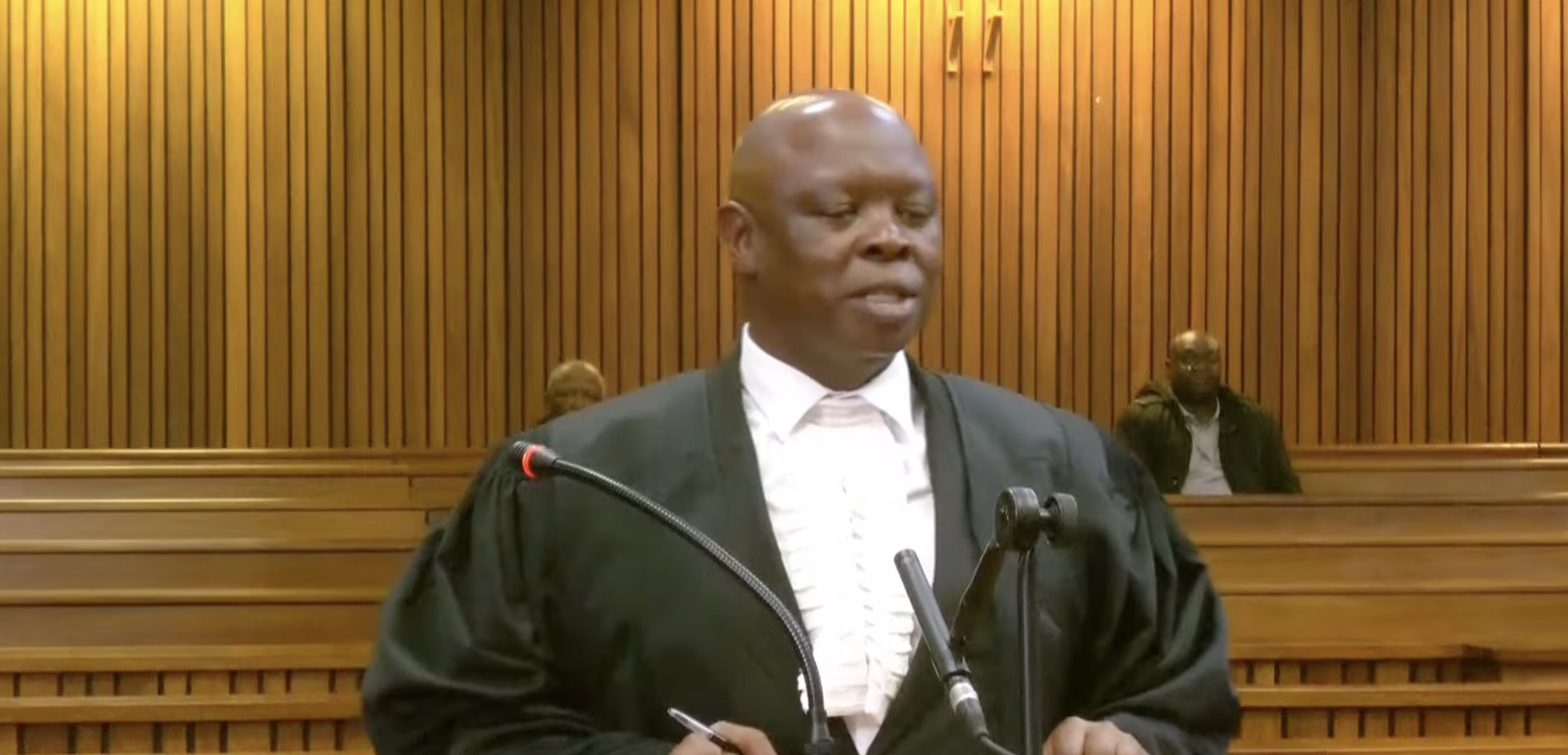
The Senzo Meyiwa murder trial resumed in the Pretoria High Court with the State intensifying its focus on accused number one, Muzi Sibiya, whose testimony has drawn scrutiny over inconsistencies in his alibi.
During a tense day of cross-examination, State prosecutor George Baloyi grilled Sibiya about his claim that he was in KwaZulu-Natal (KZN) at the time of Meyiwa’s killing on October 26, 2014. Despite previously testifying that he lived in KZN between 2013 and 2014, Sibiya has failed to provide details about his exact whereabouts on the day of the murder.
Baloyi argued that Sibiya’s lack of clarity undermines his credibility and could have serious implications for the court’s understanding of events surrounding Meyiwa’s death.
Sibiya, however, maintained his innocence, firmly denying any presence at the crime scene.
“I’m saying that I was not at the Basotho hostel on the 26th of October 2014,” he testified. “I had never met any of my co-accused on that date.”
Baloyi challenged the assertion, pointing out the gaps in Sibiya’s account and pressing him to explain why he could not recall specific details of his movements in KwaZulu-Natal that day.
In response, Sibiya conceded:
“Yes, there is a point that you fail to mention that you were at KZN even if you cannot remember precisely whereabouts in KZN that you were.”
The exchange has become a focal point in the high-profile case, with the prosecution arguing that Sibiya’s vague alibi fails to support his claim of innocence.
The murder of Bafana Bafana and Orlando Pirates goalkeeper Senzo Meyiwa in 2014 shocked South Africa and has since become one of the country’s most closely watched court cases.
As proceedings continue, public attention remains fixed on the courtroom — where the search for clarity and justice for Meyiwa continues more than a decade after his death.