


The South African courts witnessed a pivotal moment yesterday as the State concluded its case in the high-profile Joshlin Smith matter. Accused individuals Jacquen ‘Boeta’ Appollis and Steveno van Rhyn made the startling decision to not give evidence or call any witnesses, a move that has left many in legal circles pondering the ramifications of their silence.
As proceedings progressed, the State called Colonel Riaan Morris from the provincial Commercial Crimes Unit to the stand. He presented six disturbing videos to the court, shedding light on the circumstances surrounding Smith’s disappearance. Among these, one video showed Kelly Smith on Sunday, March 3, 2024, at an open prayer service held in honour of her missing daughter, Joshlin. In contrast, other clips captured a meeting between Kelly and Minister Gayton McKenzie at a local Spur restaurant.
Key to the evidence were several clips of McKenzie engaging with Van Rhyn, who is accused in the case. The minister was filmed in the back of a vehicle, questioning Van Rhyn about his whereabouts during the time Joshlin went missing, raising pointed questions about the credibility of the accused’s claims.
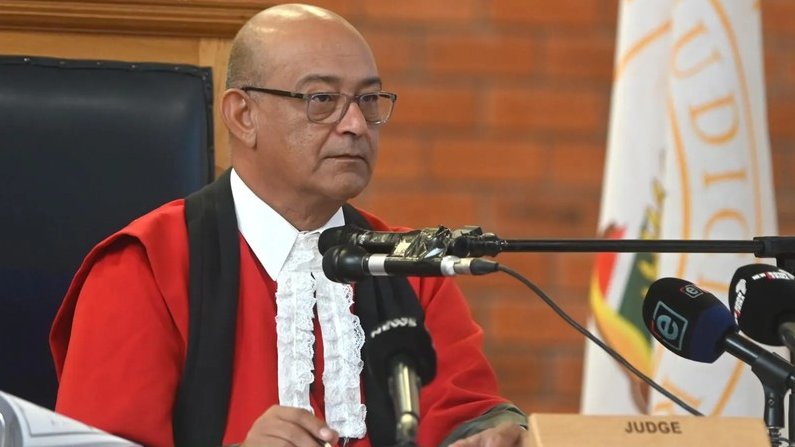
As the court session unfolded, Judge Nathan Erasmus was informed that the defence was set to bring forth Section 174 applications. Under South African law, this application allows a defendant to be discharged if the evidence is deemed insufficient for a conviction at the close of the State’s case. Fanie Harmse, representative for Appollis, opted not to pursue such an application, while Van Rhyn’s lawyer, Nobuhle Mkabayi, argued the case should be dismissed, stating that “all state witnesses who testified didn’t bring any evidence that this court can come to the conclusion that accused two has committed an offence.”
When Judge Erasmus highlighted that Laurentia Lombaard, a key State witness, had implicated Van Rhyn, Mkabayi swiftly countered, labelling Lombaard as “not credible.” This back-and-forth indicated the intensity of the legal battle unfolding in the courtroom, with Judge Erasmus drawing attention to Van Rhyn’s statement admitting he was present when Joshlin was taken, implying that this admission complicates the defence’s narrative.
Simultaneously, Joshlin Smith’s attorney, Rinesh Sivnarain, put forward a similar application for his client, arguing that the evidence against Smith was insufficient to establish a prima facie case. Highlighting the alleged inconsistencies in Lombaard’s testimony, Sivnarain argued that her poor credibility—exacerbated by her excessive drug use—should warrant the court’s rejection of her evidence entirely.
In a surprising twist, Appollis later instructed his lawyer not to testify or call witnesses, a decision that reverberated through the court. Van Rhyn, too, chose silence over defending himself, prompting speculation over the strategies at play in a case that has captivated public attention.
Ultimately, Judge Erasmus handed down his ruling, declining the defence’s applications to dismiss the charges against both men. As the trial continues, watchers of the case are left to wonder what the consequences of this unexpected silence might mean for all parties involved.