


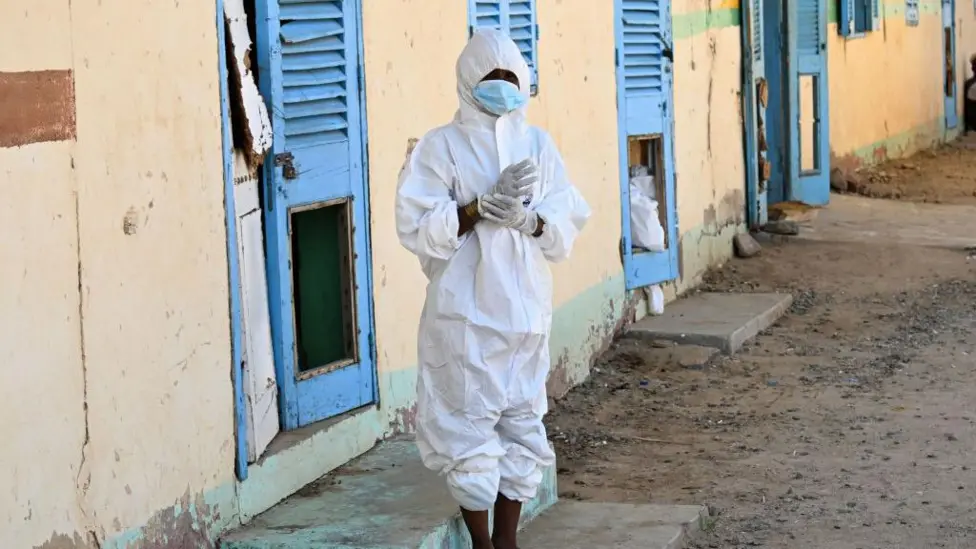
As Sudan grapples with the prolonged impacts of civil unrest, it now stands “on the brink” of a public health disaster, with an alarming surge in cholera and other deadly diseases, according to the International Rescue Committee (IRC). The nation, ravaged by conflict for nearly three years, is witnessing a rapid deterioration in its health infrastructure and a corresponding rise in fatal infections.
Recent figures from Sudan’s Health Ministry have revealed that at least 172 people have succumbed to cholera within just one week, with the majority of new infections concentrated in the beleaguered Khartoum state. This grim statistic underscores a deepening humanitarian crisis exacerbated by a fractious civil war between the Sudanese army and the paramilitary Rapid Support Forces (RSF).
Local doctors and media reports indicate that escalating drone attacks have contributed to extensive power outages impacting water purification stations. These disruptions have left desperate residents with no choice but to consume contaminated water sources, heightening the risk of cholera transmission. IRC’s country director for Sudan, Eatizaz Yousif, highlighted that the ongoing conflict is significantly “fueling the resurgence of cholera,” depriving communities of essential services.
The situation is further compounded by low cholera vaccine coverage across the region, with essential medical supplies seen as dwindling rapidly. Health charity Doctors Without Borders (MSF) warned of numerous “suspected cholera cases” flooding in from Khartoum since the middle of last month, with their medical coordinator, Slaymen Ammar, noting that the conflict has severely compromised basic healthcare infrastructure.
Ammar pointed out that healthcare services in many parts of the capital are “either unavailable or unaffordable,” resulting in many health workers abandoning their posts amidst the fighting. As a result, the remaining medical facilities are overwhelmed, struggling to cope with the rising tide of illness. In a particularly alarming statistic, MSF reported that as many as 500 cholera cases were confirmed in a single day last week in Khartoum. Other areas, including northern and southern Sudan, are also facing similar health crises, as the spread of cholera shows no sign of abating.
The World Health Organization notes that while most individuals infected with cholera may experience mild symptoms or none at all, the disease can escalate quickly, leading to severe diarrhoea that necessitates urgent intervention with antibiotics and intravenous fluids—treatment that is increasingly out of reach for many in Sudan.
The human toll of the civil conflict is staggering. To date, the relentless violence has claimed over 150,000 lives and displaced millions, with the United Nations labelling the situation as the world’s worst humanitarian crisis.