


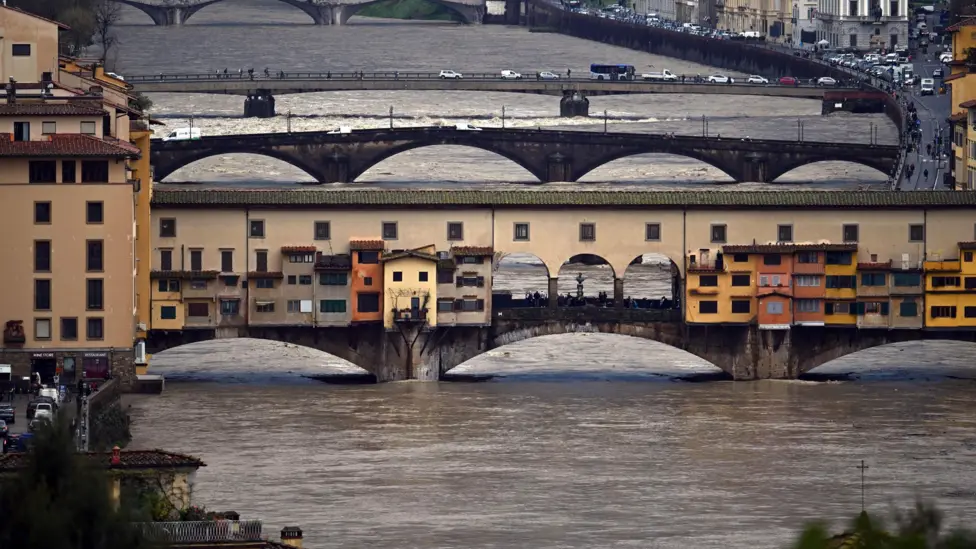
Parts of northern Italy, particularly Tuscany and Emilia-Romagna, are grappling with significant flooding and landslides following torrential rain. As red alerts blanket cities such as Florence and Pisa, officials warn residents to remain vigilant in the face of continuing downpours predicted through Friday afternoon.
With local rescue and health services on high alert, Tuscany’s president has urged citizens to exercise “the utmost attention and caution”. The impact of the relentless rain was felt acutely in Bologna, where reports of landslides and mudslides led to the swift evacuation of residents late Thursday evening. Fortunately, no casualties have been reported as the worst of the flooding began to recede by mid-morning on Friday.
Among the harrowing tales that emerged from the chaos was the rescue of a family of four from a landslide in Badia Prataglia, Tuscany, highlighting the serious risks posed by the severe weather. Additionally, the national fire brigade was inundated with emergency calls after the Rimaggio river overflowed, flooding the Sesto Fiorentino area on Florence’s northern outskirts.
Authorities in Pisa have been proactive in erecting flood defences along the Arno river, which has recently surged beyond the first flood-risk level. Streets in Florence have suffered from extensive flooding and fallen trees, compelling local officials to advise against all travel in the area. The A1 motorway has also been partially closed, adding to travel woes in the region.
The adverse weather has led to closures across more than 60 municipalities in Tuscany, including several campuses of the University of Florence. Schools are shuttered as communities brace for continuing conditions. As red weather alerts—indicative of serious flood risk—are expected to linger throughout the day, officials remain on high alert.
This month’s deluge comes as a stark reminder of the lingering impacts of extreme weather events, notably the devastation left by Storm Boris, which battered the region in September 2024. That storm resulted in the evacuation of over 1,000 residents and severe infrastructural damage, while in previous years, records show that intense rainfall led to the tragic loss of 13 lives as rivers surged and landslides unfolded.
Scientific consensus underscores that climate change exacerbates such extreme weather patterns. Europe, as the fastest-warming continent, is experiencing a marked increase in both the frequency and intensity of heat waves and heavy rain. Experts from the World Weather Attribution group assert that a warmer atmosphere, capable of retaining more moisture, leads to heightened rainfall and consequent flooding, raising concerns for future climate resilience.