


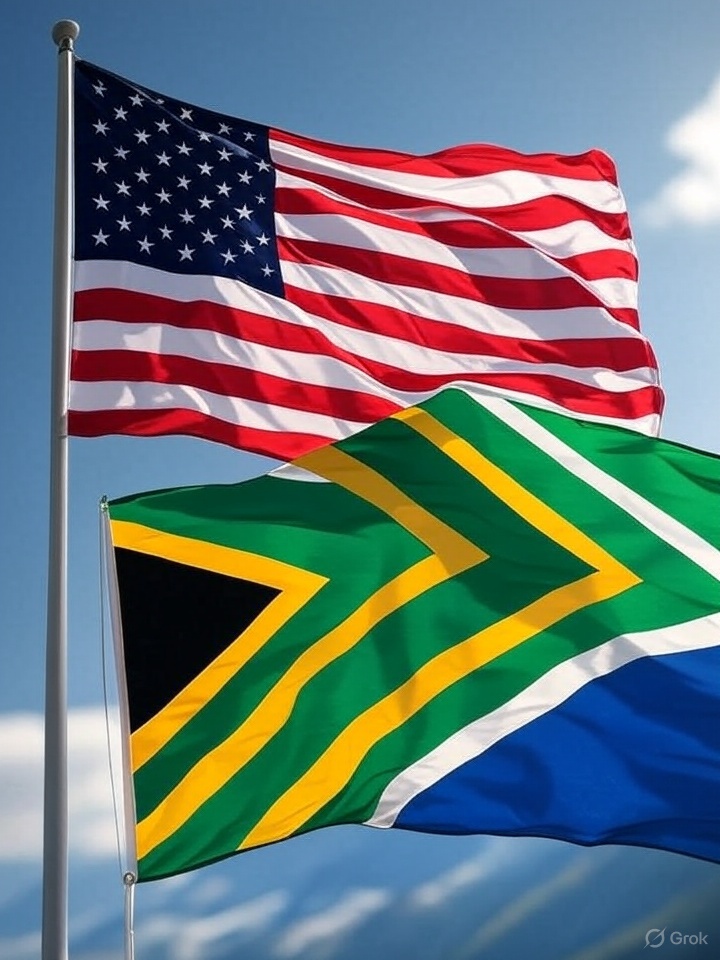
As the clock ticks down to the United States’ planned 30% tariff increase on South African exports, the local Department of Trade and Industry has confirmed it signed a condition precedent document with the US Trade Representative’s office. This pivotal step is seen as a foundational framework that outlines what must occur prior to a comprehensive trade agreement being reached.
“We have not signed any substantive agreement yet. The document signed was a precedent condition document,” said Ministerial spokesperson Kaamil Alli, emphasising that negotiations are still in progress. This preemptive measure signals a potential shift in the decades-old trade dynamics between the two countries.
The urgency of the situation escalated following a formal correspondence from former US President Donald Trump to President Cyril Ramaphosa, insisting on remedial actions regarding trade imbalances and cautioning that tariffs are set to be imposed from August 1, 2025. The tariffs are part of the US effort to remedy what it perceives as South Africa’s “unsustainable trade deficits” alongside longstanding barriers to market entry.
Fears have intensified among industry experts and exporters, who anticipate that critical sectors—including automotive, agriculture, and mining—could face severe repercussions. A stark warning issued by Minister of Finance Enoch Godongwana highlighted the potential loss of about 100,000 jobs should a trade deal fail to materialise before the deadline. “My prayer, first and foremost, is that the deal should be made by August 1st. And secondly, if it’s not made, it would be useful that we get an extension until we finalise the deal,” Godongwana remarked, underscoring the significant implications of losing a trading partner as substantial as the United States.
Compounding the anxiety, fresh data released by the Automotive Business Council (Naamsa) reveals a concerning decline in vehicle exports to the US, with figures plummeting dramatically. There was a staggering 73% drop in the first quarter of 2025 alone, further exacerbated by declines of 80% and 85% in April and May, respectively. This turmoil followed Trump’s earlier decision to impose a 25% tariff on all vehicles imported into the US, which has profoundly affected South Africa’s automotive sector.
As negotiations ramp up, both nations are becoming increasingly aware of the economic stakes.