


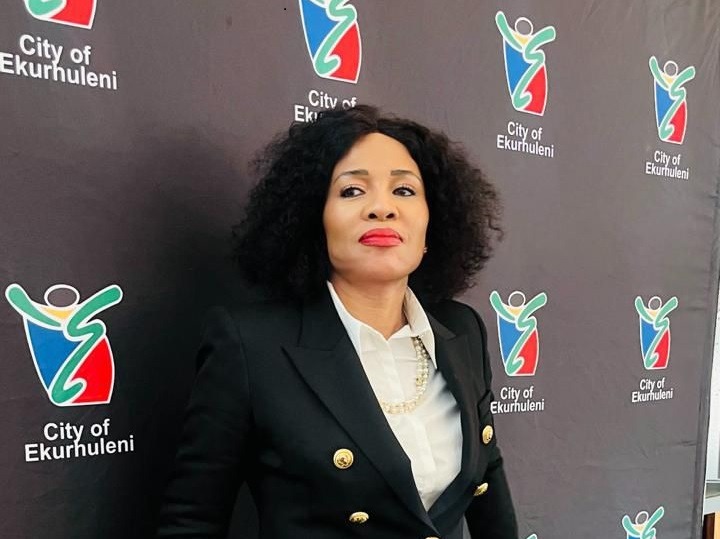
Once again the treatment of black executives and professionals is under the spotlight. The latest to find herself having to fight back is City Manager at the Ekurhuleni Metropolitan Municipality Imogen Mashazi, who has been placed on ‘special leave’ just a few months before her retirement.
The Ekurhuleni council last week decided to place Mashazi on special leave in order to allow space for ‘transition’ in anticipation of her retirement in August when she would have turned 65.
The complication is that the City Manager still has another year on her contract for which she’s demanding to be paid for and is adamant she does not wish to serve the period. She has served the metro for 36 years and is one of few women who served as an accounting officer for a large municipality that was revered for good governance including consistent clean audits from the Auditor General.
Mashazi has slammed the municipality for its decision, refused to leave earlier and urged Mayor Doctor Xhakaza to lobby council to rescind it saying she deserves better treatment as a long serving employee.
“We did a lot of things. I can mention a lot of them. We received three debt-to-debt audits. We received a lot of awards. We recently received awards from Africa for good governance. We’ve been always number one in terms of good governance.
“We have currently reduced the opening balance from two billion to less than a billion as a city. So with 36 years of experience, when this person says I want to go on retirement, is that how that person should be treated? You just put your own special needs and say you’re not going to entertain any mutual separation. Because the executive mayor wrote a report to council requesting council to give him permission to enter into agreement with me for a second mutual separation. And it was rejected. Instead, they put a recommendation there that I must put on special leave. That is where the issue is,” said Mashazi.
She also questioned the legality of the decision to place her on special leave saying its not supported by legislation.
“Special leave, there’s no law that supports them. If I were to go to court now, they’re going to pay me,” she said also pointing out she’s reluctant to engage in a legal battle with employer.
Mashazi expressed hope that an ongoing discussion with Xhakaza could still achieve a mutual separation that does not involve letigation.
“But now we have a discussion with the executive mayor. We’re in discussion that he must go to debt-to-council and look how best can we rescind that particular resolution. Then I’ll be comfortable(8:40) if the resolution can be rescinded. But for now, I refuse to sign the special leave because you can’t force anyone to sign a special leave, especially if that person did not do any wrong,” said Mashazi.
Another black executive who finds himself fighting to stay on the job is Road Accident Fund CEO Collins Letsoalo. Letsoalo was recently placed on special leave by the entity’s board before being suspended and then reinstated within two years over a yet to be concluded Special Investigation Unit. Letsoalo is at odds with the country’s leading law firms who he has accused of milking the fund.
In turn, the powerful law firms have accused Letsoalo of not understanding the mandate of the RAF. The criticism against Letsoalo is in response to his insistence on the RAF dealing directly with victims of road accidents instead of relying on lawyers. The CEO’s argument is that the RAF as a social benefit scheme should not need to be sued which may result in claimants receiving more compensation (currently 25 percent of compensation goes to to lawyers).
Previous black executives to have been removed from state owned entities on the basis of allegations of corruption include Brian Molefe, Matshela Koko (both Eskom CEOs) Siyabonga Gama (Transnet) and Lucky Montana (PRASA). All of them have had serious allegations of fraud as well as corruption including at the Zondo Commission but following their removal, no case has been proven against them.
On the other hand, their white counterparts such as Andre De Ruyter and Jan Oberholzer (both Eskom) who presided over the worst levels of load shedding are seen as having been given a free pass. Eskom has since been stabilised after the two left and Oberholzer has since returned with an IPP deal which many have criticised.


