


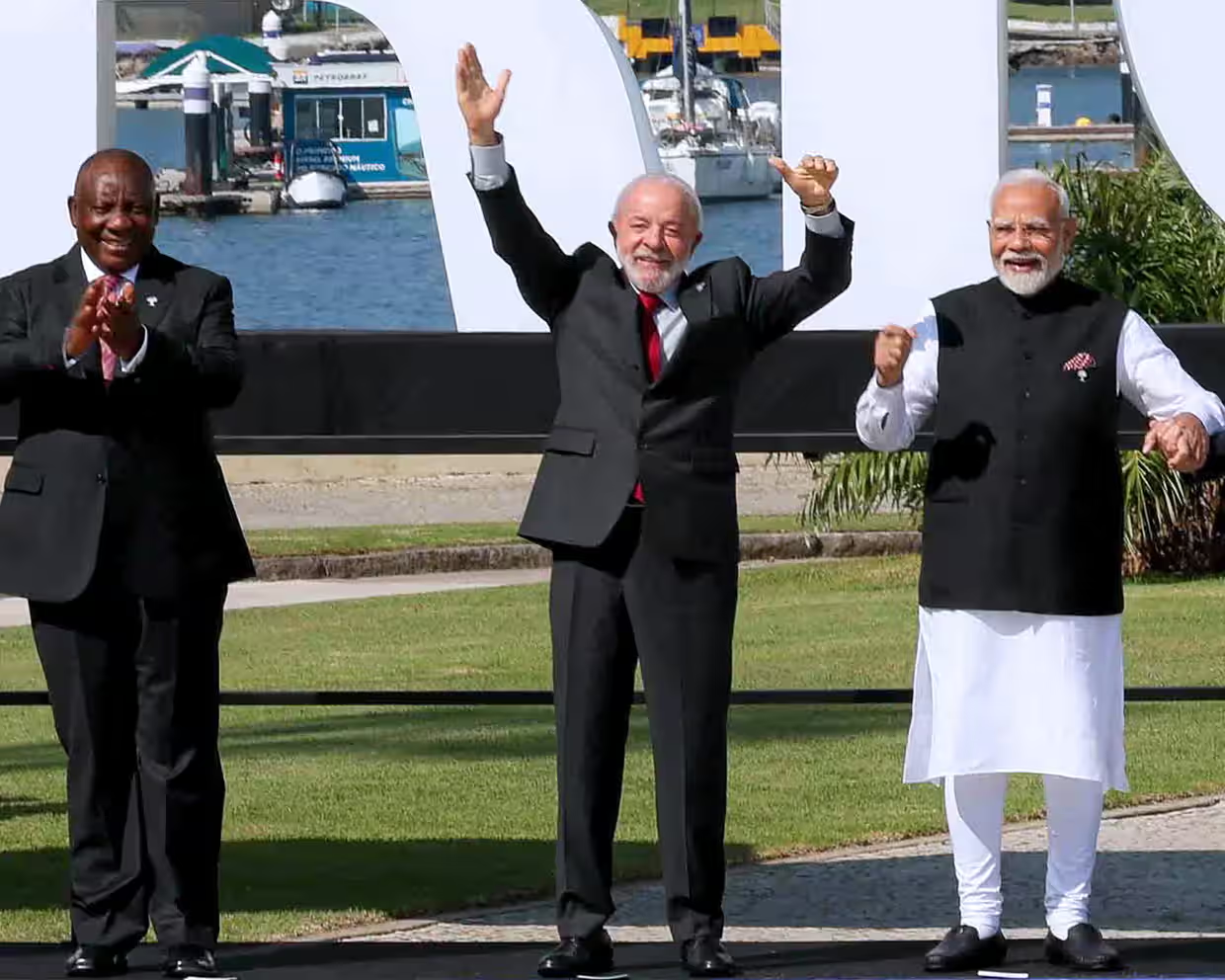
In ongoing tensions between the United States and the BRICS alliance, US President Donald Trump has threatened to impose an additional 10% tariff on countries that align with what he describes as “Anti-American policies” of the group. This announcement was shared on social media, where Trump cemented his stance against the coalition comprising Brazil, Russia, India, China, and more recently, Egypt, Ethiopia, Indonesia, Iran, Saudi Arabia, and the United Arab Emirates.
“Any country aligning themselves with the Anti-American policies of BRICS will be charged an ADDITIONAL 10% tariff. There will be no exceptions to this policy,” he asserted. Such rhetoric marks a continuation of Trump’s determined approach to trade, aimed at protecting US manufacturing and jobs by penalising nations that oppose American interests.
With a previously set deadline of 9 July for reaching new trade agreements, officials have now indicated that the tariffs will officially take effect on 1 August. Trump anticipates sending letters to approximately 10 to 15 nations informing them of their new tariff rates unless they come to a suitable deal with the US.
Since assuming office in January, Trump has championed a series of tariffs, arguing they are essential for invigorating American industry. April saw him declare “Liberation Day,” unveiling a raft of new taxes on imports from various nations, sometimes reaching as high as 50%. However, the most aggressive proposals were paused to allow negotiations to unfold.
As of now, the US has secured trade agreements only with the UK and Vietnam, along with a partial arrangement with China. Notably, the much-anticipated deal with the UK is designed to reduce tariffs on UK vehicles to 10% for a limited number of units, while Vietnam’s agreement includes a tax of 20% on goods entering the US. Still, these agreements have not resolved underlying conflicts, particularly regarding steel imports, where negotiations remain deadlocked.
In recent comments, Trump indicated Japan could face tariffs as high as 35% if negotiations remain unproductive. Meanwhile, the European Union has been warned of potential 50% tariffs unless a satisfactory agreement is reached. Reports suggest the EU is deliberating on a provisional deal to maintain current tariffs for most goods while discussing reductions on tariffs related to automobiles and steel.
The BRICS alliance, designed to bolster the international standing of its member countries and diminish the influence of the US and Western Europe, now represents more than half of the global population. In 2024, Trump has threatened escalated tariffs of up to 100% on BRICS nations should they proceed with unveiling a currency aimed at rivaling the US dollar. This ultimatum coincides with criticisms from BRICS finance ministers who denounced US tariffs as detrimental to global economic stability.
Experts argue that moving away from dependency on China, a key player in global supply chains, poses significant challenges. Industries reliant on Chinese production for critical components, such as electric vehicle batteries and rare earth materials, face daunting obstacles in finding alternatives.
As the global economic landscape shifts and tensions mount, the implications of these tariff threats and the contrasting positions of BRICS and the US will likely contribute to an evolving dialogue across international trade forums. All eyes remain on upcoming negotiations and whether Trump’s aggressive stance will yield the expected results or exacerbate divisions in global trade relationships.