


The United Nations Security Council convened an emergency session on Monday to address the United States’ controversial military operation in Venezuela, which culminated in the capture of President Nicolás Maduro and his wife, Cilia Flores. The debate unfolded amid sharply divided international opinions, with accusations of sovereignty violations clashing against justifications of law enforcement against an indicted leader.
The meeting, requested by Venezuela, Colombia, Russia, and China, began at 10 a.m. EST and focused on the legality of “Operation Absolute Resolve”—a U.S.-led raid on January 3 involving over 150 aircraft, airstrikes on Caracas targets, and a Delta Force extraction team. Maduro, 63, was seized from his fortified residence after attempting to retreat to a safe room, according to U.S. officials. He and Flores were transported aboard the USS Iwo Jima before arriving in New York late Saturday.
Coinciding with the UN debate, Maduro made his initial appearance in Manhattan federal court at noon before Judge Alvin K. Hellerstein. The former leader, indicted on narco-terrorism conspiracy, cocaine importation, and weapons charges superseding a 2020 case, is expected to plead not guilty. Prosecutors allege Maduro led a 25-year scheme flooding the U.S. with tons of cocaine, partnering with groups like the FARC. He remains detained at Brooklyn’s Metropolitan Detention Center.
U.S. Ambassador Mike Waltz defended the action as “justice, not regime change,” targeting an “illegitimate dictator” responsible for drug trafficking and regional instability. “This was a precise law enforcement operation enforcing existing indictments,” Waltz stated, emphasizing no American lives were lost.
In contrast, Venezuelan Ambassador Samuel Moncada condemned it as “colonial aggression” aimed at plundering oil reserves and installing a puppet government. Russia and China echoed this, labeling the strikes unlawful imperialism and demanding Maduro’s release. Russian representatives accused the U.S. of setting a precedent for global chaos.
UN Secretary-General António Guterres expressed “deep alarm,” warning the operation “constitutes a dangerous precedent” and urging respect for the UN Charter’s Articles 2(3) and 2(4) on peaceful dispute resolution and non-use of force. “International law, including the Charter, has not been respected,” his spokesperson said, calling for de-escalation and dialogue.
Latin American voices reflected regional fractures. Brazil and Colombia urged restraint and sovereignty respect, while Argentina’s Javier Milei hailed Maduro’s removal as a “victory for freedom.” El Salvador and Ecuador similarly welcomed the end of “narco-Chavista” structures. European nations like France and the UK stressed international law and peaceful transitions without endorsing the U.S. methods.
No resolution emerged from the council, hampered by U.S. veto power and deep divisions. Casualties from the strikes—reportedly including civilians and Maduro’s security detail—remain unconfirmed, with Venezuela claiming significant losses.
The operation’s aftermath sees Vice President Delcy Rodríguez acting as interim leader, demanding proof of life and vowing defense. President Donald Trump announced the U.S. would “run” Venezuela temporarily to secure oil assets and facilitate transition, though Secretary of State Marco Rubio clarified no full occupation is planned.
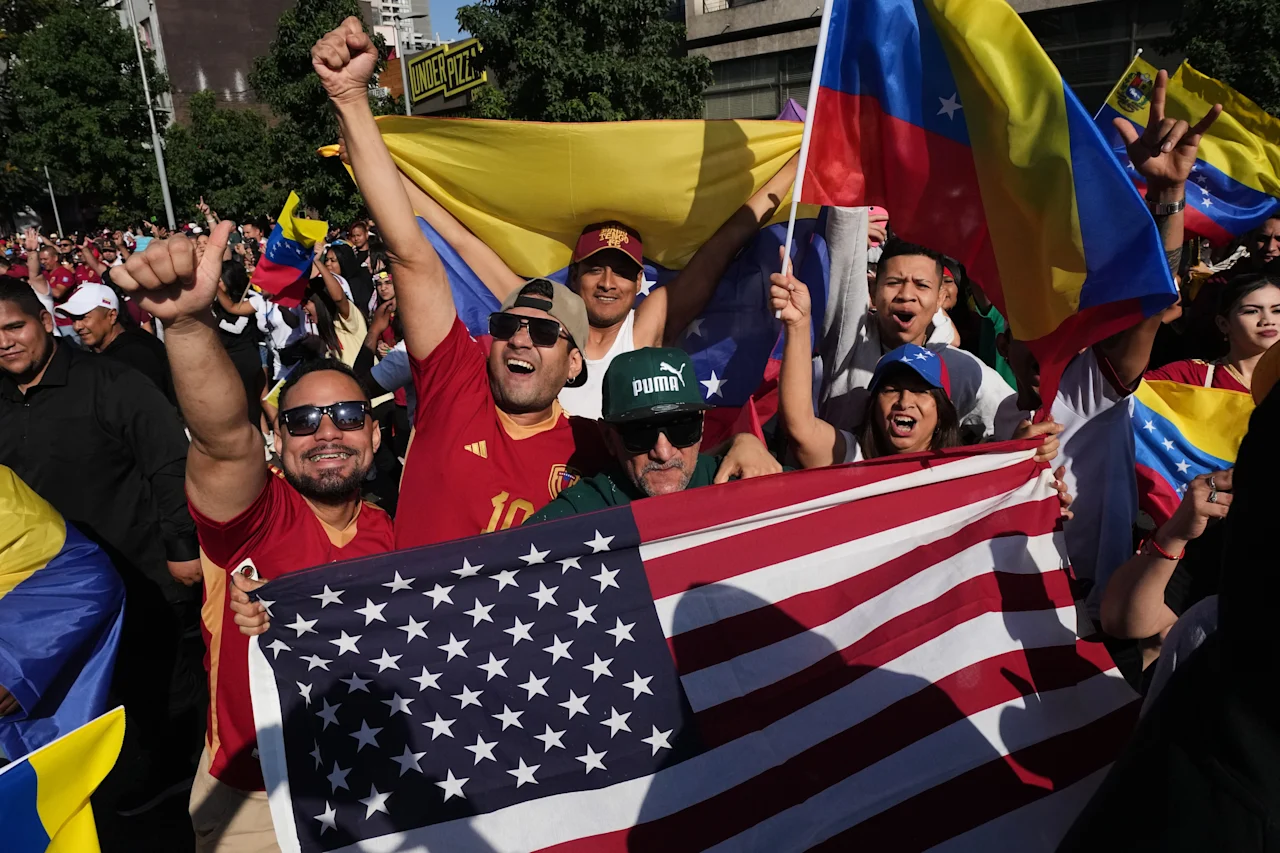
Global reactions poured in: Protests in allied nations like Cuba and Iran, celebrations among Venezuelan exiles in Miami and beyond. Legal experts widely deem the action illegal absent UN authorization or self-defense claims, potentially emboldening future unilateral interventions.
As Maduro’s trial looms—potentially lasting years—the crisis underscores eroding norms in international relations, with stability in oil-rich Venezuela hanging in the balance.