


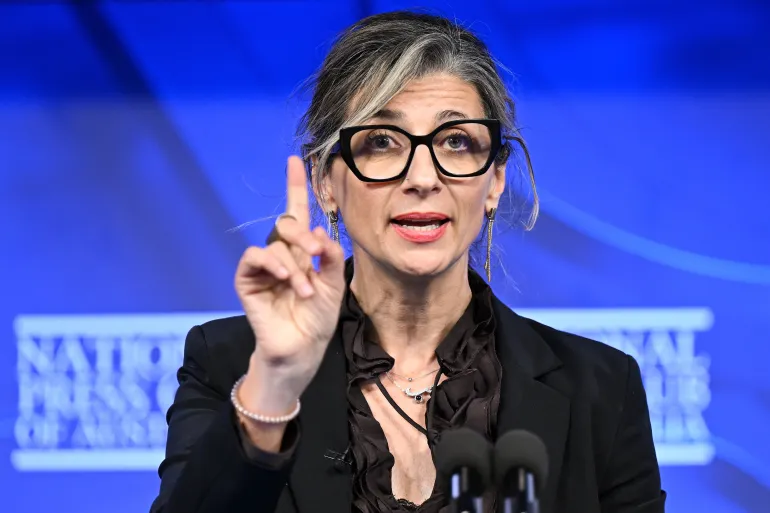
The Trump administration has intensified its efforts to silence criticism of Israel’s actions in Gaza, announcing on Wednesday that it has implemented sanctions against Francesca Albanese, the United Nations special rapporteur for the West Bank and Gaza. This move follows a failed campaign by the US to have the international body dismiss her from her position, further complicating the already fraught discourse surrounding the ongoing conflict.
Albanese, an Italian human rights lawyer known for her fervent advocacy for Palestinian rights, has openly condemned what she terms the “genocide” perpetrated by Israel against Palestinians trapped in Gaza. These recent sanctions coincide with Israeli Prime Minister Benjamin Netanyahu’s visit to Washington, where he is meeting with President Trump and other officials to discuss the ongoing war, now entering its 21st month.
The sanctions’ exact impact remains uncertain, particularly regarding whether Albanese will be able to travel to the United States under diplomatic provisions. Proponents of the sanctions argue they are a necessary defense of Israel, while critics contend they are an attempt to undermine legitimate human rights inquiries.
Albanese’s vocal stance has placed her at the centre of a controversy that has seen her call for international pressure on Israel amid its deadly bombardment of Gaza. She has been a staunch supporter of the International Criminal Court’s initiatives to pursue arrest warrants against Israeli leaders, including Netanyahu, for alleged war crimes. Furthermore, her reports have positioned numerous large US companies as complicit in Israel’s military operations, igniting widespread debate about Western complicity in the escalating violence.
In her July report, Albanese highlighted Western defence firms supplying weapons used against Palestinians and outlined the role of various industries in sustaining Israel’s war efforts. “While life in Gaza is being obliterated and the West Bank is under escalating assault, this report shows why Israel’s genocide continues: because it is lucrative for many,” she stated, drawing ire from pro-Israel factions that label her assertions as unfounded and politically charged.
The US response has been stark. Secretary of State Marco Rubio took to social media to denounce Albanese’s work, declaring, “Albanese’s campaign of political and economic warfare against the United States and Israel will no longer be tolerated.” This sentiment was echoed by Israel’s ambassador to the UN, who praised the sanctions as a necessary action against Albanese’s “biased campaign,” framing it as a shift from human rights advocacy to “political warfare.”
Albanese’s scrutiny aligns with a broader critique of Israel’s military actions, especially following the onset of the current conflict in October 2023. Initiated by a devastating attack from Hamas, which resulted in approximately 1,200 deaths in Israel, Israel’s subsequent military response has seen over 57,000 Palestinian deaths, as reported by Gaza’s Health Ministry. With countless civilians trapped and critically injured in the wreckage of ongoing bombardments, Albanese asserts that the repercussions extend beyond human lives to the ethics of international complicity, urging immediate action against the backdrop of what she calls “ethnic cleansing.”
Amidst escalating violence and vitriolic international rhetoric, the geopolitical landscape surrounding the Gaza conflict appears rife for further complications. As both governments clamp down on dissenting voices, the fate of humanitarian efforts and human rights advocacy remains perilously uncertain.