





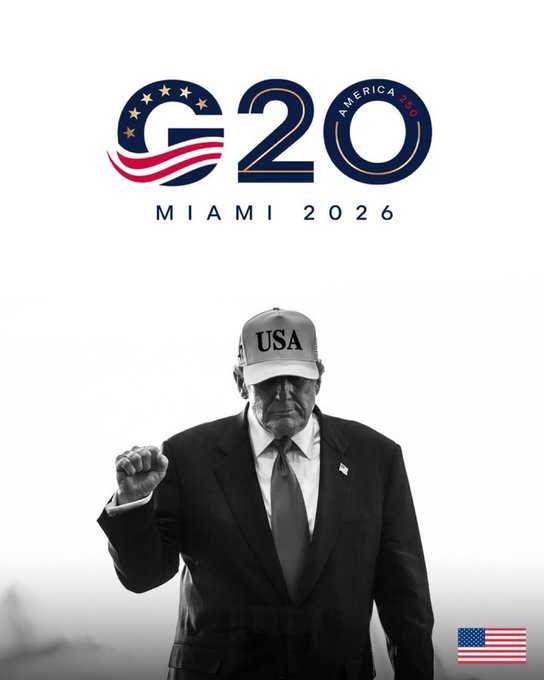
The recent handover of the G20 Presidency from South Africa to the United States on December 1, 2025, has spotlighted deepening bilateral frictions, rooted in U.S. President Donald Trump’s longstanding criticisms of South Africa’s domestic policies. These include debunked claims of a “genocide” against white Afrikaner farmers and land expropriation without compensation—narratives Trump has amplified since his return to office in January 2025. The U.S. boycotted South Africa’s G20 Leaders’ Summit in Johannesburg on November 22-23, 2025, citing opposition to the host’s agenda, particularly its emphasis on climate action, debt relief for developing nations, and Africa’s development priorities. This absence extended to the summit’s declaration, which Washington refused to sign, marking a rare fracture in the forum’s consensus-driven process.
Exclusion from the Inaugural US Sherpas Meeting
Compounding the rift, the U.S. has explicitly excluded South Africa from its first G20 Sherpas meeting, scheduled for December 15-16, 2025, in Washington, D.C. Sherpas—senior officials who negotiate agendas and outcomes—typically include all 19 G20 member countries plus the European Union and African Union. Invitations sent to other members omitted Pretoria, a move South African officials described as “anticipated hostility” given the summit’s recent close. This snub follows Trump’s November 26, 2025, Truth Social post announcing South Africa’s barring from the entire 2026 G20 cycle, including the Leaders’ Summit in Miami, Florida. He accused Ramaphosa of refusing a ceremonial gavel handover to a U.S. representative (a claim Pretoria denies, stating formal transfer occurred via diplomatic channels).
South Africa’s response has been defiant yet pragmatic. President Cyril Ramaphosa, in a November 30 state address, reaffirmed the country’s status as a G20 founding member since 1999, calling Trump’s threats “regrettable” and his allegations “blatant misinformation.” Pretoria has signaled a pivot toward future presidencies, notably the United Kingdom’s in 2027, where it aims to rebuild alliances on issues like sustainable finance and Global South equity—priorities sidelined in the U.S. agenda of deregulation, energy security, and tech innovation.
Broader Implications and Trump’s Policy Leverage
Trump’s actions align with his “America First” redux, including an executive order earlier in 2025 suspending most U.S. aid to South Africa (primarily HIV/AIDS programs via PEPFAR, totaling ~$350-450 million annually). He has vowed to halt all “payments and subsidies,” though much funding was already curtailed. This escalates a pattern: In May 2025, Trump granted refugee status to dozens of white South Africans, echoing 2018 claims, while slashing broader refugee admissions. Critics, including European diplomats, view the G20 maneuvers as an attempt to undermine multilateralism, but legal experts note Trump’s exclusion threats lack teeth—G20 membership isn’t unilateral, and other members (e.g., China, India) could push back via the troika system (US, prior host South Africa, next UK).
South Africa’s Domestic Focus Amid External Pressures
As your note highlights, South Africa is redirecting energies toward stability at home. The country faces municipal elections in late 2026 (likely November 1, per the five-year cycle from 2021), electing councils for all 257 municipalities. These “midterms”—the sixth since 1994—will test the Government of National Unity formed after the ANC’s 2024 national poll loss of majority. Key contenders include the ANC (defending ~46% national vote share), DA (now in coalition), and rising uMkhonto we Sizwe (MK) party, eyeing Gauteng metros. Outcomes could reshape local governance on service delivery, amid economic woes like 32% unemployment.
These polls precede the UK’s 2027 G20 by months, potentially dominating headlines and influencing Ramaphosa’s global posture. A strong showing might bolster Pretoria’s multilateral clout; fragmentation could invite further U.S. opportunism. Trump’s hostility—tied to domestic U.S. politics—may intensify in 2026, but G20 norms and allies like the AU could mitigate isolation.


