


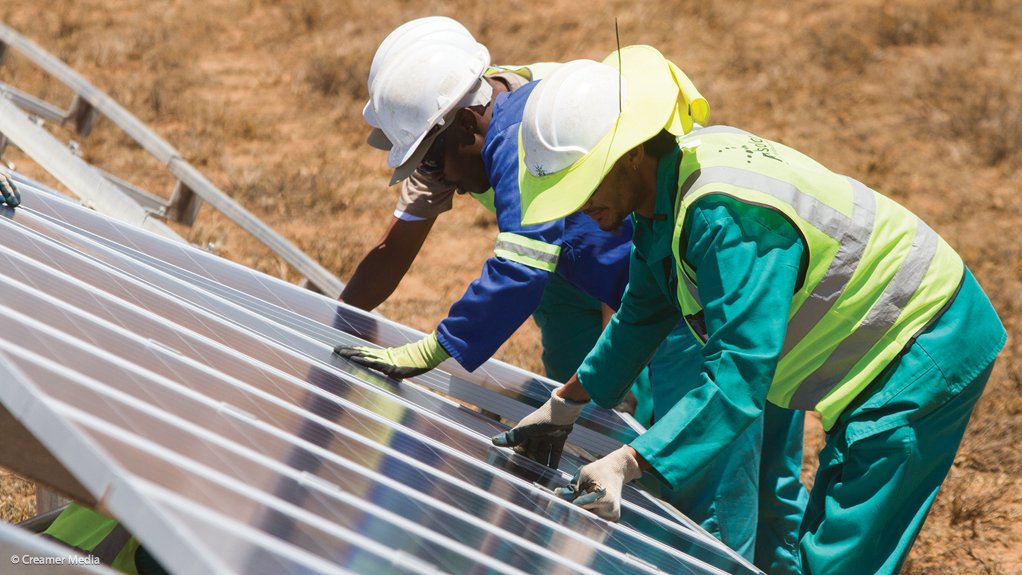
In a significant blow to South Africa’s ambitious energy reform ambitions, the United States has announced its withdrawal from the Just Energy Transition Partnership (JETP), a coalition designed to aid developing nations in transitioning away from coal. This decision has resulted in the shelving of the electrification of South Africa’s informal settlements, encapsulated in a five-year initiative spearheaded by the United States Agency for International Development (USAID) through its Power Africa programme.
According to a statement from the Just Energy Transition Project Management Unit (JET-PMU) within the Presidency, the US formally communicated its exit last week. This positions South Africa alongside Indonesia and Vietnam, which have also been affected by similar decisions, signalling a seismic shift in US foreign support for renewable energy infrastructure in these countries.
The JETP, which emerged during the United Nations climate talks in Glasgow in 2021, was viewed as a beacon of hope, promising $56 million in grant funds alongside a potential $1 billion in commercial investments from the US International Development Finance Corporation (DFC). Unfortunately, the US has now opted to retract its financial commitments, which now reduces the total international investment pledges for South Africa from $13.8 billion to $12.8 billion. This reduction notably impacts future commercial investment potential in the nation’s energy landscape.
Despite the uncertainty brought on by the US exit, the Power Africa programme has already made strides in the Kouga Local Municipality in the Eastern Cape, connecting over 700 informal dwellings to the electricity grid. The initiative aims to further cement the government’s commitment to universal energy access by 2030, amid growing pressures to decarbonize its energy sector.
The erasure of US support comes as a worrying trend, especially as analysts predict it could detract from the overall momentum necessary for South Africa’s just energy transition. Projects designed to foster advancements in green hydrogen, electricity infrastructure, and skills development may all be jeopardised, raising concerns over the long-term viability of these initiatives.
The ramifications of the US withdrawal reach beyond local projects; it reflects broader risks to collective global climate goals and the support networks designed to assist nations grappling with the shift from fossil fuels.