


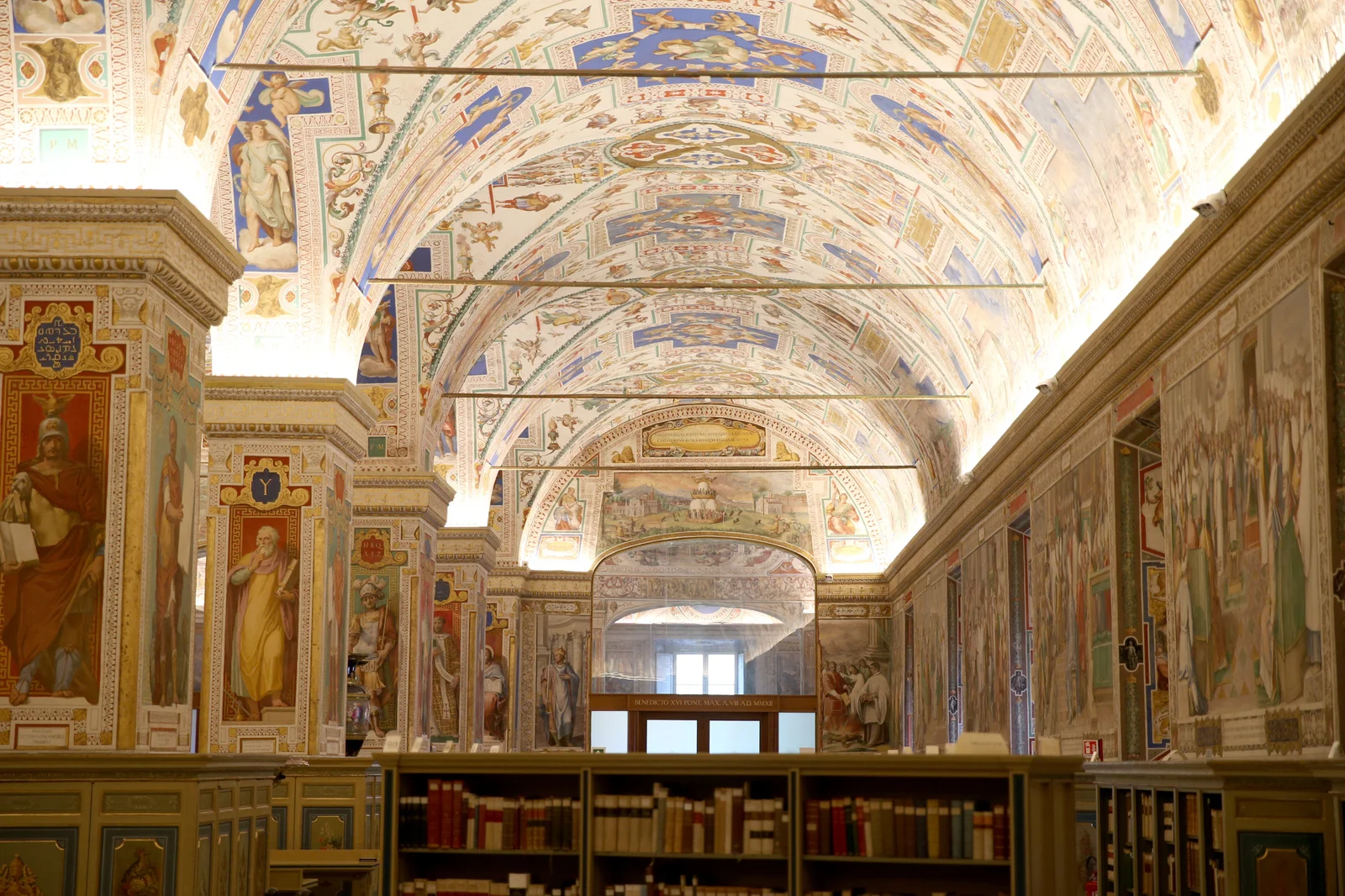
In a historic gesture of interfaith dialogue, a Muslim prayer room has been established within the walls of the Vatican City’s 500-year-old Apostolic Library. This initiative responds to requests from Islamic scholars visiting the library, highlighting an effort to foster inclusivity and respect among diverse faith traditions.
The Vatican Apostolic Library, a cornerstone of the Catholic Church’s intellectual heritage, was established in the 15th century and houses a staggering collection of around 80,000 manuscripts, 50,000 archival items, and nearly two million books. Known as a universal library, it offers notably diverse collections, including Arabic, Jewish, Ethiopian, and Chinese texts, with a rich trove of historical artefacts.
Giacomo Cardinali, the library’s Vice Prefect, shared insights with Italian newspaper La Repubblica about the motivation behind this new prayer space. He revealed, “Muslim scholars asked us for a room with a carpet to pray on, and we gave it to them: we have incredible ancient Korans.” This acknowledgement of Islamic scholarship marks a significant movement towards greater understanding and appreciation of different faiths within the heart of Catholicism.
The library’s extensive collections also include hundreds of thousands of coins, medals, engravings, and prints, reflecting its role as an intellectual epicenter. Yet, the willingness to accommodate Muslim practices has implications that extend well beyond mere access to resources. It signals the Vatican’s commitment to fostering a spirit of inter-religious dialogue, which contrasts sharply with the exclusivity found in other holy sites, such as Mecca.
Mecca, acknowledged as the holiest city in Islam, strictly prohibits non-Muslims, enforcing a ban that stems from a verse in the Koran cautioning believers against the spiritual impurity of polytheists. This stark contrast underlines the Vatican’s unique approach to interfaith relations, an effort aimed at bridging divides that often seem insurmountable.
Earlier this year, King Charles made headlines by hosting an “Islamic call to prayer” at Windsor Castle, furthering discussions on religious inclusion. Amidst criticisms regarding his title as “Defender of the Faith,” his actions demonstrated a clear commitment to promoting interfaith engagement. The initiative at the Vatican Apostolic Library echoes this philosophy, setting a precedent for how religious institutions can foster collaboration in an increasingly pluralistic world.