


In a chilling escalation of South Africa’s whistleblower crisis, former Ekurhuleni Metropolitan Police Department (EMPD) officer and private security owner Marius “Vlam” van der Merwe—known as “Witness D” at the Madlanga Commission—was gunned down outside his Brakpan home on December 5, 2025, in full view of his wife and children. CCTV footage captured him confronting his attackers, drawing his weapon in self-defense before being fatally shot multiple times, possibly with an AK-47. Police have identified three persons of interest, with one in custody, and investigations by the South African Police Service (SAPS) and Independent Police Investigative Directorate (IPID) are ongoing. National Police Commissioner Fannie Masemola visited van der Merwe’s family on December 8, vowing breakthroughs soon and enhanced security for commission witnesses.
The Explosive Testimony That May Have Sealed His Fate
Van der Merwe’s killing came just three weeks after his November 14, 2025, in-camera testimony at the Madlanga Commission of Inquiry into Criminality, Political Interference, and Corruption in the Criminal Justice System—established by President Cyril Ramaphosa in July 2025. He detailed the 2022 torture and murder of Mozambican robbery suspect Emmanuel Mbense during an unauthorized interrogation at a Brakpan site. Van der Merwe implicated EMPD officers Keshia Lee, Leandre Pretorius, Koebus van Rensburg, and Jaco Hanekom in the assault—including suffocation and “tubing” (a waterboarding-like torture)—and claimed suspended EMPD Deputy Chief Julius Mkhwanazi, leader of an alleged rogue unit, ordered the cover-up. After realizing Mbense was dead, the group allegedly called Mkhwanazi, who instructed van der Merwe to dump the body in a nearby dam. Van der Merwe recounted: “When I asked Keshia Lee if the man was telling them what they wanted to hear, she immediately said ‘he will not be speaking ever’ and I realised at that point that they killed the man.” Divisional Commissioner Revo Spies corroborated Lee’s involvement with video evidence of her allowing a criminal to use a state vehicle in a robbery. IPID confirmed its probe into Mbense’s death remains active.
This testimony exposed a “state capture 2.0” web involving criminal syndicates, illegal mining, tender fraud, and assassinations—echoing apartheid-era brutality. Friends noted van der Merwe felt guilty for his role in the cover-up and testified to unburden himself, aware of the risks despite a prior attempt on his life.
Government Response: Caution Amid Outrage
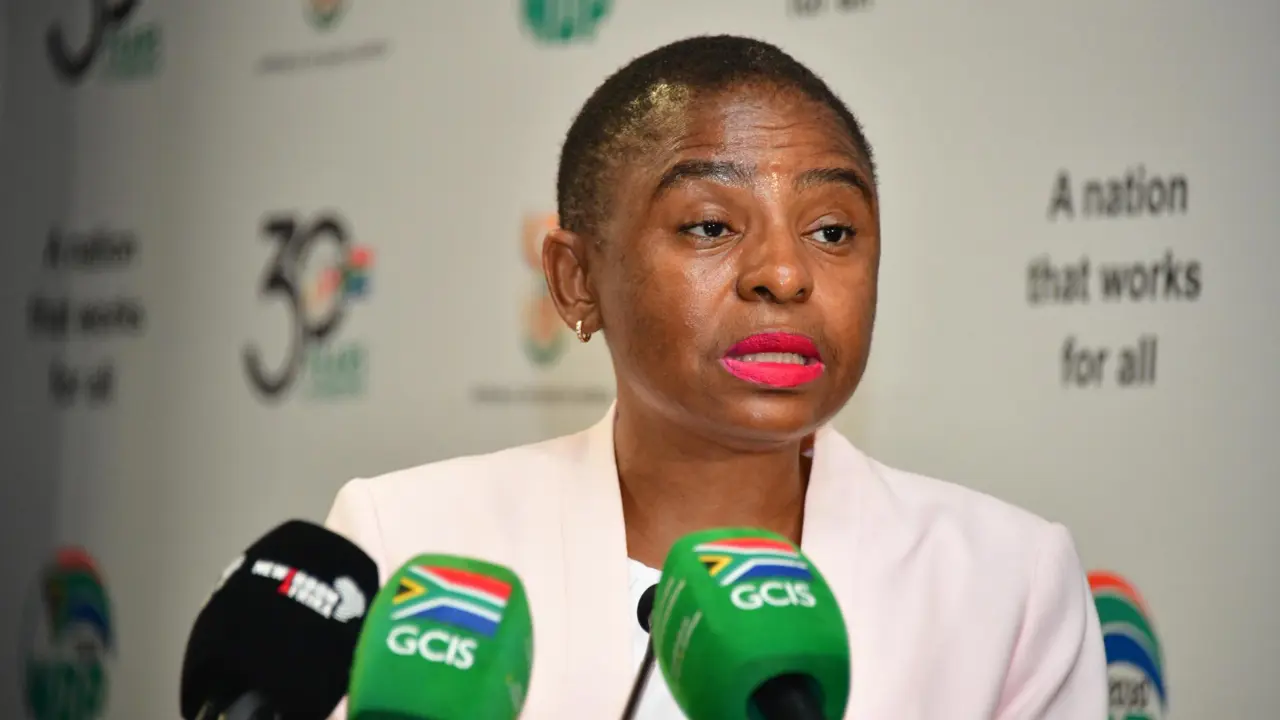
Minister in the Presidency Khumbudzo Ntshavheni, briefing media after Cabinet’s final 2025 meeting, urged against speculating on motives, insisting police investigations proceed without assumptions. She emphasized: “Currently, there’s nothing indicating he was murdered because of his testimony at the Madlanga Commission.” Ntshavheni defended the system, noting van der Merwe declined witness protection offered by the Justice Ministry for him and his family, opting for his own security firm. “You can’t criticize the witness protection service when it’s witnesses who are refusing protection,” she said, dismissing claims of commission failure.
However, President Ramaphosa condemned the “heinous” act as an “attack on justice,” suggesting it stemmed from van der Merwe’s “brave testimony” angering those undermining the rule of law. Civil society, unions like SAFTU, and parties decried it as part of a pattern silencing whistleblowers, reigniting memories of past assassinations and demands for independent probes and stronger protections. A candlelight vigil was held, and calls grow for reforms to prevent future silences.
Van der Merwe’s widow, Lee-Anne McLean, shared a viral TikTok tribute, amplifying national outrage. As IPID and SAPS intensify efforts, his death underscores the perilous cost of truth-telling in South Africa’s fight against corruption.