


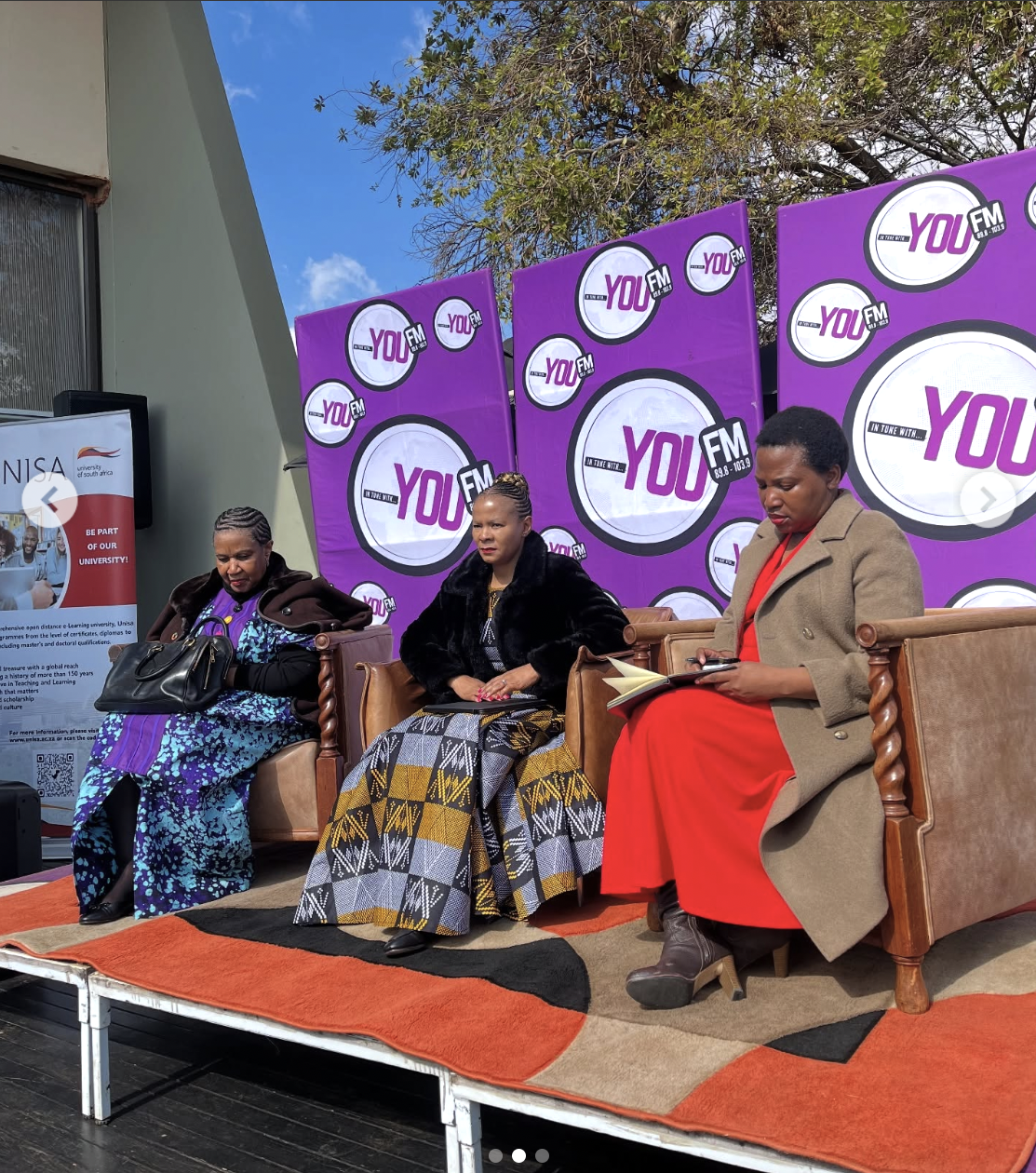
On a day marked by elegance and empowerment, women from diverse backgrounds celebrated this year’s Women’s Day at YOU FM’s event in the picturesque Cradle of Humankind, Maropeng. Dressed in vibrant hues of purple, attendees welcomed a line-up of distinguished speakers who championed the cause of women’s rights, leadership, and technology integration.
The keynote address was delivered by Phumzile Mlambo-Ngcuka, the Former Deputy President of South Africa and former Executive Director of UN Women. Mlambo-Ngcuka captivated the audience with a heartfelt plea for young girls to “take up space” and position themselves as future leaders of the nation. Her powerful words reverberated through the gathering, encouraging attendees to break the barriers that still inhibit women in various sectors.
Joining Mlambo-Ngcuka on the stage were notable figures including Sheila Mabale-Huma, the Executive Mayor of Rustenburg Local Municipality, and Dr MaseTshaba Mantepu, Executive Dean of the College of Economic and Management Sciences at UNISA. Their presence underscored the importance of leadership inspired by strong female role models.
In an exclusive interview with YOU FM, Mlambo-Ngcuka elaborated on the essential role of technology in the development of women, particularly in South Africa’s rural areas. “We need to address the issue of infrastructure at our rural schools so that they can move from a situation of being isolated,” she stated. Mlambo-Ngcuka urged the need for committed educators, emphasising, “It’s also important for teachers to be go-getters because their learners look up to them.”
As the founder of the Umlambo Foundation, she highlighted the urgent need for technology literacy to advance the capabilities of young girls, warning that “the lack of technology literacy causes limitations.” She drew a parallel between technology access and other basic needs: “Connectivity is like water, health, and other essential services. In the 21st century, a child who does not have access to technology is as good as a child who is illiterate or blind.”
This year’s Women’s Day theme, “From Rural Communities to Global Readiness: Advancing Every Child into the 21st Century,” resonated deeply with participants, especially considering the continued struggles women face. Despite significant progress since the 1956 protests by over 20,000 women against oppressive laws, modern challenges such as inequality, gender-based violence, and underrepresentation in leadership roles persist. Calls for collaboration among stakeholders in both public and private sectors have grown louder, advocating for a united front to address these urgent issues.
In concluding her remarks, Dr Mlambo-Ngcuka issued a compelling challenge to young women: to invest in their personal and professional identities beyond mere appearances. Her message was clear: empowerment begins with self-belief and aspiration.

