


By Keith Gottschalk
Anti-corruption activist Paul Holden has done South Africa a great favour by summarising the work of the judicial commission that probed massive corruption under former president Jacob Zuma. No one except academics will read the commission’s 4,750 page report, but many will read Holden’s book, Zondo at your Fingertips.
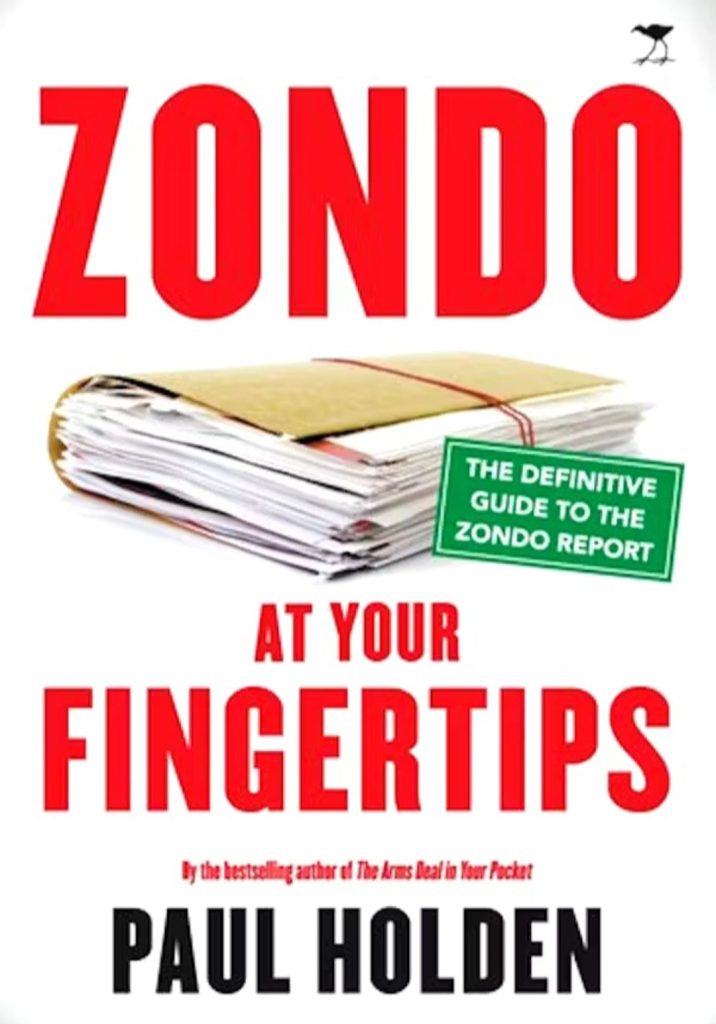
Holden is a former director of investigations at Corruption Watch, the South African corruption watchdog. He has worked with the investigative organisations Shadow World and Open Secrets for many years. He seeks to expose how corrupt individuals, aided by auditors and banks, not only looted the state but came to control it and pervert it into a kleptocracy.
The author, who has also lived in the UK, tells us that the Zondo commission was globally unique:
There are only a handful of examples of any state or quasi-judicial inquiry being given the task and resources to delve so deeply into the corruption of the ruling party … something like the scale, importance and independence of the Zondo Commission could never happen in the United Kingdom.
Commissions of inquiry
The most ambitious commission of inquiry set up in South Africa was the Truth and Reconciliation Commission. Set up in 1996 after the end of apartheid, it offered amnesty in exchange for information about atrocities.
No one who refused to apply for amnesty, or whose amnesty application was refused by the commission, was in fact prosecuted. A quarter of a century lapsed before the families of some detainees who’d been tortured to death found pro bono lawyers who instituted the reopening of inquests and other litigation – with zero support from the government.
The great majority of the recommendations of commissions of inquiry, such as the Farlam Commission into the massacre of striking miners and other killings at Marikana, North West province in 2012, remain unimplemented and ignored by the government. Sceptics argue that commissions of inquiry merely provide governments with a pretext to stall any remedial actions for years, until the politics of the front page has moved onto other issues.
Holden also summarises the commission’s enhanced proposed protection for whistleblowers, and to grant them compensation for losses they suffered. He notes that Zondo also flagged the deployment of party loyalists to key state positions as a violation of the constitution’s section 197 (3).
Gottschalk is a Political Scientist, University of the Western Cape.
The article first appeared in The Conversation.