



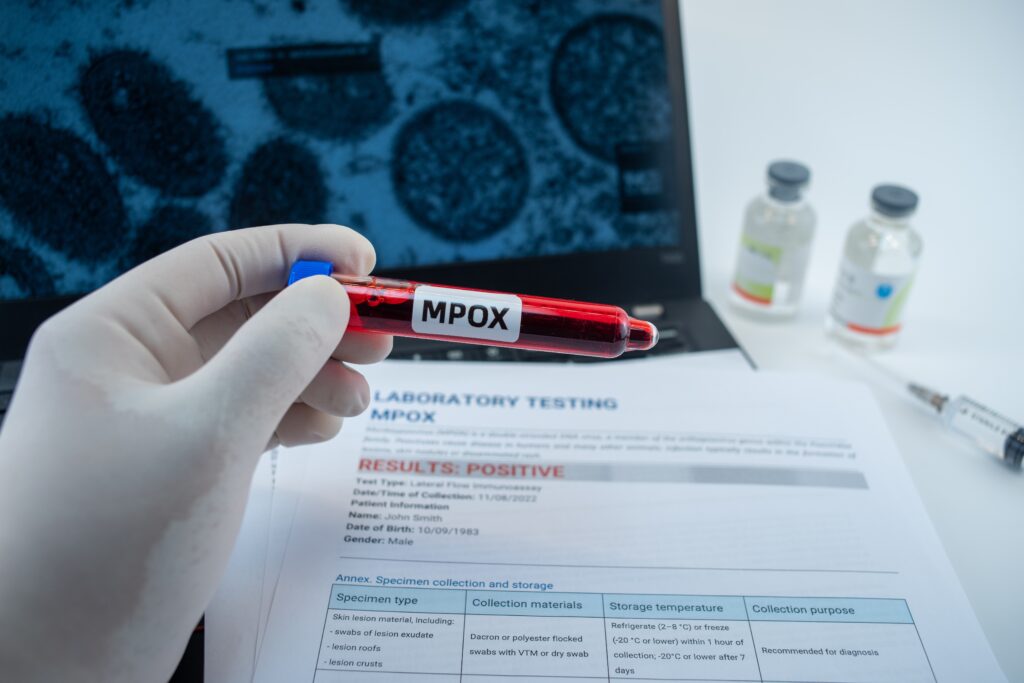
The Department of Health is urging residents to be calm, after the Africa Centres for Disease Control and Prevention (Africa CDC) and World Health Organization (WHO) declared the current Mpox outbreak a public health emergency of international concern.
The declaration comes as the virus’s cases continue to increase across the world, including recorded deaths.
According to the department, the total number of positive cases recorded in the country stands at 24 including 3 deaths, 19 recoveries and two active cases undergoing home isolation.
Twelve of these cases were reported in Gauteng, 11 reported in KwaZulu-Natal and one in the Western Cape.
“The Department of Health would like to assure members of the public that the current mpox outbreak remains under control in the country, however, that does not mean people should become complacent because we have learned from COVID-19 pandemic that viruses are unpredictable as they mutate from time to time.
The country remains on high alert in case of surge in mpox cases and emergence of new contagious strains.
Members of the public are urged to play their part and support the country`s response efforts to prevent the spread of mpox by maintaining non-pharmaceutical measures including personal hygiene,” said department spokesperson, Foster Mohale.
In addition, the department said it is considering several pharmaceutical interventions which include additional treatment and vaccine, and the decision will be informed by the epidemiological data at our disposal.
Despite the declaration by the Africa CDC and WHO, the department said there it hasn’t yet implemented any restrictions.
“It is important to clarify that both the declarations by the Africa CDC and WHO do not translate into trade and travel restrictions.
But serve as a clarion call for member states including South Africa to work together, fast-track approval of mpox vaccine and treatment while maintaining strict safety protocols, and ensure these life-saving vaccines reach the most vulnerable populations to prevent further spread of this infectious, but treatable disease, and the loss of lives,” explained Mohale.
The Department said it is working with various stakeholders including the WHO County Office, National Institute for Communicable Diseases, and Border Management Authority to intensify epidemiological and surveillance, contact tracing and health screening activities for case investigation and early detection of new positive cases in the country.
Businesses and organisations who have operations in the affected countries, have also been encouraged to put measures in place to ensure their employees who regularly travel to those areas are well informed of mpox and are fit to travel.
“We also urge all people who experience any of the mpox symptoms, with or without international travel history to present themselves to a health facility for clinical observation and confine themselves to one place until their test results are available,” added Mohale.
Some of the common symptoms of mpox include a rash which may last for 2–4 weeks, fever, headache, muscle aches, back pain, low energy and swollen glands (lymph nodes).
The painful rash looks like blisters or sores, and can affect the face, palms of the hands, soles of the feet, groin, etc.

