


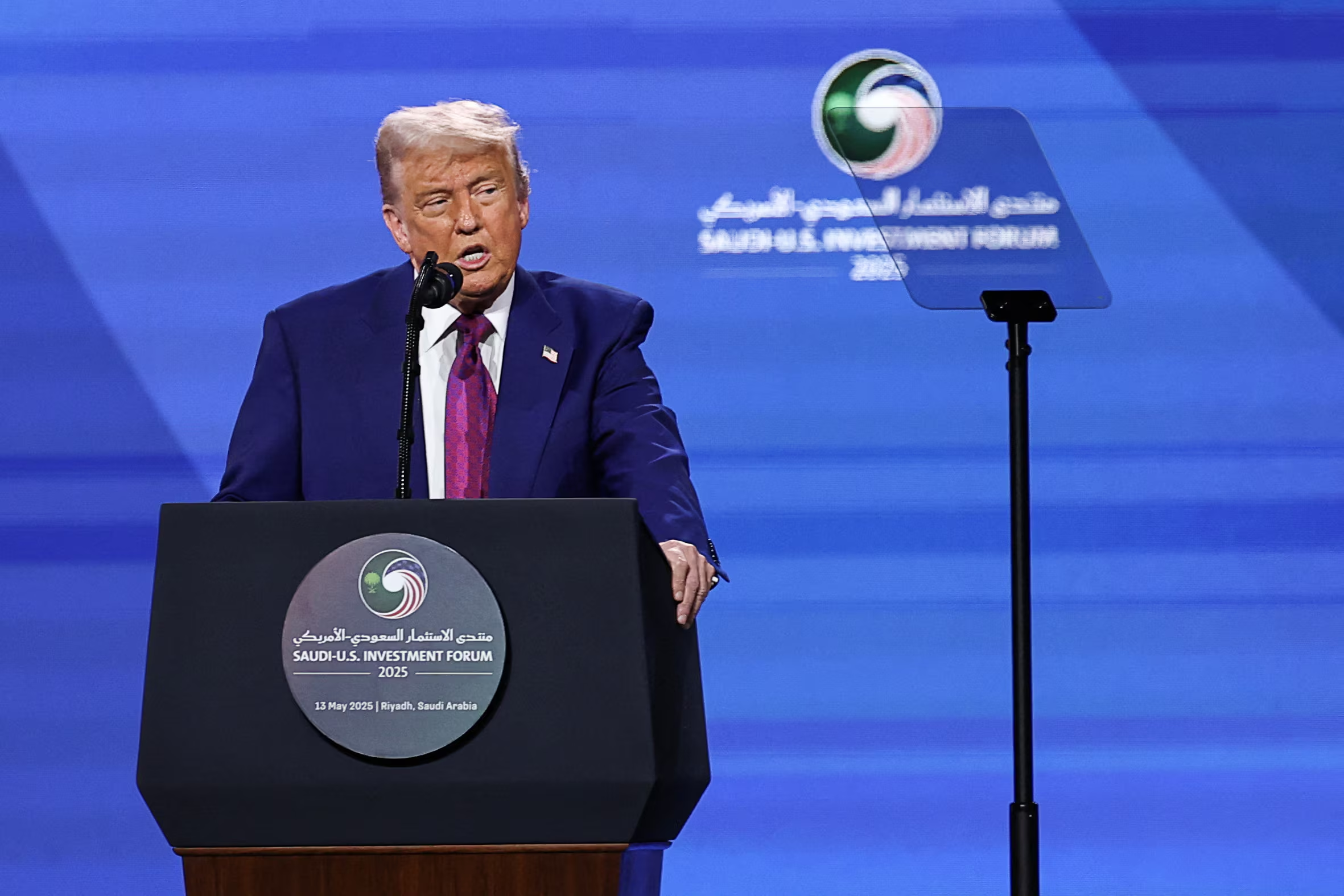
In a surprising move, President Donald Trump announced on Tuesday the lifting of long-standing sanctions on Syria, marking a significant policy shift amidst a backdrop of civil strife and international diplomacy. The announcement came during his trip to Riyadh, where he solidified a staggering $600 billion commitment from Saudi Arabia in investments aimed at bolstering the US economy.
Trump’s decision to remove sanctions—which positioned Syria as a state sponsor of terrorism since 1979—signals a new chapter for the war-torn country. Secretary of State Mike Pompeo had raised concerns regarding the previous sanctions, which were intensified after the outbreak of civil war in 2011. The political landscape in Syria has dramatically shifted since the rebels led by President Ahmed al-Sharaa ousted long-time ruler Bashar al-Assad last December, paving the way for potential reconstruction.
During the press conference held in Riyadh, Trump stated that he was acting on a request from Saudi Crown Prince Mohammed bin Salman, highlighting the close ties between the two leaders. “Oh what I do for the crown prince,” Trump quipped, bringing laughter to the audience. He acknowledged the sanctions served their purpose but confidently declared it was time for Syria to move forward.
Transitioning from sanctions to diplomacy, the US announced an arms package worth nearly $142 billion to Saudi Arabia, deemed the largest defence cooperation agreement in US history. The agreement encompasses partnerships with over a dozen US defence contractors, focusing on air and missile defence, maritime security, and advanced military technologies. The crown prince asserted that the plan was only the beginning, aiming to escalate investments to a monumental $1 trillion in the future.
That evening, Trump engaged business leaders, including Tesla CEO Elon Musk, at an investment forum where discussions ranged from energy to infrastructure. The potential of collaboration between American enterprises and Saudi projects, part of the Vision 2030 initiative, was highlighted by Saudi Investment Minister Khalid al-Falih, signalling a transformative age in Saudi-American relations.
While Trump’s agenda focuses on economic investments, he is concurrently navigating a complex geopolitical landscape. With rising tensions surrounding Iran—including potential nuclear negotiations—Trump expressed his desire for a resolution that encourages peaceful cooperation, stating, “It’s my fervent hope that Saudi Arabia will soon sign its own normalisation agreement with Israel.” However, significant obstacles remain regarding Israeli-Palestinian relations, as PM Benjamin Netanyahu’s government continues its military operations in Gaza.