


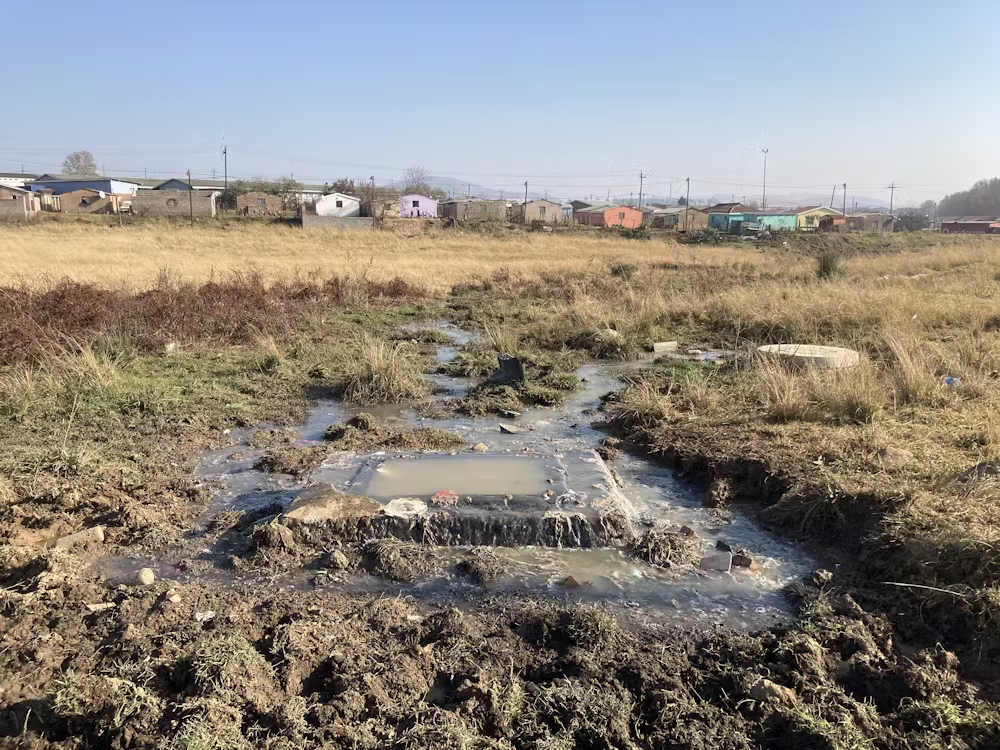
In South Africa, the alarming state of wastewater management highlights a critical challenge that threatens both public health and the environment. As septic conditions deepen, the government’s efforts to tackle sewage challenges are falling woefully short. Wastewater—water that is discarded from toilets, sinks, showers, and industrial processes—is not merely a nuisance; if left improperly managed, it can become a silent killer, infiltrating rivers and streams, and leading to widespread ecological collapse.
A troubling analysis led by aquatic ecologist Mark Graham, water and sanitation engineer Dave Still, and research scientist Nicholas B. Pattinson reveals that wastewater treatment facilities are processing even less sewage today than they did a decade ago—despite a burgeoning population that increased by approximately 10% between 2013 and 2021. Each day, a staggering 20 million litres of sewage are lost before reaching treatment facilities, as broken and poorly maintained sewer infrastructure allowed waste to seep into waterways.
“The volume of wastewater reaching treatment plants has stagnated, revealing a critical gap in South Africa’s ability to manage its sewage effectively,” said Graham. “This means that even as technology and infrastructure improvements are introduced, they are largely ineffective if the sewer systems themselves aren’t functioning.”
To address these looming threats, the government initiated the Green Drop assessment programme in 2008, designed to track wastewater treatment. However, this initiative stalled for eight years before being relaunched in 2021, during which time millions of litres of sewage, laden with dangerous pathogens and toxins, went unaccounted for. The importance of this gap cannot be overstated: the Green Drop assessments merely highlight treatment efficiencies but fail to capture how much sewage is being managed or lost in transit.
One illustrative case is the Darvill wastewater treatment works in Pietermaritzburg, which was upgraded at a cost of over one billion rand (approximately US$56 million). Ironically, despite the improvements, the facility now treats less sewage than it did in 2013. In a troubling trend observable across various municipalities—including Johannesburg, which saw an 18% decline in sewage processed—Green Drop scores have remained largely unchanged, ill-representing the reality of the wastewater crisis.
The ramifications of missing wastewater are dire. Poorly managed sewage directly contaminates vital freshwater systems, leading to soaring E. coli levels in local rivers. E. coli counts in rivers near Pietermaritzburg are now more than ten times higher than they were 15 years ago, signalling an urgent health crisis. Every year, around 1.5 million people worldwide die due to water-related diseases, with vulnerable populations in South Africa facing the brunt of these impacts.
Additionally, deteriorating wastewater management diminishes water security by tainting drinking sources and making recycling efforts increasingly difficult. The socio-economic implications are significant: health systems are strained with waterborne illnesses such as cholera and typhoid, resulting in lost workdays and higher healthcare costs.
To stave off impending disaster, experts advocate for substantial investments in wastewater infrastructure and management reforms. “A complete overhaul in governance around sewage systems is essential,” remarked Still. “Municipal managers must be held accountable for the entire wastewater process, from capture to treatment, to ensure communities receive safe sanitation.”
Moreover, the study emphasises the potential role of citizen scientists in monitoring water quality, promoting awareness of the importance of clean water, and identifying potential issues for reporting to authorities. Community involvement presents a vital avenue for education but also calls for immediate government action.
As witnessed in previous cholera outbreaks, mismanaged wastewater has already claimed lives and futures. The need for robust political will and tangible leadership cannot be overstated in addressing the ongoing wastewater crisis. Through improved management and public engagement, there is a pathway to safeguard water security and health outcomes—before it is too late.
The original article first appeared in the Conversation.