



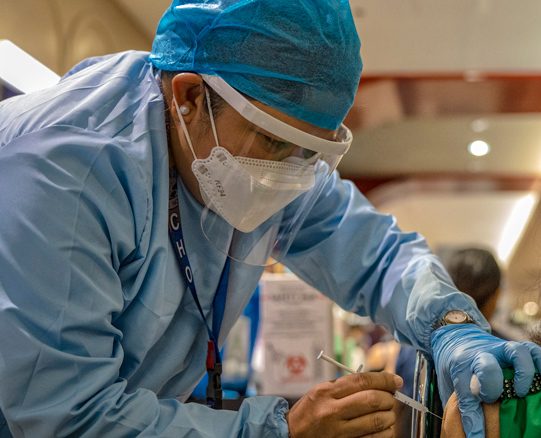
The National Health Department has appealed to parents, caregivers, and legal guardians of girls in Grade 5 aged nine-years and older to sign the consent forms issued by the schools to allow them to receive the lifesaving, Human Papilloma Virus (HPV) vaccination.
According to the department, cervical cancer is the second most common cancer among women in the country, after breast cancer.
The department will commence with the drive on Monday with the aim of protecting young girls from developing cervical cancer later in their lives.
Furthermore, the department said that the country records a high number of cases of cervical cancer and related deaths annually, despite the availability of lifesaving vaccines in both public and private health sectors.
“Over 5 700 cases of cervical cancer are reported each year in the country, while more than 3 000 women die from cervical cancer-related complications.
This means, unvaccinated girls and women living with HIV are at a higher risk of serious health complications if they develop cervical cancer later in life, compared to the general population,” said the department spokesperson Foster Mohale.
Mohale said that trained teams of healthcare workers including nurses will be visiting schools across the country to conduct the HPV vaccination campaign as part of Integrated School Health Programme.
“The success of the campaign to protect girls from this preventable, yet deadly disease hinges on stronger collaboration among all stakeholders, particularly parents and caregivers, who are required to complete the vaccination consent forms issued by schools to eligible girl learners,” appealed Mohale.
The programme has thus far benefitted more than 3,6 million girls mostly in public schools, with over 7,2 million doses administered since its inception in 2014.
According to Mohale, the programme has now been expanded to reach all girls in both public and private schools, including special independent schools to ensure that no one is left behind.
“The HPV vaccine is safe and most effective when provided from age nine or before girls become sexually active.
In South Africa, the HPV vaccination was approved by the South African Health Products Regulatory Authority in 2008 for its efficacy and safety.
Millions of girls in South Africa have received the HPV vaccine without any serious side effects,” assured the Mohale.
This school-based HPV vaccination campaign is implemented in partnership with the Department of Basic Education and other stakeholders including the World Health Organization (WHO) and United Nations International Children’s Emergency Fund (UNICEF).

