



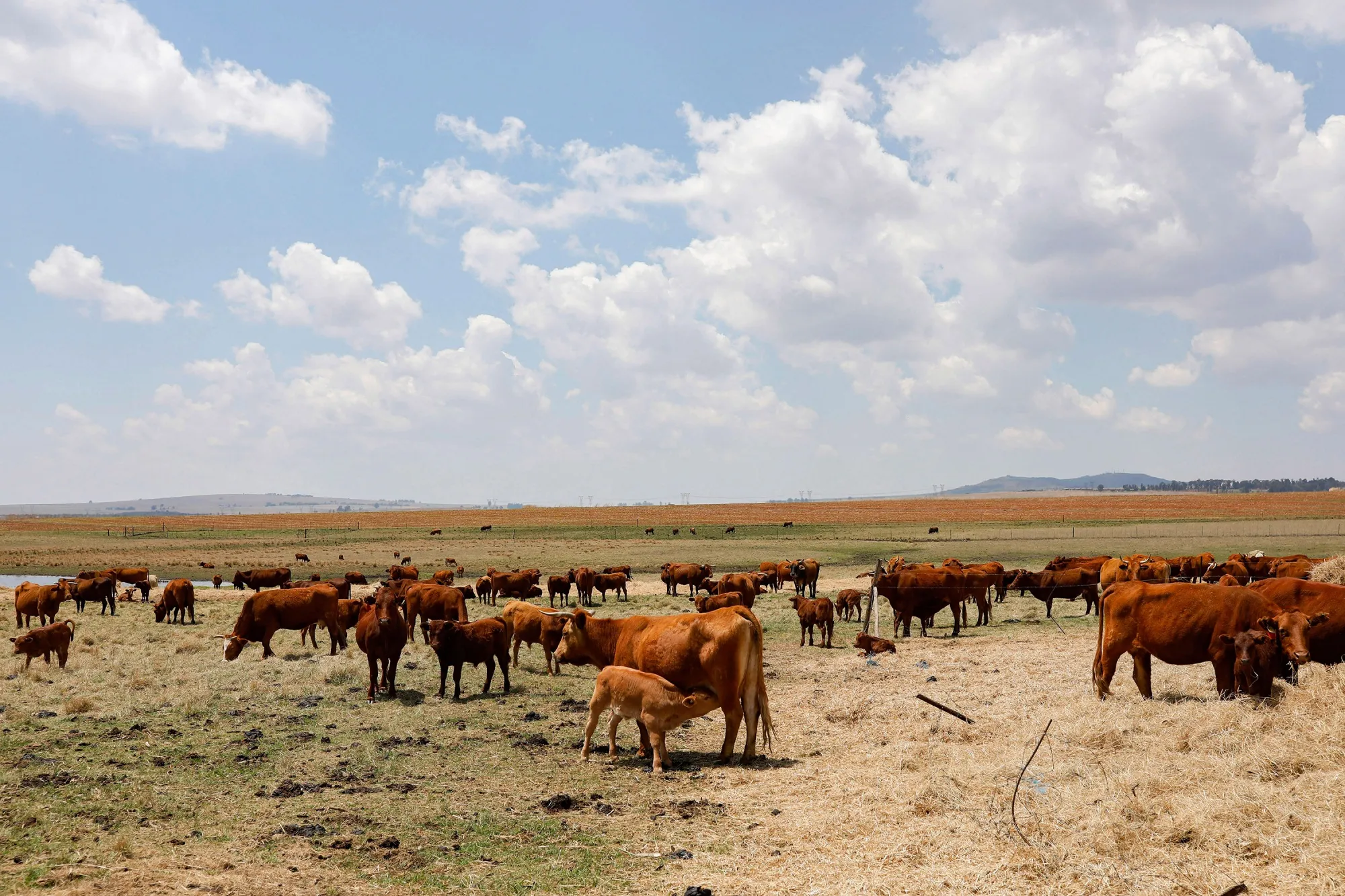
The Dr. Kenneth Kaunda District Municipality remains an epicentre of foot and mouth disease (FMD) outbreak in the North West, allegedly due to its proximity to Gauteng which is the second most affected province after KwaZulu Natal.
The disease has spread across eight provinces except Northern Cape since 2019, threatening livestock, livelihoods and export markets.
Agriculture and Rural Development MEC, Madoda Sambatha, told YOU FM Newshour that as much as the outbreak is manageable it becomes almost impossible to manage it when it spreads to the communal farms.
“Once it gets there it becomes difficult to impose control measures because of the openness of communal areas and communities and it gives us a serious challenge especially on the control of the spread and quarantine measures.
In many areas where the spread has been identified and where we have directly engaged with affected farmers, we support in terms of control measures and quarantine.
But the challenge becomes whether the facilities are spacious enough to successfully impose control measures and quarantine.
You would also understand that in communal areas space is shared amongst all local farmers and so it’s not easy to impose those preventative measures,” said Sambatha.
There’s a planned meeting between the minister and MEC’s on Thursday, where a coordinated national session for vaccination is expected to be discussed.
According to the MEC, the meeting will determine the number of dosages each province will receive to roll out their vaccination programs.
“Remember the decision is that we are going to vaccinate the full herd of cattle in each province, which means every province will receive dosages according to the number of affected cattle.
The challenge again will be on unregistered farmers (farmers we cannot account for) but otherwise vaccination is meant to be rolled out throughout the country,” Sambatha further elaborated.
The MEC has applauded what he called a healthy working relationship between his department with farmer’s organisations, unions and associations in the province.
“We work very well with everyone including structures such as Youth & Women in Agriculture and Rural Development which gives us more result in terms of consultation and brings in more stakeholders who will in turn work with us,” remarked Sambatha.
Meanwhile, national Department of Agriculture has announced that the first batch of one million high-potency vaccine doses from Biogénesis Bagó in Argentina is scheduled to arrive in South Africa this weekend.
“This shipment is the first phase of a broader agreement, with a further five million doses set to follow in March.
These vaccines are a critical component of the Department of Agriculture’s new strategy against FMD, where the national herd of over 14 million cattle will be pro-actively vaccinated, to ensure South Africa transitions to “FMD-Free Status with Vaccination,” read a statement from the department.
According to the department, the Botswana Vaccine Institute (BVI) remains South Africa’s vital partner as it has delivered two million doses to date since the recent outbreak in the country and is scheduled to provide doses of FMD vaccine monthly.

