


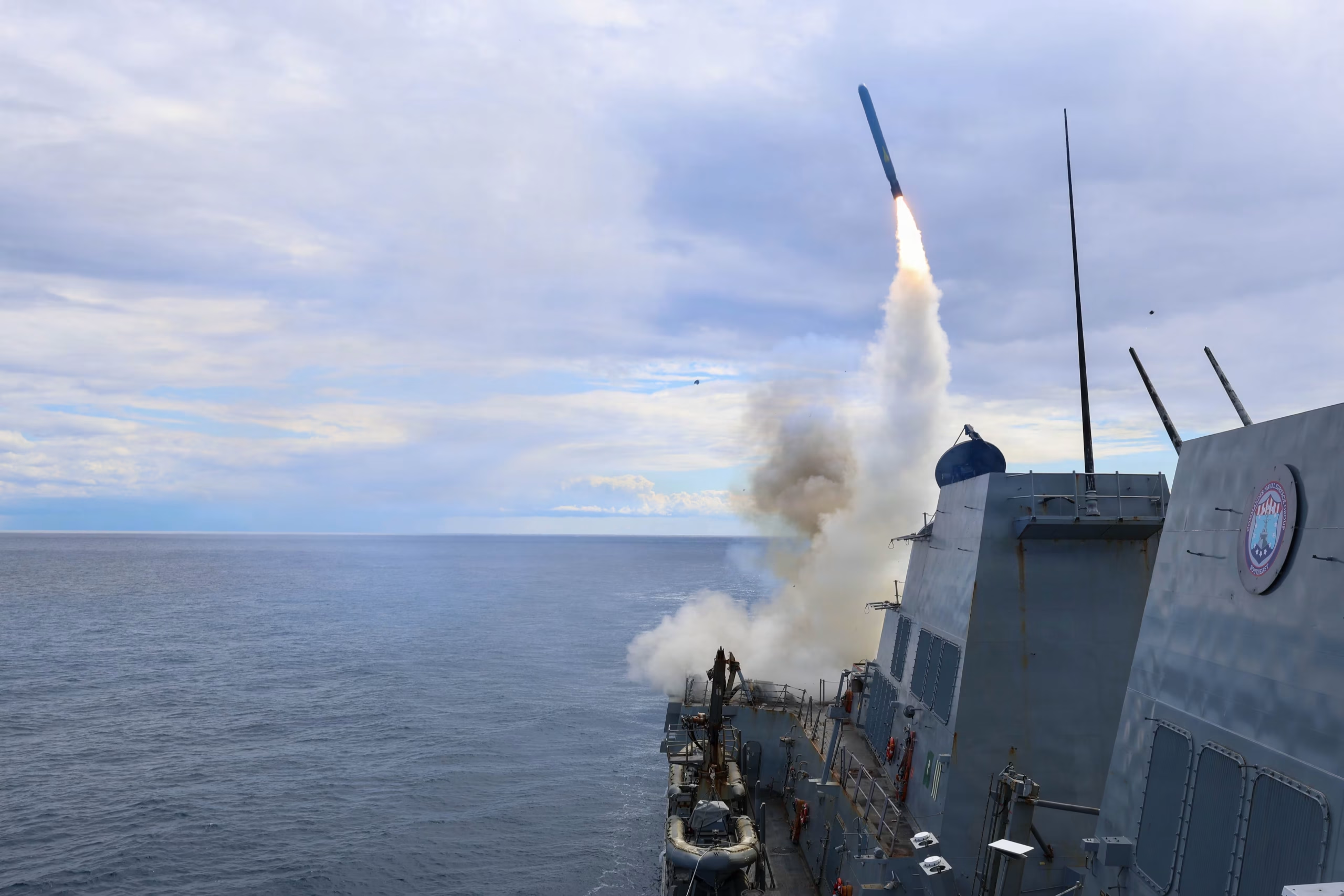
Rising tensions between the United States, Israel, and Iran are disrupting global maritime traffic, with consequences extending far beyond energy markets. Military activity and retaliatory measures have unsettled shipping across the Gulf region, particularly around the Strait of Hormuz — a narrow but vital corridor bordered by Iran and Oman through which a significant share of global trade passes. The resulting uncertainty is beginning to ripple through industries ranging from agriculture to manufacturing and global logistics.
One of the most immediate risks lies in the global fertilizer supply. Approximately one-third of the world’s traded fertilizers, including sulfur and ammonia, pass through the Strait of Hormuz. Major producers in Qatar, Saudi Arabia, and the United Arab Emirates ship these materials to key agricultural markets such as India, China, Brazil, and numerous African nations. Analysts note that viable alternatives to Gulf shipping routes are extremely limited. Existing land transport options lack sufficient pipeline and trucking capacity to replace maritime flows. Because fertilizer production depends heavily on natural gas and oil, rising hydrocarbon prices linked to regional instability could further drive up costs, potentially increasing food production expenses worldwide.
The conflict also threatens the global plastics supply chain. The United Arab Emirates serves as a major export hub for polymers, producing millions of tons of polyethylene each year — a material essential to packaging, construction, and manufacturing industries. Recent disruptions at key port facilities underscore the fragility of these supply routes. Operational interruptions, even temporary ones, can cascade across global supply chains, delaying shipments and increasing costs for manufacturers and consumers alike.
Shipping logistics themselves are undergoing significant strain. Several major maritime carriers have begun avoiding transit through the Strait of Hormuz due to escalating security risks. Insurance premiums for vessels operating in the region have surged sharply, making passage increasingly expensive and, in some cases, commercially unviable. Reports indicate that dozens of vessels remain stranded in Gulf waters, unable to proceed safely.
To maintain operations, shipping companies are rerouting vessels around the southern tip of Africa rather than passing through the Middle East’s traditional maritime corridors. While this detour allows trade to continue, it adds thousands of kilometers to journeys between Asia, the Middle East, and Europe. Longer voyages translate into higher fuel costs, extended delivery times, and increased freight rates. Over time, these pressures may feed into broader inflationary trends affecting global trade.
Food security in the Middle East presents another area of concern. Many countries in the region rely heavily on imported food supplies transported through Gulf shipping lanes. Disruptions to maritime routes can delay or block deliveries of staple goods, placing additional strain on already import-dependent economies. Historical precedent suggests such disruptions can quickly escalate into broader supply challenges when transport bottlenecks persist.
Taken together, these developments highlight how regional military tensions can reverberate across the global economy. Maritime trade remains the backbone of international commerce, and chokepoints such as the Strait of Hormuz function as critical arteries in that system. When access to these routes becomes uncertain, the effects are not confined to energy markets but spread across agriculture, manufacturing, logistics, and food security.
As the situation evolves, the stability of global supply chains will depend largely on whether safe passage through the Gulf can be maintained. Until then, businesses and governments alike face heightened uncertainty, rising costs, and the prospect of prolonged disruption to the flow of essential goods.