


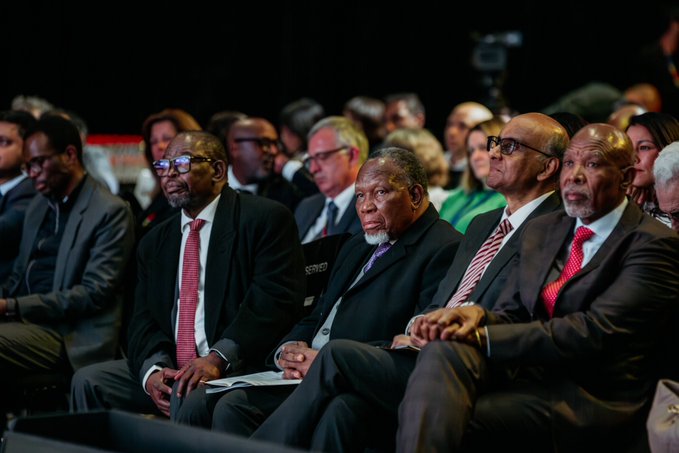
The late former South African Reserve Bank (SARB) Governor Tito Mboweni has been hailed as a fearless and independent leader whose influence helped shape South Africa’s modern economic landscape.
Speaking at the inaugural Tito Mboweni Memorial Lecture in Cape Town on Thursday evening, former Deutsche Bundesbank President Professor Axel Weber paid tribute to Mboweni’s commitment to ethical leadership, sound economic governance and public service.
The annual lecture series, established by the SARB, aims to honour Mboweni’s contribution to South Africa’s democratic and economic institutions. Mboweni served as Reserve Bank Governor from 1999 to 2009 before later taking on key Cabinet roles as Minister of Labour and Minister of Finance.
Weber described Mboweni as a leader who brought both courage and conviction to public office, helping elevate South Africa’s standing in global financial circles during a pivotal period in the country’s history.
“We do not just remember a man; we celebrate a legacy of principled leadership, institutional courage, democratic accountability and public service,” Weber said.
He noted that Mboweni became the youngest governor in the Reserve Bank’s history at the age of 40 and played a significant role in strengthening South Africa’s participation in international financial institutions following the country’s reintegration into the global economy.
According to the SARB, Mboweni’s unwavering defence of central bank independence and prudent monetary policy remains one of his most significant contributions to the country.
Family members also reflected on his enduring legacy. His niece, Fumani Mthembi, said Mboweni dedicated his life to building a stronger South Africa and believed deeply in the country’s potential as a thriving democracy and inclusive economy.
Mboweni passed away in October 2024 at the age of 65 following a short illness. Through the annual memorial lecture, the Reserve Bank hopes to ensure that his ideas, values and commitment to public service continue to inspire future generations of leaders.