



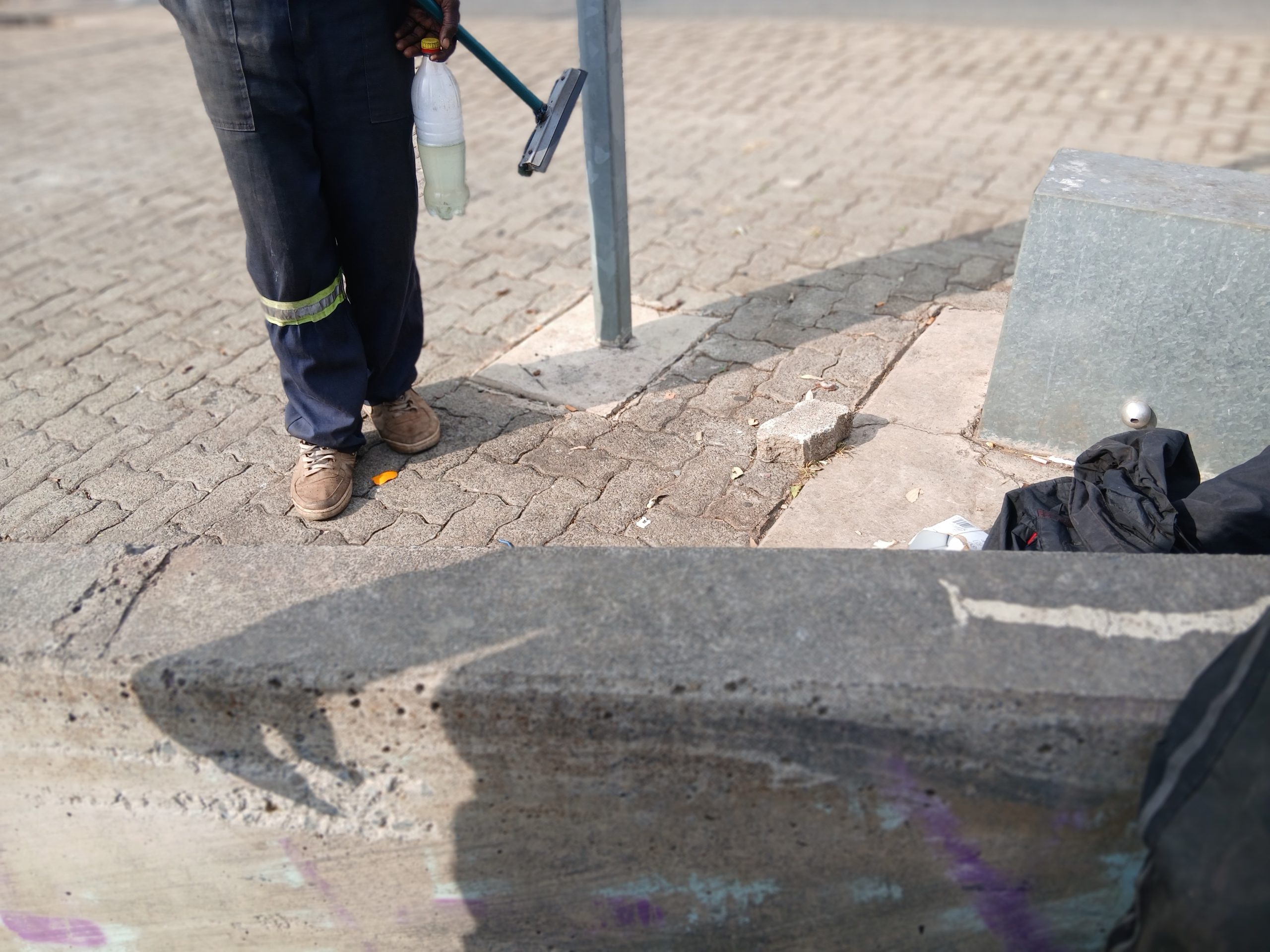
Street beggars in Johannesburg have expressed mixed feelings, with some saying motorists have become stingier as the cost of living continues to rise amid global economic pressures linked to the conflict between the United States and Iran.
The beggars say many motorists no longer carry cash and some even jokingly ask them to produce card payment machines instead of giving money.
“Some ask us to bring tapping machines because they don’t have small change, but when they do give you something it’s only R1,” said Siphelele Nkuna Masedi.
“It’s clear some people have just become stingy. It’s their tactic to avoid giving us money.”
South Africa, like many countries, has been grappling with rising food, transport and electricity costs, placing pressure on both motorists and people surviving through informal means such as street begging. The recent tensions between the United States and Iran have also raised concerns globally about higher oil prices, which directly affect fuel costs locally.
Another beggar told Newsnote that despite the difficult economic conditions, he has not noticed a major drop in donations.
“My target is R60. Even on the slowest day I still make it.”
When Newsnote spoke to him at around 2pm, he said he had already collected R400 for the day, showing coins and several R10 and R20 notes.
“And I have taken breaks to go and eat and returned not long ago,” he said.
Another young man, who did not want to be identified and cleans car windows at a traffic intersection, said they are targeted by other men for sex in exchange for money.
But he said they usually take money from them then disappear.
“I was approached by older men who look like they are married with wives. I usually take money and tell them to wait for me while I go and pack my things under the bridge, then I do not come back.”
Economists have warned that lower-income South Africans are bearing the brunt of the rising cost of living, while ordinary consumers are also cutting back on non-essential spending as household budgets come under increasing strain.
The South African Reserve Bank recently increased the repo rate by 25 basis points in an effort to contain inflation, placing further pressure on households already battling high living costs.
At the same time, motorists are facing higher fuel prices following the latest fuel hike announced earlier this week. Petrol prices increased by R1.43 per litre for both 93 and 95 unleaded petrol from Wednesday, while diesel prices decreased by more than R2 per litre depending on the grade. The increase pushed the inland price of 95 unleaded petrol above R28 per litre for the first time in South Africa’s history.

